Laguna Beach reviews citywide classification and compensation study; Baker Tilly recommends five pay plans
Loading...
Summary
Consultant Jada Kent of Baker Tilly told the City Council the city’s pay structure is broadly aligned to market but recommended five tailored pay plans and grade reassignments; staff will return with a final report, costing and bargaining implications in February.
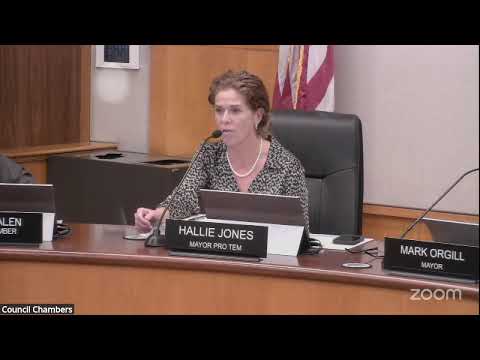
The Laguna Beach City Council heard a presentation from Baker Tilly on a citywide classification and compensation study and asked staff to return with a final report and implementation options.
Jada Kent, a consultant with Baker Tilly, told the council the firm used a five‑phase process that combined on‑site position analysis questionnaires, an internal job evaluation and an external market review to assign job evaluation scores and market midpoints. "Any changes to the pay plan and grade assignments must be bargained," Kent said, and emphasized that the study measures positions, not individual employees.
Kent recommended creating five separate pay plans—police, fire, marine safety, general and management—so grade numbers do not overlap across employee groups and to reduce compression between supervisor and subordinate grades. She said the firm ran a regression tying job evaluation scores to market midpoints to produce defensible grade assignments and to keep the structure internally equitable and externally competitive.
On reported snapshot data, Kent said 308 employees were included in the analysis and "80% have a salary that already falls within the range that we're proposing," while about 12% were below the proposed minimum and approximately 50 employees had salaries above the new maximums; she recommended "red‑circling" those above‑maximum salaries until ranges catch up and stressed no employee would receive a pay cut as a result of the study.
The consultant presented three implementation scenarios for step plans (placing employees on the nearest step, on a step tied to years in position, or keeping current step placement) and three scenarios for the management open range (move below‑minimum employees to minimum, a modest across‑the‑board adjustment, or a years‑in‑position compression fix). Kent said the city should select a single, consistently applied approach and use the job evaluation tool for ongoing updates.
Council members asked about performance‑based or hybrid step approaches that combine time and performance. Kent said hybrid systems are used in some jurisdictions but require clear, well‑defined performance metrics and ongoing administration. One council member praised the consultant and HR staff for running "one of the smoothest processes" they had seen.
Staff will bring back the final report, costing detail and staff recommendations in February (or early March) and would, if directed, meet with labor associations to begin meet‑and‑confer or bargaining processes. No formal council action or vote occurred at the study session.
The council’s next procedural steps are to review the final report and select an implementation scenario and to direct staff on timing and bargaining strategy.