Get Full Government Meeting Transcripts, Videos, & Alerts Forever!
Treasury tells House committee Do Not Pay needs more data access to stop improper payments
Summary
Treasury witnesses told a House Oversight subcommittee that Do Not Pay can scale pre-payment checks but needs statutory access to key federal datasets (tax IDs, Social Security numbers, death data) and additional modernized inputs to prevent billions in improper payments.
WASHINGTON
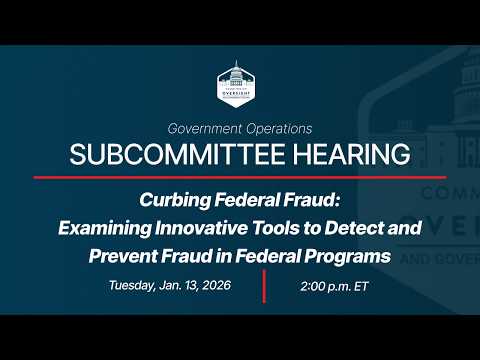
Representatives on the House Oversight subcommittee on government operations pressed Treasury officials on gaps in Do Not Pay that they said limit the agency's ability to block improper payments before they occur.
An assistant secretary for accounting policy and financial transparency at the Treasury Department told the panel that Do Not Pay is a government-wide tool used by agencies and states to flag risky payments but that it has been underutilized and lacks statutory…
Already have an account? Log in
Subscribe to keep reading
Unlock the rest of this article — and every article on Citizen Portal.
- Unlimited articles
- AI-powered breakdowns of topics, speakers, decisions, and budgets
- Instant alerts when your location has a new meeting
- Follow topics and more locations
- 1,000 AI Insights / month, plus AI Chat