
UN brief: strikes on energy and health systems deepen Ukraine’s winter humanitarian emergency
Get AI-powered insights, summaries, and transcripts
Subscribe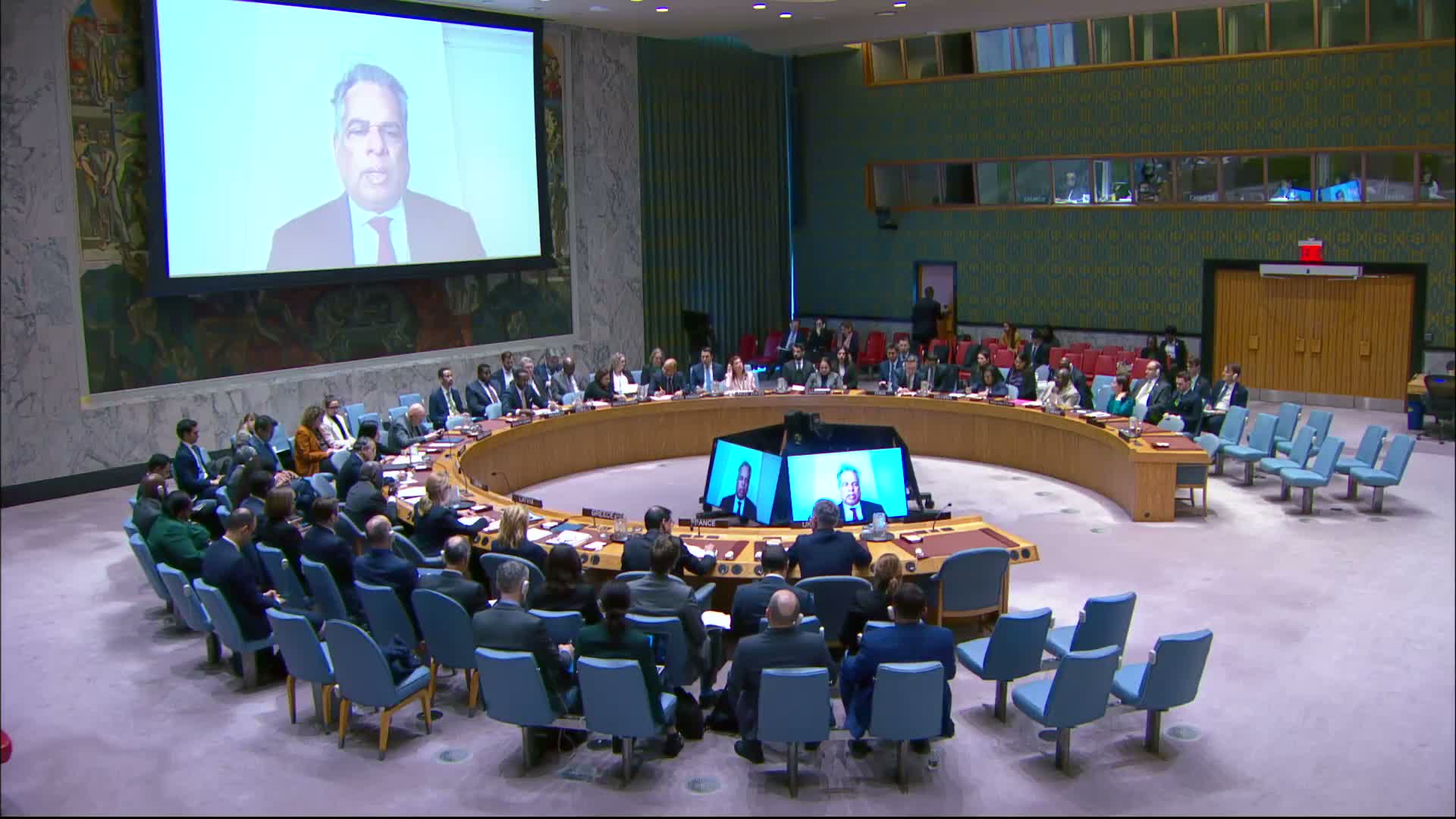
Summary
Ramesh Rajasinghe told the council that repeated strikes on power, heating and health infrastructure have left millions facing life‑threatening winter conditions; the United Nations will launch a $2.31 billion 2026 humanitarian plan on Jan. 13 to reach 4.12 million people.
Mister Ramesh Rajasinghe, briefing the council, said repeated attacks on Ukraine’s energy and health infrastructure have pushed civilian survival to the brink ahead of winter. "Power, heating, and water infrastructure have been repeatedly struck in major urban areas," he said, and added that damaged substations and heating pipelines trigger cascading failures that worsen risks for civilians during subzero temperatures.
Rajasinghe cited casualty figures and verified attacks on medical services: "Since the start of the year, the World Health Organization has reported 11 attacks on health care in Ukraine, resulting in 2 deaths and 14 injuries," he said. He also reported that "1 health worker was killed, while 5 rescuers and 4 health workers were injured" after repeated strikes.
He described the immediate coping measures civilians have resorted to after prolonged power cuts, saying families in one locality were "melting snow for washing and cooking" and heating water over candles. In Kyiv more than 1,200 heated safe spaces are operating and authorities and partners have established 68 additional heating points to provide warmth, phone charging and connectivity amid blackouts.
Rajasinghe emphasized the scale of need: "As the escalation of hostilities in Ukraine soon enters its fifth year, 10,800,000 people in Ukraine urgently need humanitarian assistance," and announced that "Tomorrow, that's Tuesday, January 13, the United Nations and our partners, in consultation with the government of Ukraine, will launch the 2026 humanitarian needs and response plan, which seeks 2,310,000,000 US dollars to deliver life saving assistance to 4,120,000 people facing the most severe needs." The plan, he said, focuses on people most at risk along the front line, displaced civilians, and those affected by repeated strikes on essential infrastructure.
Rajasinghe warned that humanitarian access remains constrained in some frontline areas "due to active hostilities, damaged infrastructure and security restrictions," and said organizations have limited information about needs in occupied parts of the country. He urged council members to act, listing three priorities: protect civilians and civilian objects; facilitate safe, sustained and unimpeded humanitarian access; and fund humanitarian action commensurate with needs through the prioritized response plan.
He framed those steps as measures to move beyond statements of concern: "They need that concrete action to reduce civilian harm and ensure that humanitarian support continues to reach people when they need it the most," he said. The president thanked Rajasinghe after the briefing; Rajasinghe’s remarks preceded the UN’s announcement of the 2026 plan launch on Jan. 13.