
Vermont superintendents urge creating scale before enacting foundation formula in Act 73
Get AI-powered insights, summaries, and transcripts
Sign Up Free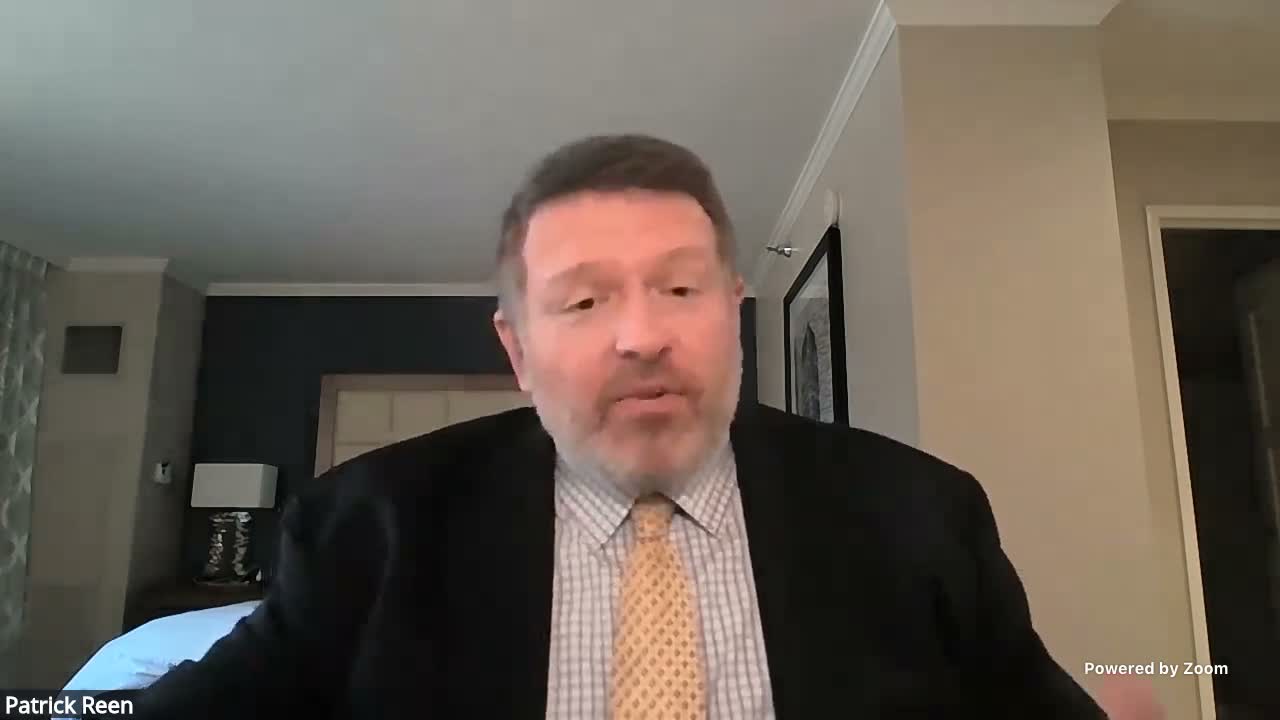
Summary
The Vermont Superintendents Association told a joint legislative education hearing that the state should create scale at district and school levels before implementing a per-pupil foundation funding formula, warning that a formula alone risks 'shuffling inequities' and that consolidation will require upfront investment.
Patrick Reen, a trustee for the Vermont Superintendents Association, told a joint House and Senate education committee hearing that the state should pursue district and school consolidation before fully implementing a foundation funding formula in Act 73.
Reen said VSA’s top priorities for the session are “to create scale at the district and school level and take steps to ensure a truly equitable foundation formula.” He warned that a foundation formula by itself “does not provide equitable funding” because districts are structured differently and therefore will deliver different outcomes with the same per-pupil dollar amount.
Why it matters: Reen argued that without meaningful scale—both larger school districts and larger schools—new funding formulas will simply redistribute inequities rather than eliminate them. He said the VSA supports district sizes informed by research, previously recommending districts of roughly 2,000 to 4,000 students where that scale makes sense for the region.
Reen emphasized the transition costs and operational work required to form new school districts: electing boards, hiring superintendents and central office staff, transferring property and debt, negotiating collective bargaining agreements, and adopting policies. “It took us 18 months and cost tens of thousands of dollars to start up the new SD while running the old SU,” he said, describing his district’s recent consolidation experience.
The VSA urged the Legislature to pair any foundation formula with specific implementation guardrails. Reen asked legislators to consider minimum class sizes, small-by-necessity protections already included in Act 73, staffing ratios, a statewide contract for educators and support staff, and construction funds for receiving schools as essential upfront investments to make consolidation equitable and feasible.
On voluntary mergers: Reen expressed skepticism that voluntary consolidation alone will achieve the reductions the state needs, citing repeated failed merger votes and local resistance in some communities. “Communities seem to have little appetite for taking action to reduce school districts,” he said, recounting several local efforts that did not pass.
On spending caps and sequencing: Reen cautioned that inserting a spending cap (referenced in testimony as “s 220”) before scale is achieved risks eroding community trust and may force local leaders into choices that harm students. He recommended sequencing: create scale and provide time, authority, and guardrails for newly formed districts before a foundation formula or caps take full effect.
What lawmakers heard: The testimony combined practical implementation concerns (costs, timelines, transition mechanics) with equity arguments—VSA repeatedly framed a foundation formula as effective only if districts and schools are restructured to use dollars more efficiently. Reen offered VSA as a partner to work out the detailed governance and transition rules necessary for consolidation.
Next steps: The committee asked Reen to submit written testimony; the hearing then moved to a Farm to School panel. The Legislature will consider these operational cautions as it continues work on Act 73 and related implementation language.