Get Full Government Meeting Transcripts, Videos, & Alerts Forever!
Get email alerts on the Criminal Justice Attorney Shortage topic
No spam. Unsubscribe anytime.
Marathon County judges and staff warn attorney shortages are slowing cases, canceling court dates
Summary
Judge O'Neil told the Public Safety Committee that shortages in prosecutors and public defenders have grown worse, forcing at least one court cancellation and prompting renewed local efforts on recruitment and case‑processing reforms.
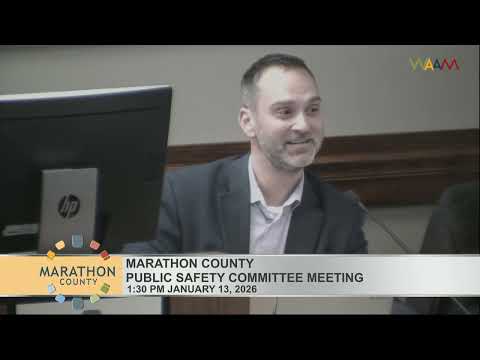
Judge O'Neil told the Marathon County Public Safety Committee that a persistent shortage of attorneys is slowing prosecutions and court processing across the county and region. "For the first time in this county, we had to cancel court this week... because there were no prosecutors available," he said, describing vacancies in both prosecutorial and defense offices.
The judge said the district attorney's office and the state public defender's office are understaffed, leaving the court system short on personnel to review reports, bring cases forward and cover hearings. He said the public defender's office was three attorneys short and the district attorney's office had multiple vacancies, which has led to longer case pendency and operational strain.
Committee members and staff discussed how bond‑forfeiture and pretrial supervision are being used to encourage court appearances. O'Neil walked the committee through Marathon County's practice: when a defendant fails to appear, the court may forfeit bond and schedule a bond‑forfeiture hearing about 30 days later, giving defendants an opportunity to explain why they missed court before a judgment is entered. He added that judges retain discretion at the forfeiture hearing to determine whether enforcement is appropriate.
Supervisors asked whether the county could impose fines or other penalties to recoup costs from missed hearings. O'Neil and county staff said the county's authority is limited: the forfeiture mechanism and existing tools (warrants, increased supervision, or filing bail‑jumping charges when appropriate) are typically used rather than a separate fine. Administrator Leonard said staff will return with data on appearance rates from the county's pretrial supervision dashboard and suggested the committee may need to pursue local recruitment approaches rather than await state solutions.
Committee discussion also covered recruitment and retention ideas: offering internships or relocation incentives, leveraging loan‑forgiveness programs, paying bar dues as an incentive, and considering office space or other supports for new lawyers. Staff noted the Wisconsin Supreme Court and state bar have produced reports on the shortage and that some statewide reforms (including broader licensure pathways) are under consideration.
The committee asked staff to provide follow‑up data on appearance rates and costs associated with missed court time and to continue work on potential local steps to recruit and retain attorneys. The committee did not adopt new policy at the meeting; Judge O'Neil framed the update as informational and recommended reconvening the case‑processing work group to explore targeted changes.