Get Full Government Meeting Transcripts, Videos, & Alerts Forever!
Get email alerts on the Human Services topic
No spam. Unsubscribe anytime.
Edgar County’s Human Resource Center names new director and highlights 24/7 'Living Room' expansion
Summary
New HRC executive director Susan Tibon told the Edgar County Board the center’s 'Living Room' walk-in program is operating 24/7 and reported monthly visits rising from about 50 to about 80; officials said Edgar County-specific substance-use treatment clients rose to 209 this year, up 101 from the year before.
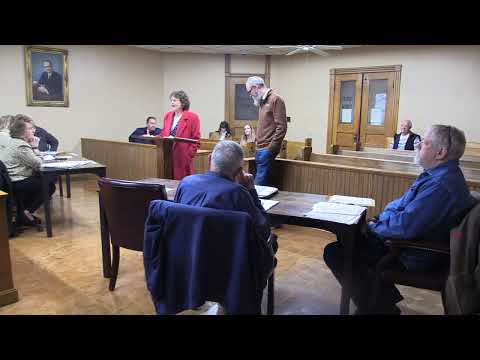
Susan Tibon, the new executive director of the Human Resource Center, spoke to the Edgar County Board at its December meeting about expanding the center’s 'Living Room' walk-in services and rising demand for substance-use and mental-health support.
Tibon described the Living Room as "open 24 hours a day, 7 days a week," a walk-in site offering counseling, addiction and mental-health assistance, showers and referrals to other services. "We were providing services for 50 people a month, and now we're providing services for 80 people a month," she said, citing increased use during the holiday period and as a gateway into other programs.
The presentation included county-specific service totals: board discussion recorded an Edgar County total of 209 people served in substance-use-disorder programs this year, compared with 108 the prior year — an increase of 101 people. Board members and HRC staff attributed the rise to greater outreach, improved communication and program restructuring that merges mental-health and substance-use services.
Tibon and staff also described how HRC’s services operate across county lines. Clark County residents can access a similar spectrum of services but do not currently have a 24/7 Living Room site; HRC runs school-based programs in roughly half of Edgar County’s schools and said it is pursuing capacity to expand into Shiloh, Crestwood and Crystal schools.
Board members asked about program capacity and the geographic hub for services; staff noted that some services (developmental-disability day services and apartment supports) are more concentrated in parts of the county such as Marshall. The board encouraged HRC to continue updates at study sessions and to coordinate with schools and partner counties.
The board did not take formal action on HRC programs during the meeting. The most recent procedural step recorded was the board’s invitation to HRC to continue providing updates at regular meetings and study sessions as staffing and program changes develop.