
Coffey County adopts 15-step salary chart, adds 12¢/hour in lieu of April step increases
Get AI-powered insights, summaries, and transcripts
Subscribe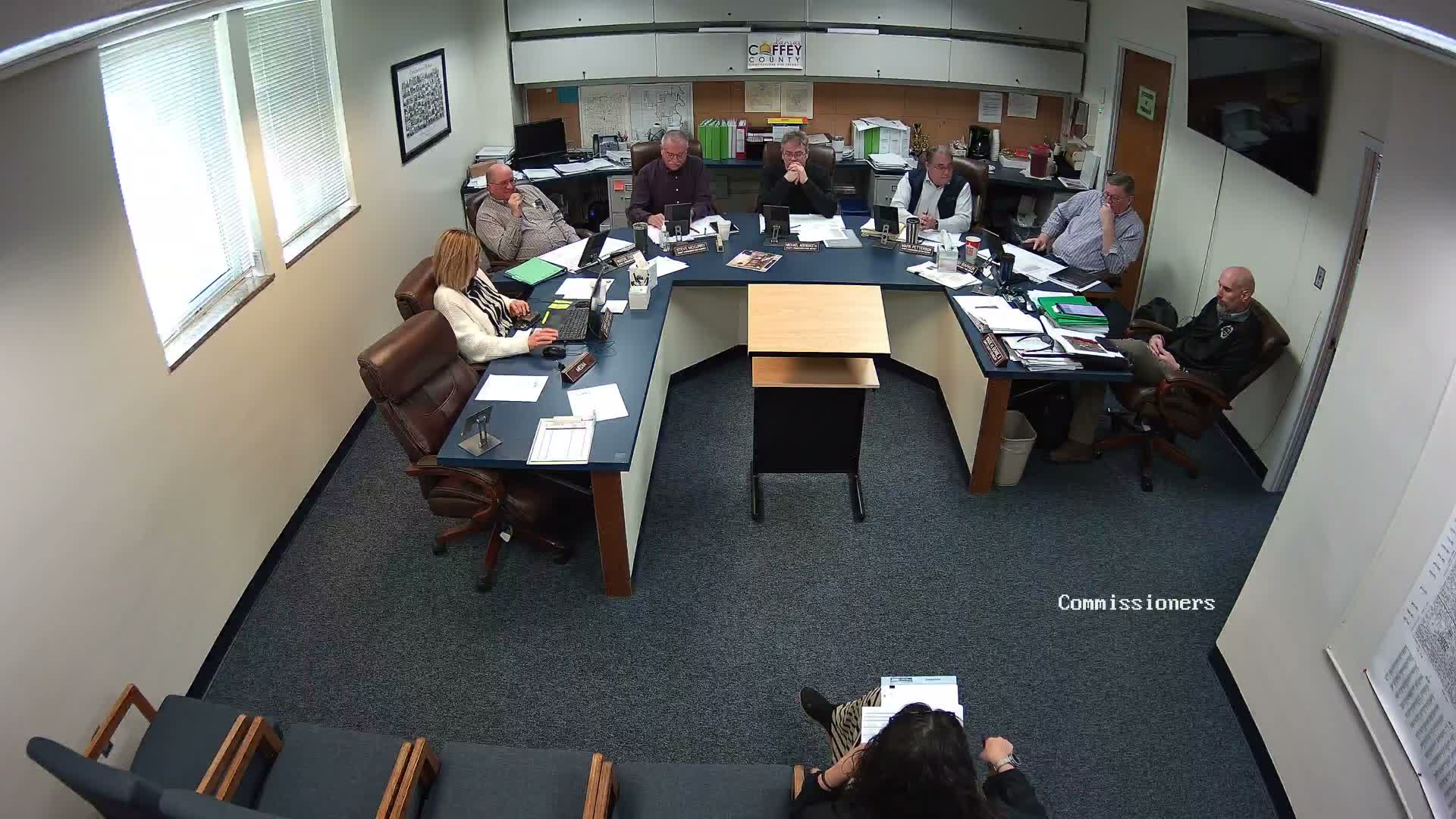
Summary
The Coffey County Board of Commissioners voted unanimously to adopt a new 15-step salary chart effective Jan. 30, 2026, placing hourly employees on the nearest step equal to or greater than their current wage and adding $0.12 per hour in April instead of individual step increases.
The Coffey County Board of Commissioners voted unanimously on Jan. 12, 2026, to adopt a new 15-step salary chart for county employees and to add $0.12 per hour in lieu of the typical April step increases.
The board placed each hourly employee on the nearest step in the new 15-step scale that is equal to or greater than their current wage and set the chart to take effect in the Jan. 30, 2026 payroll. Commissioners also directed that cost-of-living adjustments (COLA) will still be applied according to routine practice, but there will be no separate step increases in April 2026; instead a $0.12-per-hour adjustment will be added to each step so the county’s total wage cost for the fiscal year stays within previously projected amounts.
Staff presented the estimated fiscal impact during the session: implementing the new chart would require roughly $83,116 for placement on the new step schedule, while the April step increases alone were estimated at $118,331. County payroll staff explained the $0.12-per-hour adder represents the balance between those figures when spread among full‑time hourly employees.
Commissioners debated operational and fairness questions for more than an hour, including whether to grandfather current longevity and how the change would affect employees near the top of pay ranges. One commissioner said the intent was to accelerate pay-step progression for long-tenured employees while avoiding an immediate, larger spike in payroll costs that would affect the county budget.
The motion was amended on the record to remove ambiguous language (changing “nearest higher step” to “nearest step that is equal to or greater than current wage”) so that no employee would see a reduction in pay. The final motion, as amended, passed on a voice vote of 5-0.
The county’s HR and payroll office will place employees on the new scale, apply the $0.12 add-on to step values, and incorporate the COLA when published; payroll staff said they aim to have changes reflected in the Jan. 30 paycheck and will provide explanation materials to departments and affected employees.
Next steps: departments will receive a detailed implementation memo and payroll will execute the chart change. Commissioners said they will monitor long-term budget impacts and revisit compression or longevity issues as needed.