
Committee hears split testimony on HB 1596 to raise cigarette excise, repeal Medicaid premium and restore UNH funding
Get AI-powered insights, summaries, and transcripts
Subscribe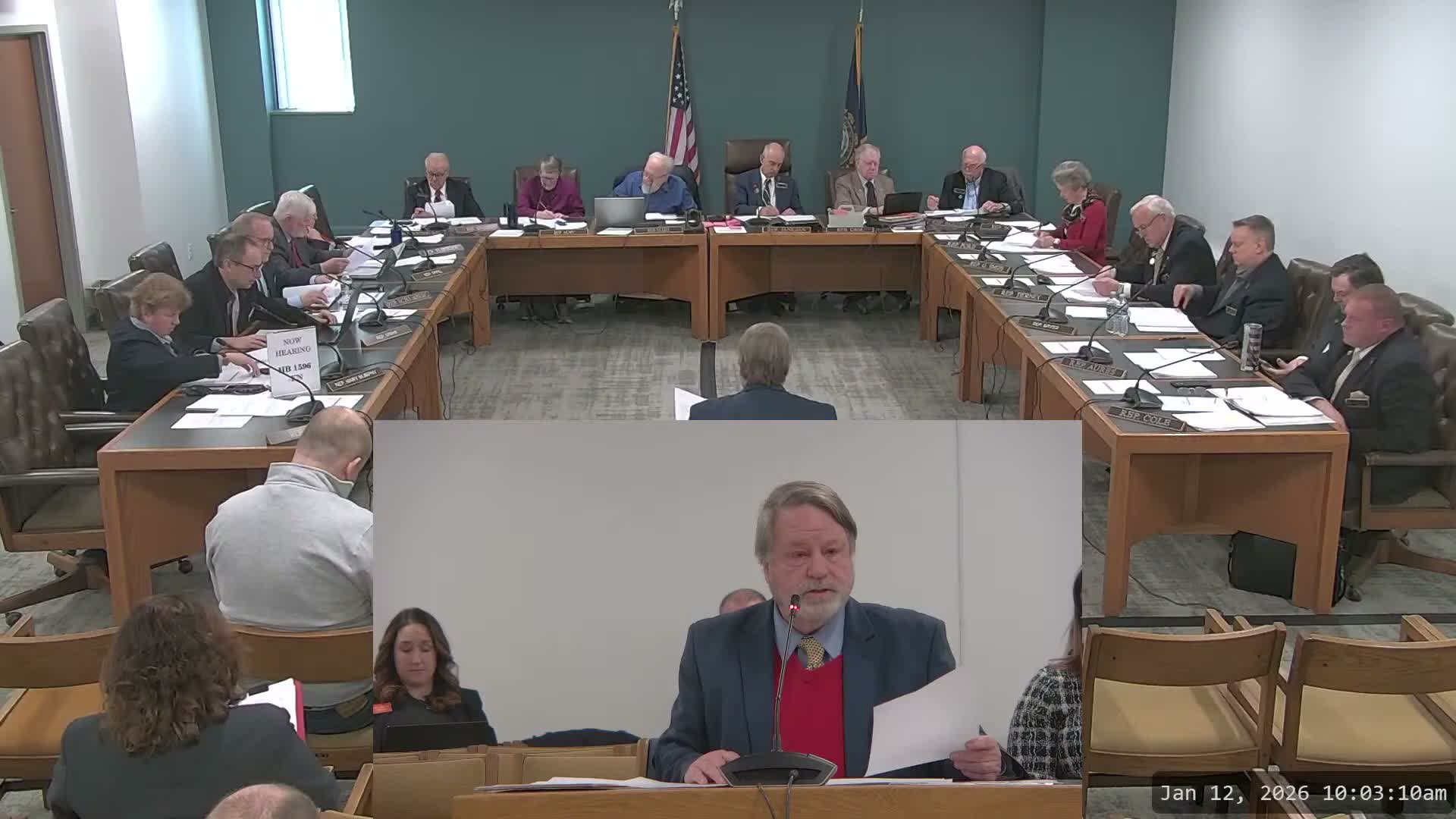
Summary
Supporters including the American Cancer Society and American Heart Association backed a $1.02 increase in the cigarette excise as a public‑health measure and revenue source for cessation programs; retailers, small businesses and some legislators warned of cross‑border impacts, illicit trade and unfair burden on certain consumers.
The House Ways and Means Committee took public testimony on HB 1596, a package that would raise New Hampshire's cigarette excise from $1.78 to $2.80 per pack, repeal an income‑based Medicaid premium included in the current budget, and restore prior cuts to the University of New Hampshire.
Sponsor remarks framed the $1.02 increase as a cost‑of‑living adjustment dating from the 2008 base rate and said the change would keep New Hampshire competitively priced in New England while generating money to repeal the Medicaid premium and return funds to UNH. The sponsor told the committee the bill was "net positive" on cash flow and emphasized the health rationale for a larger, periodic adjustment rather than frequent, small increases.
Public health groups urged passage. Michael Rollo, director of government relations for the American Cancer Society Cancer Action Network, told the committee the society supported the tobacco sections of HB 1596 and cited state health and economic figures: ‘‘Smoking is estimated to cost the state of New Hampshire $847,000,000 in direct health care costs annually,’’ of which roughly $149.7 million is borne by Medicaid, he said. Nancy Vaughn of the American Heart Association urged a $1.00 per pack minimum to gain measurable cessation effects and asked that some revenue be restored to the state's tobacco control and cessation programs.
Retailers, industry representatives and some legislators pushed back. Anna Bettencourt, a category manager for a regional retailer, said a large excise hike would disproportionately hit a single group of consumers, encourage cross‑border shopping and could push small vendors into illicit markets. ‘‘They never decrease their price,’’ she said of tobacco manufacturers, arguing manufacturers' routine price movements make buyers bear much of any tax increase. Drew Klein of the Josiah Bartlett Center and others warned that a 57% increase risks reducing sales and over‑estimating revenue because cross‑border behavior typically changes when excise differences grow.
DRA and implementation issues: Jennifer Ramsey of the Department of Revenue Administration explained that New Hampshire administers the cigarette excise via stamps applied to packs and cautioned that a simultaneous effective date without implementation lead time would be impracticable. DRA recommended a delayed applicability date (for example six months) to allow vendors to print new stamps and for administrative systems to be updated.
What happens next: The committee closed the public hearing after submissions from health groups, business owners and DRA. No final action was taken during the hearing; the committee or sponsors may propose technical fixes (timing and implementation language) before a work session or vote.