
Committee hears three‑part revenue bill to raise cigarette tax, repeal Medicaid premiums and restore UNH funding
Get AI-powered insights, summaries, and transcripts
Subscribe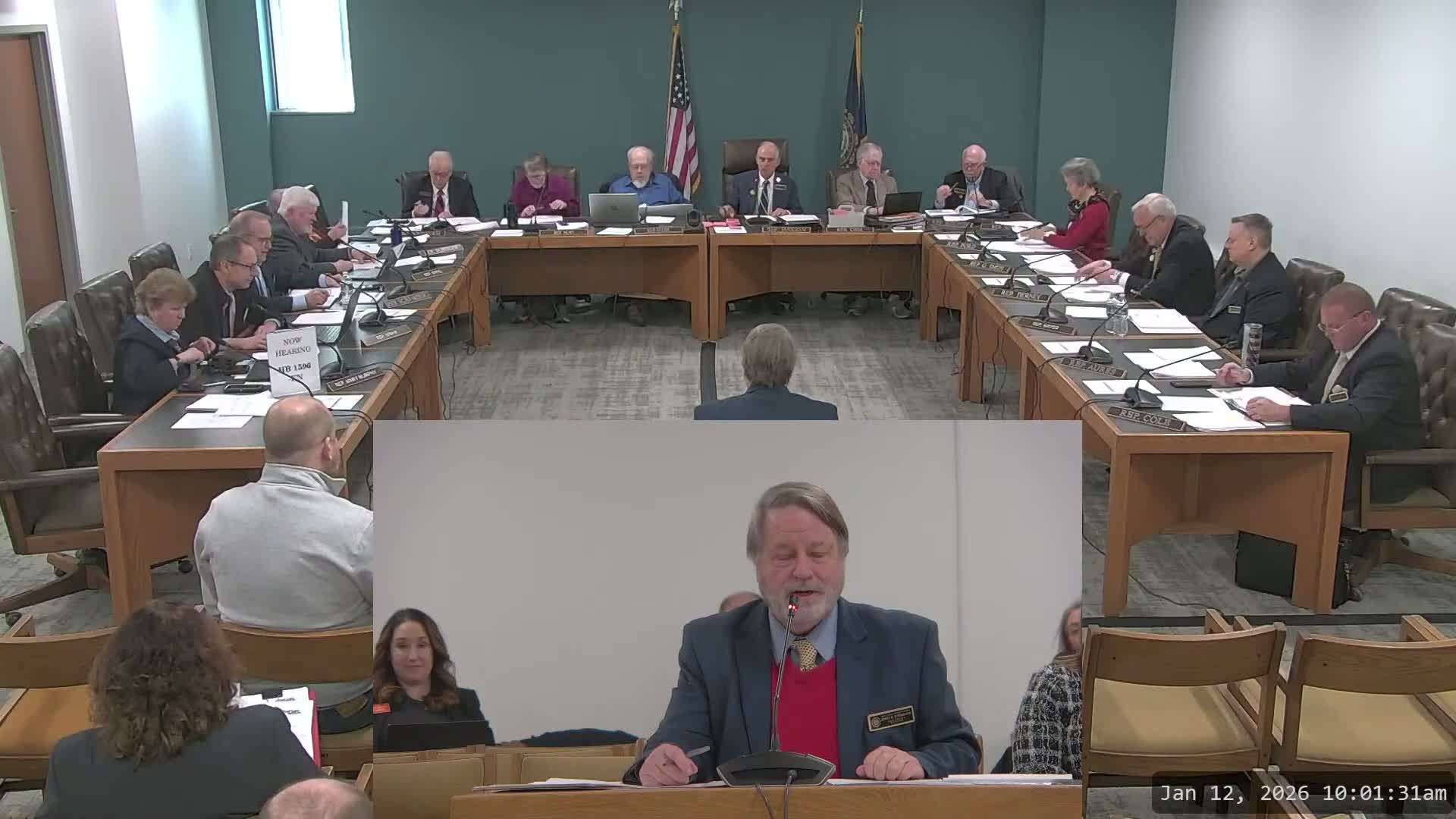
Summary
Representative Jerry Stringham introduced HB 1596 to raise New Hampshire's cigarette excise from $1.78 to $2.80 per pack, repeal an income‑based Medicaid premium, and restore prior cuts to the University System of New Hampshire; public‑health groups backed the excise increase while retailers warned of cross‑border sales and illicit trade.
CONCORD — Representative Jerry Stringham told the House Ways and Means Committee he brought forward a three‑part revenue bill, House Bill 15‑96, that pairs a cigarette excise increase with targeted policy changes to reduce harms from an income‑based Medicaid premium and to restore funding to the University System of New Hampshire.
"With that, spirit, I'm pleased to introduce House Bill 15 96," Stringham said. The bill would lift the state cigarette excise from $1.78 per pack — the rate set in 2008 — to $2.80, an increase Stringham described as a cost‑of‑living adjustment calculated using Bureau of Labor Statistics inflation data. He told the committee the package remains "net, net positive cash flow wise, to the state." (Representative Jerry Stringham)
Public‑health witnesses urged the committee to adopt a substantial excise increase. Michael Rollo, director of government relations for the American Cancer Society, said the society "is in full support of House Bill 15‑96, the tobacco tax portions" and cited state health‑cost estimates tied to smoking. "Smoking is estimated to cost the state of New Hampshire $847,000,000 in direct health care costs annually," Rollo said, and recommended a portion of any new revenue be dedicated to tobacco‑control and cessation programs.
Nancy Vaughn of the American Heart Association said a $1 per‑pack increase is the minimum she would recommend for meaningful public‑health impact and urged restoration of funding for the state's cessation services; she asked lawmakers to reserve a share of revenues to restore the tobacco‑control program.
Retailers and category managers said a large increase will shift customer behavior. Anna Bettencourt, director of category management at YATCO Energy, said New Hampshire benefits from a tax advantage and that increasing the excise "is an unfair increase to a certain group of people." She warned that large excise hikes can fuel illicit trade and that manufacturers frequently pass through price increases to consumers.
Other witnesses raised competing fiscal projections. Drew Klein of the Josiah Bartlett Center and retail operators pointed to research showing cross‑border effects and said a 57% excise increase would likely reduce in‑state sales and erode projected revenue. The Department of Revenue Administration warned that implementation requires changes to stamps and distribution systems and recommended a delayed effective date to allow the state to update printing and compliance systems.
Committee members pressed Stringham on the calculation that produced the $2.80 figure. Stringham said he used CPI inflation since the last full adjustment and that he expected public‑health groups such as the American Heart Association and American Cancer Society to support the chosen level.
The chair closed the public hearing after testimony and moved the committee to the next bill. No vote was taken at the hearing; the measure was left for future committee action and possible work‑session drafting.