
Child-support overhaul debated: sponsors push formulaic parenting-time factor, advocates urge caution
Get AI-powered insights, summaries, and transcripts
Subscribe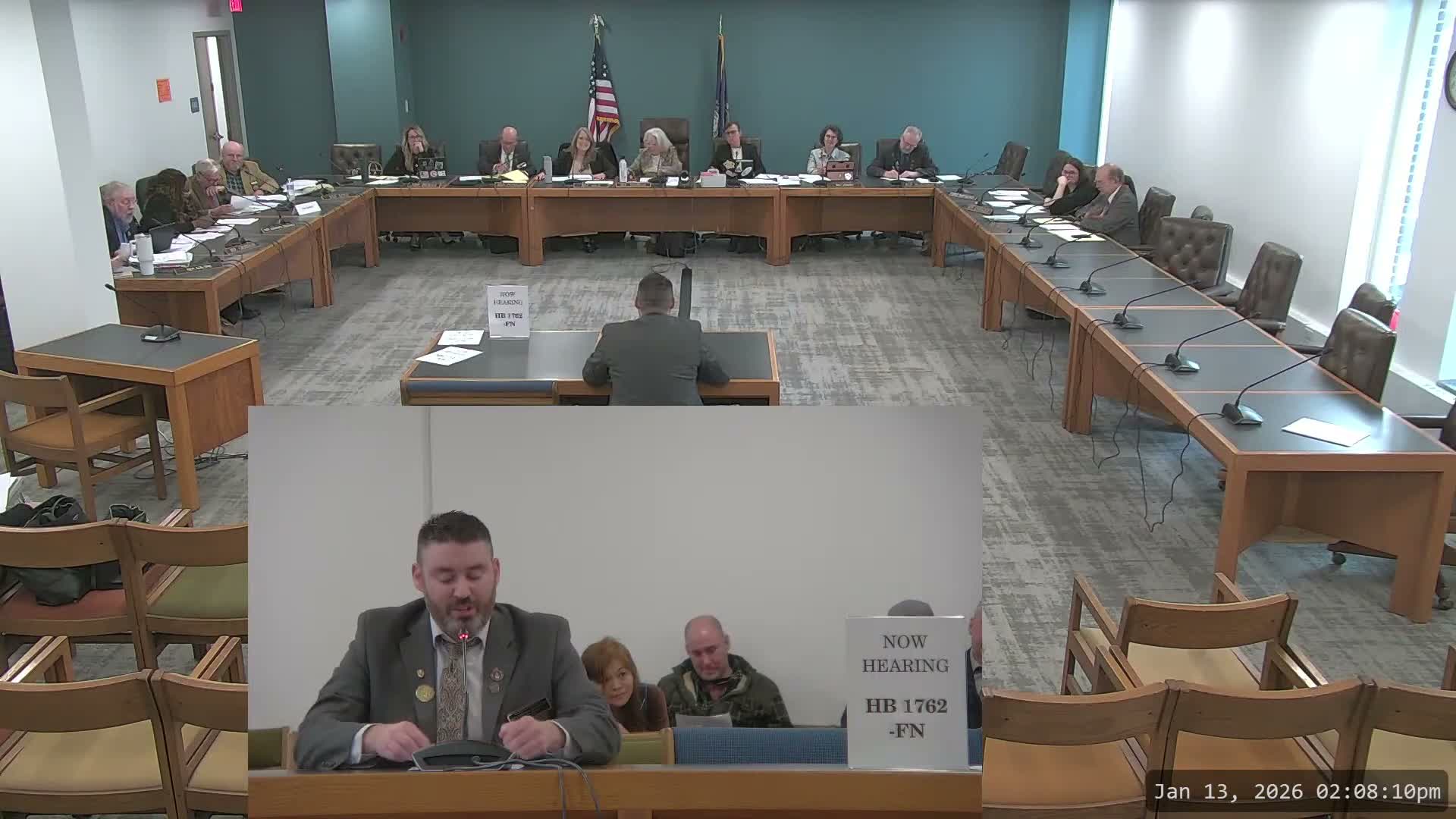
Summary
Representative Sabourin Deshauney reintroduced HB 17-62 to add a parenting-time factor to child-support calculations. The Bureau of Child Support Services said a vendor review is underway; legal-aid advocates and other witnesses urged reliance on the 2024 'special circumstances' change instead of embedding parenting time directly into the formula.
Representative Sabourin Deshauney opened HB 17-62 by noting New Hampshire is among a small number of states without a formulaic parenting-time adjustment and said a statutory change would bring greater clarity to support calculations.
Matthew Hayes, staff attorney and legislative liaison for the Bureau of Child Support Services, told the committee the bureau is neutral on the bill, reminded members that a quadrennial child-support review was completed in 2022 and that a new vendor-driven review is underway with results expected later in 2026. Hayes said the proposed bill would have operational implications for calculators and worksheets and recommended the committee weigh retroactivity and caseload impacts.
Supporters urged reform. Some witnesses suggested tying child support to 'equal living situations' and to require consideration of assets and household realities. Robert Tanguay urged that statutes such as the Uniform Support Act and RSA provisions requiring consideration of assets be applied.
Opponents including Mary Krueger of New Hampshire Legal Assistance argued against inserting a parenting-time factor directly into the statutory formula. Krueger pointed to a 2024 statutory change (effective 01/01/2025) that added 'special circumstance' provisions allowing courts to account for shared or approximately equal parenting time without changing the base formula, and she urged the committee to let that recent reform take hold before making more sweeping changes.
Bureau testimony flagged implementation questions: recalculation workload, technology and fiscal costs, and whether modifications would flood the courts if orders were recalculated retroactively. Committee members asked about the self-support reserve, the interplay with last session’s HB 185 on shared parenting, and whether other states have adopted the exact approach proposed.
The hearing concluded with advisers urging the committee to consider the pending '4-year review' data later in 2026 and to clarify retroactivity, fiscal impacts and the self-support reserve calculation if it proceeds. No vote was taken on HB 17-62.