
House committee hears sharply divided testimony on HR 30 reiterating local zoning authority
Get AI-powered insights, summaries, and transcripts
Subscribe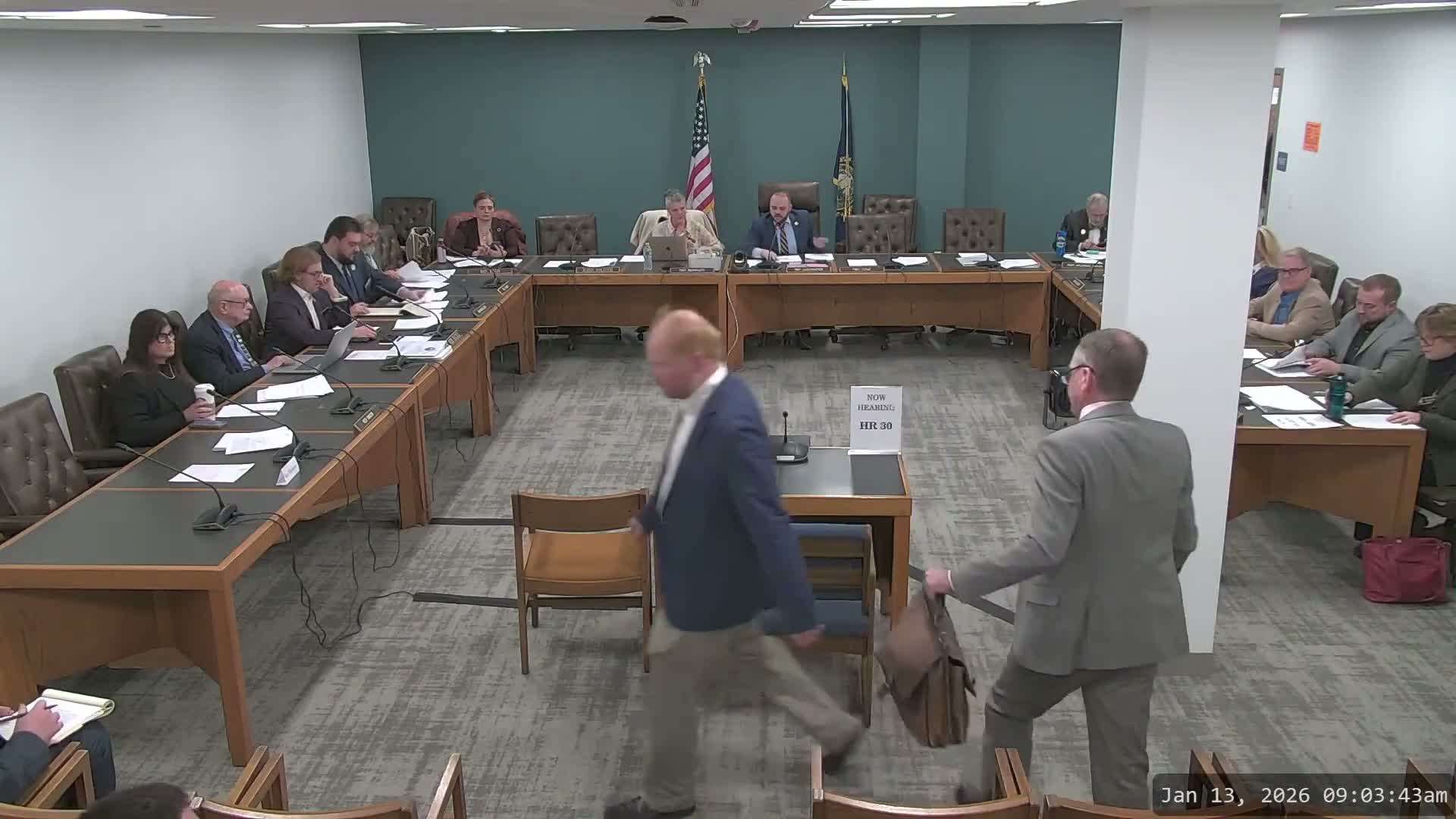
Summary
Lawmakers and stakeholders debated House Resolution 30, with the sponsor urging reaffirmation that planning and zoning belong to municipalities and others arguing statewide housing needs sometimes require higher‑level action. Testimony ranged from legal history to local fiscal impacts.
Representative Len Turcotte opened the public hearing on House Resolution 30 by reading the resolution into the record and urging the committee to reaffirm that planning, zoning and related regulations belong to municipal governments under "RSA 6 72 colon 1." He framed the resolution as a statement of principle favoring local decision‑making over state mandates.
Proponents of the resolution, including several local officials and speakers who emphasized the costs municipalities face when state actions override local rules, said towns are better positioned to judge their own infrastructure, character and public‑safety limits. Patricia Virgio, a selectboard chair, described litigation and expensive local repairs that she said followed state preemption, warning towns are being forced into costly legal defenses and infrastructure burdens.
Opponents and other witnesses urged caution with an absolutist local‑control posture. Planning professionals and housing advocates — including Ivy Vann, a certified planner — said some housing problems (lack of housing supply, statewide affordability) require coordinated, higher‑level approaches to avoid a patchwork of exclusionary rules. Nick Taylor of Housing Action New Hampshire cited polling and affordability metrics to argue that New Hampshire voters support stronger state tools to encourage housing options.
Committee members questioned how far local control should extend and whether the state could properly identify the line between health, safety and welfare and broader community preferences. The hearing closed after extended testimony and the committee later recorded an ITL motion on HR 30 (see Votes at a glance).
The committee will continue to consider whether HR 30 is purely declaratory or whether its language could affect pending or future state housing policy debates.