
House subcommittee presses for federal framework as members debate Self Drive Act
Get AI-powered insights, summaries, and transcripts
Subscribe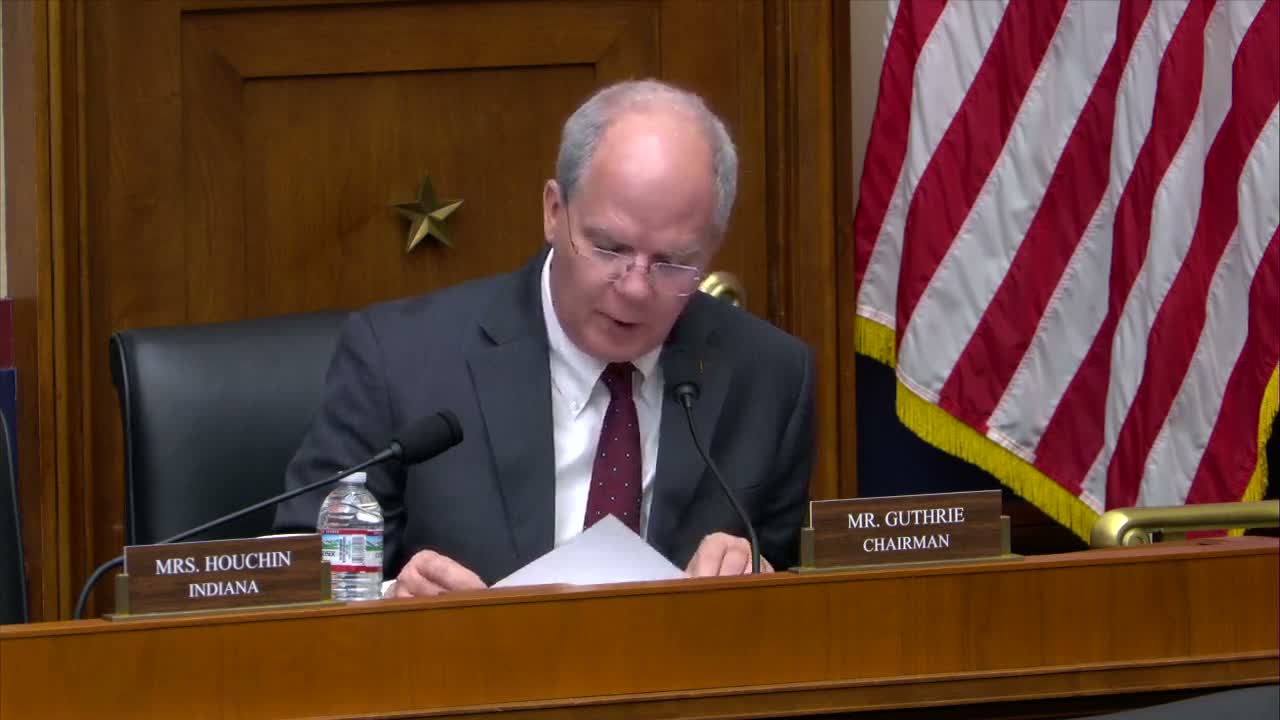
Summary
A House Energy and Commerce subcommittee hearing examined the Self Drive Act discussion draft and related AV bills, with witnesses and lawmakers debating safety cases, transparency, NHTSA authority and data reporting requirements for autonomous vehicles.
A House Energy and Commerce subcommittee hearing on Jan. 14 examined competing proposals to create a federal framework for autonomous vehicles, with lawmakers and witnesses debating how to balance safety oversight, transparency and industry innovation.
Finch Fulton, a former DOT policy official now advising on transportation policy, told the panel that “safety cases are structured arguments supported by evidence that help prove vehicle safety before public road operations.” Fulton urged routine engagement between regulators and manufacturers and recommended that safety cases be submitted to NHTSA before vehicles enter commerce.
Consumer and safety witnesses pushed for stronger reporting and public oversight. Michael Brooks, executive director of the Center for Auto Safety, said parts of the current Self Drive Act draft are “a little problematic for us, mainly because they trigger the preemptive effect of the act” and because, as he put it, safety cases risk becoming “manufacturer homework in secret” absent routine submissions and oversight.
Members pressed competing priorities. Chairman Guthrie argued for a national standard to avoid a patchwork of state rules and to preserve U.S. competitiveness, while Representative Trahan and others raised concerns about the need for federal access to safety data and protections for first responders when AVs experience unplanned stoppages.
Several members supported data‑reporting proposals to create denominators for safety analysis. Representative Mullen highlighted his AV Safety Data Act, which would require vehicle‑miles‑traveled reporting and capture unplanned stoppages; Brooks and others said standardized data collection is essential to assess AV safety per mile.
Witnesses and lawmakers agreed on some fundamentals — that safety must be paramount — but they diverged on implementation: industry and some advisors favor a framework built around safety cases and targeted preemption, while safety advocates want more routine oversight, public reporting and preserved state remedies.
The subcommittee closed with members submitting written questions for the record and staff collecting supplemental documents; no legislative votes were taken at the hearing.