
Dearborn council holds first reading of shopping-cart ordinance that would shorten impound period
Get AI-powered insights, summaries, and transcripts
Subscribe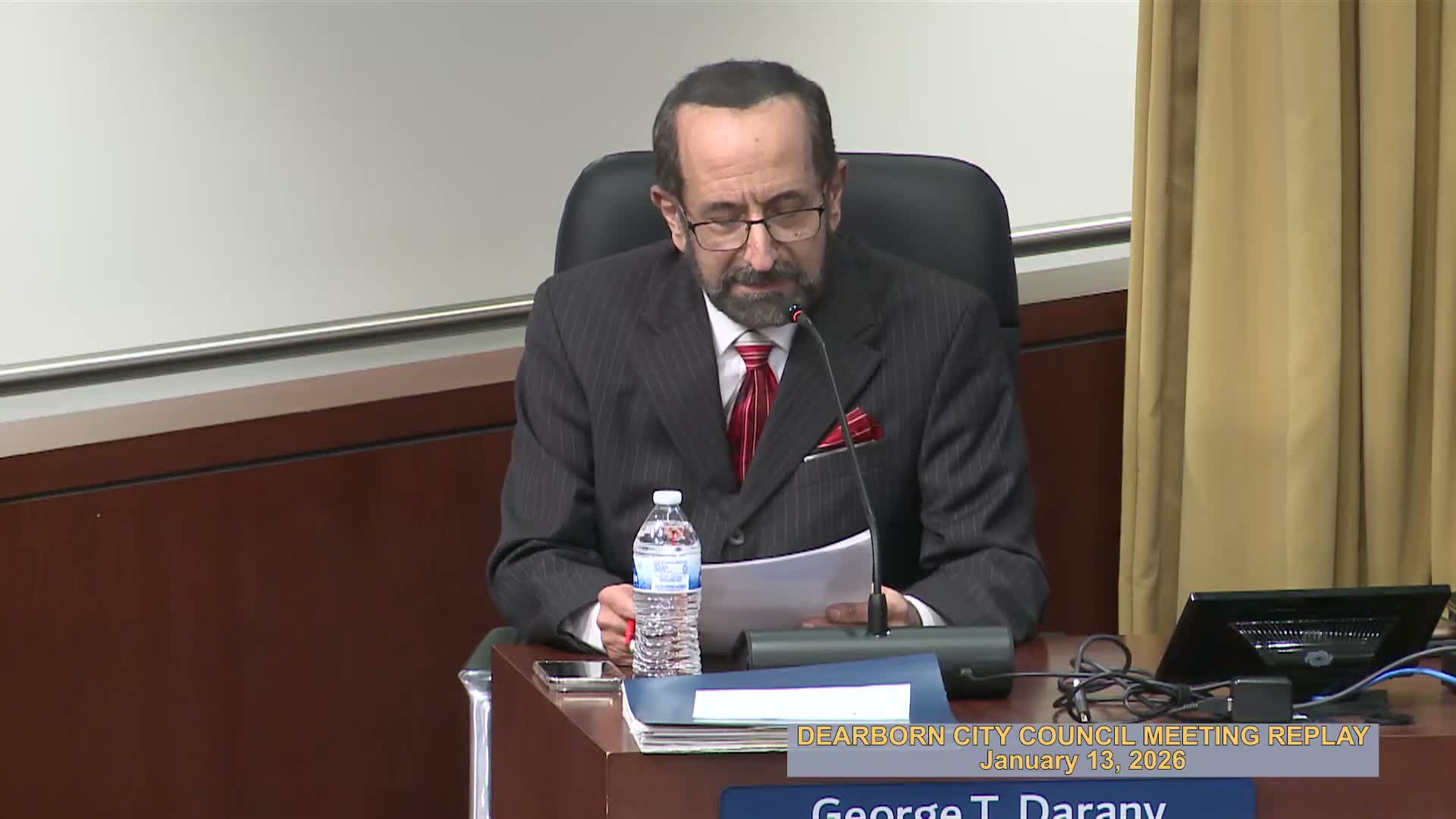
Summary
Council held a first reading of an ordinance to amend Sec. 13‑14 (shopping carts), shortening impoundment from 21 to 3 days, adding a $100 return fee and $25/day storage fee, and prioritizing return to owners; mayor recommended an amendment to return carts immediately when collected. (First of two readings.)
Dearborn’s City Council on Jan. 13 held the first reading of an ordinance to change how the city handles recovered retail shopping carts, proposing to prioritize returning carts to businesses over storing them and to reduce the impoundment period from 21 days to three days.
Council President introduced the measure, which would also impose a $100 per‑cart return fee and a $25 per‑day impoundment charge and remove language that previously allowed uncapped recovery costs. The stated purpose is to reduce the number of abandoned carts in public easements and make businesses responsible for their equipment.
Mayor Hamoud recommended revising the ordinance at second reading so the city would, when possible, return carts immediately after collection rather than impounding them. "As soon as we pick it up…we just go and drop it off, take it to the appropriate business," he said, adding that a one‑day holdover could apply if the business is closed. The mayor and council members discussed avoiding criminalizing residents who move carts and instead holding businesses accountable and encouraging technological solutions such as wheel locks.
Councilman Pierce asked whether the city can discourage residents from removing carts from store property; the council discussed the difference between criminal theft and a "failure to return" under local standards and noted legal notice and warning requirements would factor into enforcement.
The item was presented as the first of two readings. Council instructed the city attorney to draft any changes so the modification — including the mayor’s suggested immediate return language — could be considered at second reading.
The council did not adopt the ordinance at this meeting; the ordinance remains at first reading pending legal review and a second reading.