Get Full Government Meeting Transcripts, Videos, & Alerts Forever!
Get email alerts on the Environmental Public Safety topic
No spam. Unsubscribe anytime.
Resident warns county about tankers dumping near Beulah waterworks; officials urge regulatory follow-up
Summary
A Beulah resident told the Lee County Commission she followed trucks labeled 'Senegro' and photographed dark sludge being hauled to land near a water‑treatment facility, raising health and road‑safety concerns. Commissioners directed her to city and state agencies and asked staff to investigate.
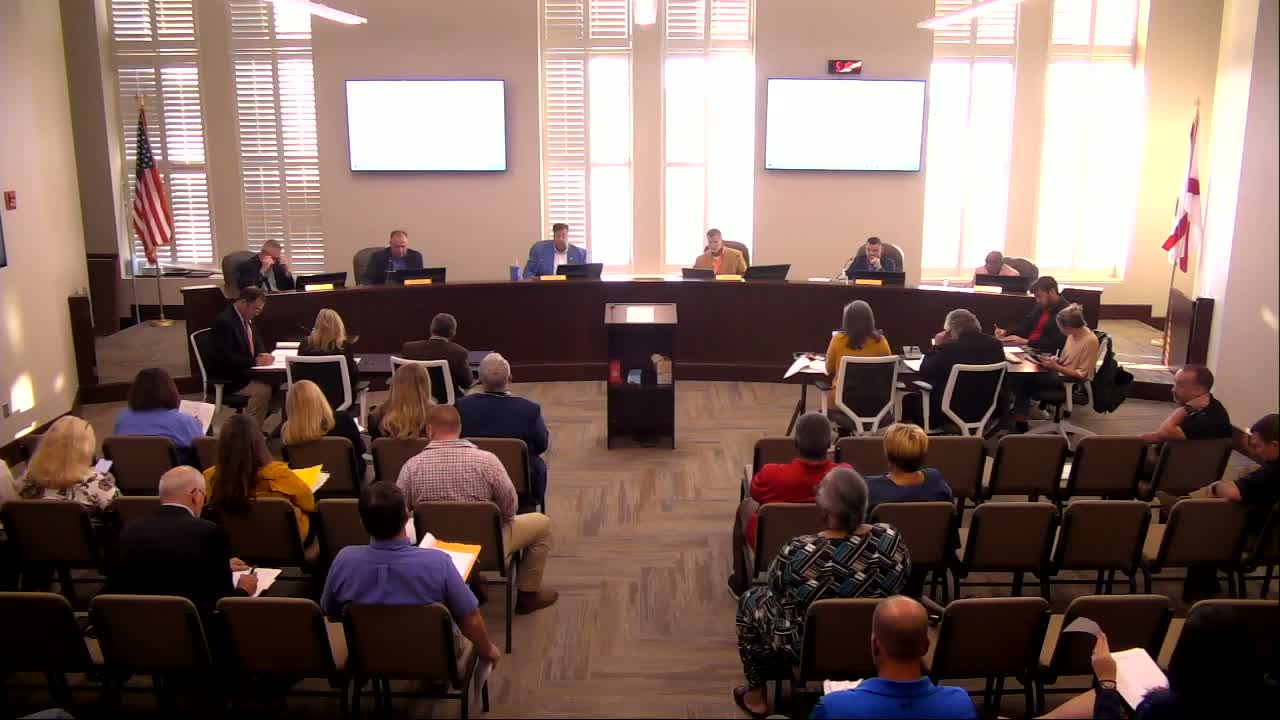
A resident, Kayla Mon Yielding of District 4, told the Lee County Commission she had followed tankers marked "Senegro" and photographed dark, "sludge‑like" material being unloaded near what she identified as a water‑treatment facility in the Beulah area. "They're hauling stuff…it's not pretty. I'd call it a sludge," Yielding said while showing photos and describing trucks traveling at high speed through quiet residential roads.
Yielding said she filed a report with the Alabama Department of Environmental Management and urged county departments to look into both the potential public‑health implications and road damage from heavy vehicles. She told commissioners: "These things concern me because I got grandchildren," and asked the county to "look into what they're moving in our communities." The speaker said she had also been directed to other county offices before coming to the commission meeting.
Commissioners and staff responded that the facility Yielding pictured appears to be operated by Opelika City Water and suggested she and staff coordinate with Opelika officials, the sheriff's office and state public‑health or environmental regulators. An unidentified commissioner noted, "You probably wanna check with both of those entities to see if everything's in order," pointing listeners to the Alabama Department of Public Health and other permitting authorities.
The commission did not take formal action at the meeting. County staff and commissioners advised Yielding to provide her photos and report to the sheriff and to Opelika City officials because, as discussed at the meeting, the waterworks property appears to be city‑owned rather than county‑operated. Yielding said she previously submitted materials online to state regulators and that she would continue to press for follow‑up.
The concern raised at the meeting centers on several distinct issues: the composition of the material being hauled and dumped, the proximity to a drinking‑water facility, apparent speeding and roadway wear from heavy trucks, and whether the activity is subject to city, county or state permitting. No new testing results or permits were presented at the meeting, and there was no formal determination or enforcement action recorded. The commission encouraged the resident to share her documentation with the sheriff, ADEM, and Opelika City Water so those agencies could investigate and, if necessary, take regulatory or enforcement steps.