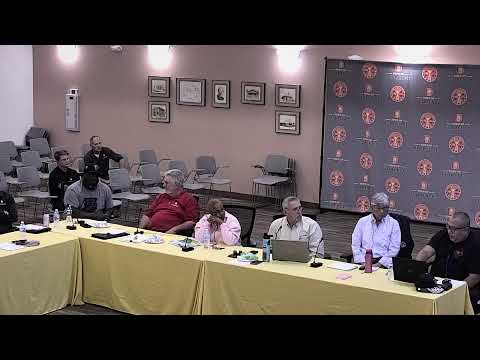
Florence reviews mid‑year finances as staff flags CIP timing and personnel costs
Loading...
Summary
Town staff presented a mid‑year fiscal review showing revenues tracking near budget, personnel costs as the largest expenditure, and several capital projects affected by timing; council asked for clearer variance explanations and noted receipt of some outside funds.
Town of Florence officials on Jan. 13 reviewed a mid‑year financial update that shows general‑fund revenues largely tracking to plan but several capital and special‑revenue accounts affected by project timing and accounting changes.
Carl, a finance staff member presenting the report, told the council the town’s seven largest general‑fund revenue sources account for roughly 83–85% of total receipts and that updated December allotments raised year‑to‑date collections to about 49.2% of budget. "If our state‑shared revenues hold based on our December allotment, we will hit our budget," Carl said, noting a tentative year‑over‑year increase of about 3.5% once updated receipts are posted.
The presentation highlighted that personnel remains the single largest cost in the general fund, at about 41% of the budget, and that one‑time accounting changes—most notably creating an internal fleet internal service fund—produce large year‑to‑date transfers that make some line‑item comparisons appear extreme. Carl told council the fleet accounting change explains a transfer increase shown in the packet.
Council members pressed for clearer variance reporting. Resident Les Buckner, speaking during the public‑comment period, asked that variance explanations be tabulated so readers can see “this is a variance because a, b, and c.” Buckner also asked whether projected revenues from Florence Copper were included in forecasts.
Staff described several special‑revenue and CIP effects. HEERF and TET receipts are later in the project cycle, the HEERF fund shows CIP‑heavy expenditures but revenues recently updated to roughly half of budget, and capital funds such as construction sales tax are stronger (around 60%) but lag project invoice timing. In the enterprise funds, water and wastewater user fees were reported near 48–50% of budget; Toomey, utilities director, told council some water projects were postponed (including a well project) which reduced near‑term financing needs.
Council members asked staff to provide a concise high‑level overview at the front of future budget packets and clearer drill‑down explanations for variances. Carl said final revenue figures had arrived only that morning and that staff would refine the midyear package for the next meeting. The council discussed turning the six‑month review into a recurring briefing to keep members informed of CIP timing and expenditure trends.
The next procedural step is for staff to circulate updated variance tables and for departments to return with any recommendations for budget adjustments or transfers as projects firm up.