
Gadsden County finance staff say expenditures exceed revenues by about $4.1 million; board orders deeper budget review
Summary
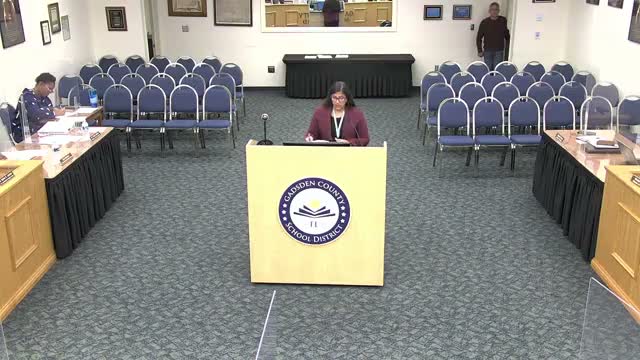
At a Dec. 16 financial workshop, Gadsden County School District finance staff submitted part of the Annual Financial Report and told the board revenues of $43,963,323.06 were outpaced by expenditures of $48,088,426.37, leaving the district with roughly a 3% reserve; board members requested a dedicated budget workshop and staffing and grant reallocation work.
At a Dec. 16 financial workshop, Gadsden County School District finance staff presented a portion of the district's Annual Financial Report (AFR) and said total revenues were $43,963,323.06 while total expenditures were $48,088,426.37, a gap staff described as reducing the district's reserve to about 3%.
"Our fund balance was right at 3%," finance staff told the board during the presentation. The AFR portion submitted to the state (ESE 348) was accepted with a few questions and no reported errors, staff said.
Why it matters: the gap between revenue and spending, combined with a thin reserve, leaves limited capacity to absorb unexpected maintenance or personnel costs. Board members repeatedly pressed staff for a clearer, line‑by‑line explanation of where overspending occurred and urged a longer budget workshop to establish concrete spending limits.
Finance staff attributed part of the shortfall to personnel benefit costs that had been underreported on grant allocations; when benefits exceed grant estimates, the excess must be covered by the general fund. Staff said they will reallocate personnel costs in the accounting system and recommend adjusted grant amounts for the next cycle so grant budgets better match actual employee costs.
The finance director walked the board through other causes staff are investigating, including maintenance and facilities expenditures, vendor and purchase‑order overruns and increased travel costs. A facilities example cited during the meeting: a school heating/AC unit that would cost "almost $100,000" to replace, an expense not easily absorbed when reserves are low.
Board members asked whether the roughly $4.1 million discrepancy was solely the result of the grant coding issue. Staff said the grant/benefits issue was one clear example but that a department‑by‑department review is needed to identify other overruns and vendor timing issues.
Enrollment decline was raised repeatedly as an underlying revenue pressure. "This is our top—this all our money come from students," a board member told colleagues, urging recruitment and retention as part of the fiscal strategy. Staff and board members discussed that state scholarship options and student movement have shifted dollars away from the district and that money follows students according to the state's timing rules.
What the district will do next: staff said they are updating Skyward and other internal reports so directors can monitor spending against line items and will work, department by department, to correct prior payroll allocations. Board members asked to schedule a longer, dedicated budget workshop; staff said they aim to provide a fuller picture by the January board meeting but cautioned that some reconciliations and system corrections will take additional time.
No formal motion or vote on the AFR was recorded during the workshop. The Auditor General's upcoming review may request presentation changes under GASB rules, but staff said those changes would be formatting clarifications and would not alter the AFR dollar totals.
The board ended the workshop by directing staff to prepare more detailed, department‑level budget reports and to arrange an extended budget workshop to set spending parameters and staffing allocations.

Create a free account
Unlock AI insights & topic search