Get Full Government Meeting Transcripts, Videos, & Alerts Forever!
Get email alerts on the Municipal Court Appointments topic
No spam. Unsubscribe anytime.
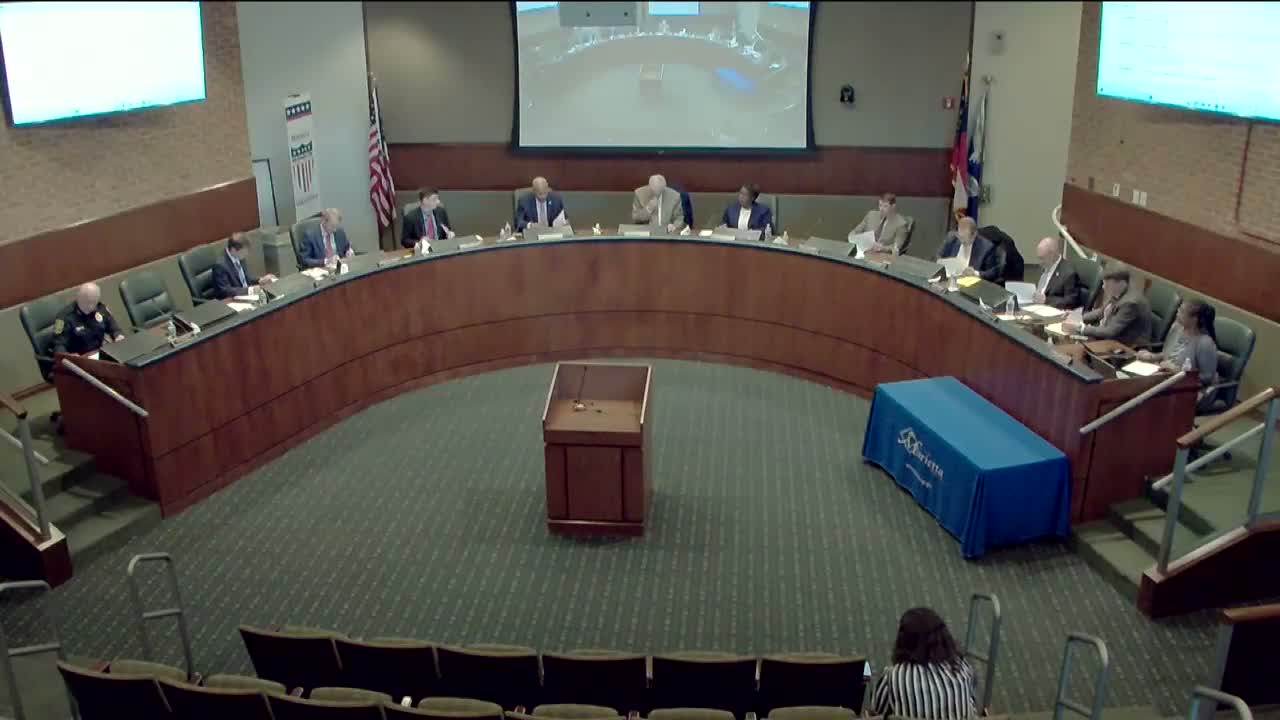
Marietta council confirms municipal appointments, defers lead prosecutor hire for interviews
Summary
Marietta City Council approved a slate of municipal appointments — city manager, city clerk, city attorney, chief and associate municipal judges — and a list of assistant prosecuting attorneys to secure court coverage, while referring the selection of the city’s prosecuting attorney to a work-session interview process.
Marietta City Council on Tuesday confirmed a series of organizational appointments and moved to delay naming a permanent prosecuting attorney until the council can interview three finalists.
The council approved the mayor’s committee and officer appointments, reappointed William F. Bridal Jr. as city manager, renewed Stephanie Guy as city clerk and Douglas R. Haney as city attorney. Council also confirmed Lawrence E. Burke as chief judge and named Joanne Bloom, Melinda Taylor and Donna Merrill as associate judges for the Marietta Municipal Court.
Those votes were routine, but debate focused on court staffing. Staff warned the current prosecuting attorney’s contract expires Jan. 10 and that assistant prosecutors’ terms could also lapse, which could leave the Jan. 14 court sessions without a prosecutor. To prevent a coverage gap, the council voted to approve a slate of assistant prosecuting attorneys to be available for court while the final prosecuting attorney selection is completed.
Council approved the following assistant prosecuting attorneys: Latonya/Latanya Hines/Hynes (name spelled inconsistently in the record), Robert Donovan, Robert Schottenheimer, Ronald Hood, Courtney Brubaker and Benjamin Smith. The council adopted a substitute motion to amend the initial proposed list and then passed the main motion as amended.
A separate motion to appoint Courtney Brubaker as the city’s prosecuting attorney prompted questions about process and timing. Several councilmembers and the city attorney’s office recommended interviewing three candidates — Benjamin Smith (the incumbent), Courtney Brubaker and Ronald Hood — and directed staff to include those interviews on the agenda work session. Legal counsel cited HB 577 (2017) and relevant charter language that permit appointments at the organizational meeting but allow flexibility to hold appointments until the first regular meeting.
Court clerk Kim Odom described the municipal court workload and scheduling pressure: “We are scheduling between a 100 and a 120 per session,” she said, noting the court typically is supposed to max out at 85 cases per session. Odom also outlined different calendars (plea and arraignment, nonjury trials, photo-enforced and code enforcement) and explained that assistant prosecutors are paid $315 per session and associate-judge training registration generally runs $350–$400 per year.
Councilmembers said the interim approach—appointing assistants now while finalizing interviews—ensures courts will not be left without coverage. The council carried the motion to refer the prosecuting attorney selection to the work session; the appointments and assistant-prosecutor slate were approved during the meeting.
The meeting record shows the council also appointed Kimberly Odom as court clerk/court administrator and thanked her for managing a heavy caseload. The council placed the item to adopt the city’s 2026 rules and procedures on the JL committee for review rather than taking final action during the organizational meeting.
The council’s next procedural step will be the agenda work session and the regular January meeting, where the council may finalize any outstanding appointments after the scheduled candidate interviews.