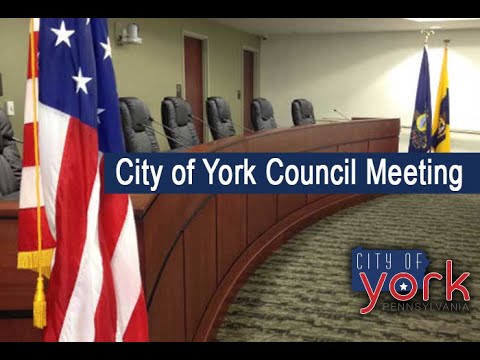
York City Council adopts Bill 34 to tighten single-family definition, require review for rooming-house conversions
Loading...
Summary
Council adopted Bill 34 after a public hearing. The ordinance clarifies the "single family" definition, creates a "single housekeeping unit" standard, and requires owners who convert single-family homes into licensed rooming houses to undergo planning and zoning review; the change applies prospectively.
The City of York Council adopted Bill No. 34 on final passage following a public hearing that drew residents, neighborhood association representatives and property managers to City Hall.
Introduced by Councilmember Elspeth (Elizabeth) Buff on Dec. 2, 2025, Bill 34 amends Article 13 of the city’s planning and zoning code to define “family,” establish a “single housekeeping unit” standard and regulate rooming houses as accessory uses to single-family dwellings. Council and administration described the changes as clarifying language to ensure conversions from single-family homes to formal rooming-house rental operations go through planning and zoning review.
During public testimony, Erica Towns, an attorney representing the Springdale Neighborhood Association, urged adoption to provide clarity and consistent enforcement in the RS-1 single-family district. Sarah Morgan, a Springdale resident, said the change mattered for homeowners investing in older single-family properties. Brandon Hershey of Budget Rentals Management asked for confirmation that currently licensed rooming houses and valid licenses would not be invalidated; the administration and the solicitor said the amendment is prospective and would not retroactively void existing approvals.
Solicitor Flowers explained enforcement: a zoning officer responds to complaints, inspects properties for indicators such as multiple kitchens or separate meters, and may issue a notice of violation with 30 days to comply or appeal to the zoning hearing board. Council members discussed removing a numeric occupant cap from the text and instead relying on spatial and unit-based criteria to distinguish family households from multiunit or rooming-house uses.
Council took multiple questions from residents about whether specific addresses (for example, 101 Springettsbury Avenue) would become nonconforming; the solicitor said outcomes could depend on pending legal challenges and whether prior approvals stand. After deliberation, council moved, seconded and adopted Bill 34 by roll-call vote.
What’s next: The ordinance clarifies definitions and enforcement approaches; any property owner seeking to convert a single-family dwelling into a rooming house with formal leases should expect to apply to planning and zoning and, if necessary, to the zoning hearing board.