
Residents urge county to pause proposed flyover aerial photography over privacy and data-use concerns
Get AI-powered insights, summaries, and transcripts
Subscribe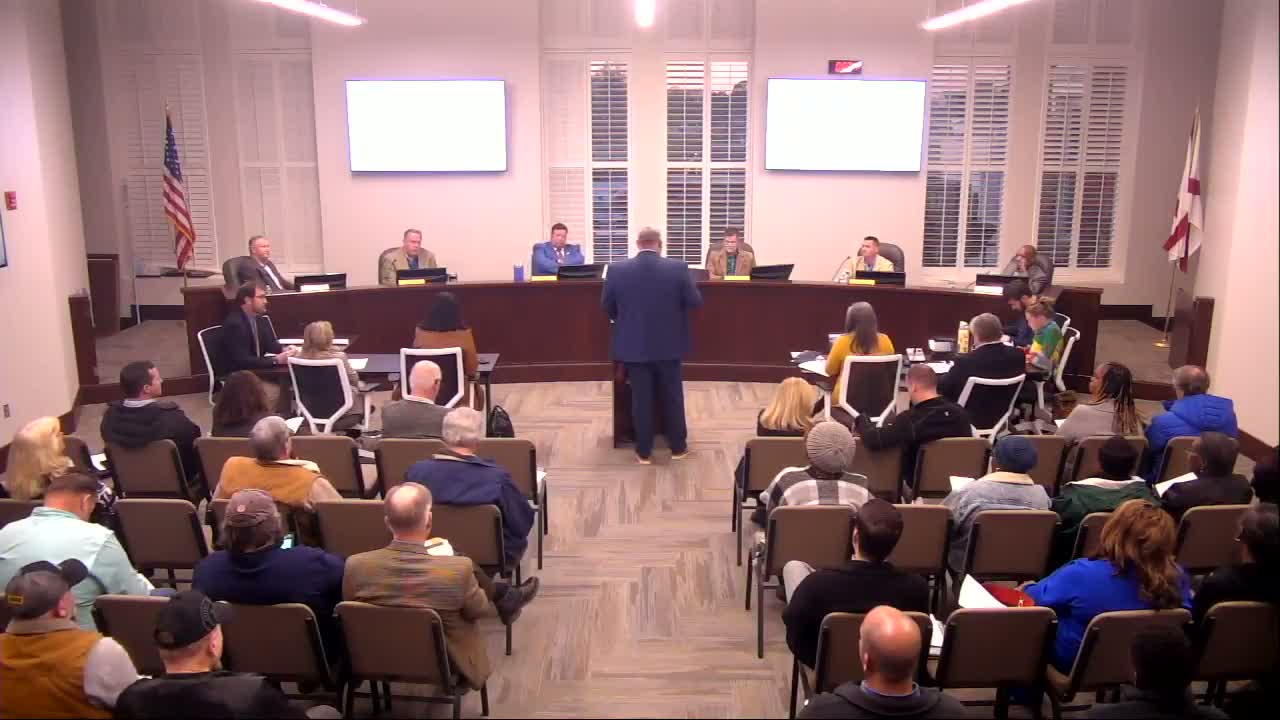
Summary
Multiple Lee County residents and community groups pressed commissioners to delay or further study a proposed aerial (flyover) photography contract, raising questions about data ownership, third-party access, privacy protections and whether imagery would be used for tax assessments.
Residents and local advocates urged the Lee County Commission to postpone or thoroughly revise a proposed aerial ("flyover") photography contract, saying the work could intrude on private-property rights and create new privacy and data-use risks.
At the public-comment portion of the meeting, Susan Boat said the contract (which she understood had been pulled from the agenda) would increase government intrusion and voiced alarm about multiple contract clauses that mention third-party access and "unlimited users." "Can you assure Lee County citizens that the information is safe?" she asked. "No. I don't believe you can," she said.
Robert Wilkins said he wants a one-year postponement so the county can answer outstanding questions, including why the vendor would need rights to ‘‘original orthogonal lidar’’ and planimetric datasets and what revenue or secondary uses the data might generate. "How much privacy will be lost by this contract?" he asked, urging the commission not to move forward without more information.
Other speakers framed the issue as both a privacy concern and a governance question. Keith Carroll described aerial mapping as "almost a form of trespassing" and asked that the county produce clear, written limits on how imagery would be used; Barbara Gilmore, a lifelong Lee County resident, said the contract would infringe on personal and property rights.
County staff did not present new technical safeguards in the public comment record; Lynn Bailey, who registered to speak about agenda item 8e under new business, specifically asked whether the county solicited bids by land mass or by value and where the request for bids was posted. Several speakers suggested forming a citizen advisory committee to recommend safeguards or compromises.
Why it matters: High-resolution orthophotos and lidar can reveal structures, pools, outbuildings and other property features; vendors sometimes retain rights to source datasets, and county policy or vendor contracts determine who may access processed data. Residents said the county should be transparent about retention policies, access controls, and permitted uses—particularly whether images could be used for assessment or shared with independent contractors.
What the commission said or did: On the dais, commissioners acknowledged the volume of citizen concern. Several commenters said the flyover item had been removed or tabled from the agenda; the public record shows speakers repeatedly asking for clarity and more time. No formal vote on an aerial photography contract is recorded in the public-comment exchange.
Next steps: Citizens asked the commission either to delay the contract or to convene a committee with citizen representation to develop usage guidelines and privacy protections before any procurement proceeds.