
House subcommittee hears competing views on bill to codify rigs-to-reefs conversions
Get AI-powered insights, summaries, and transcripts
Subscribe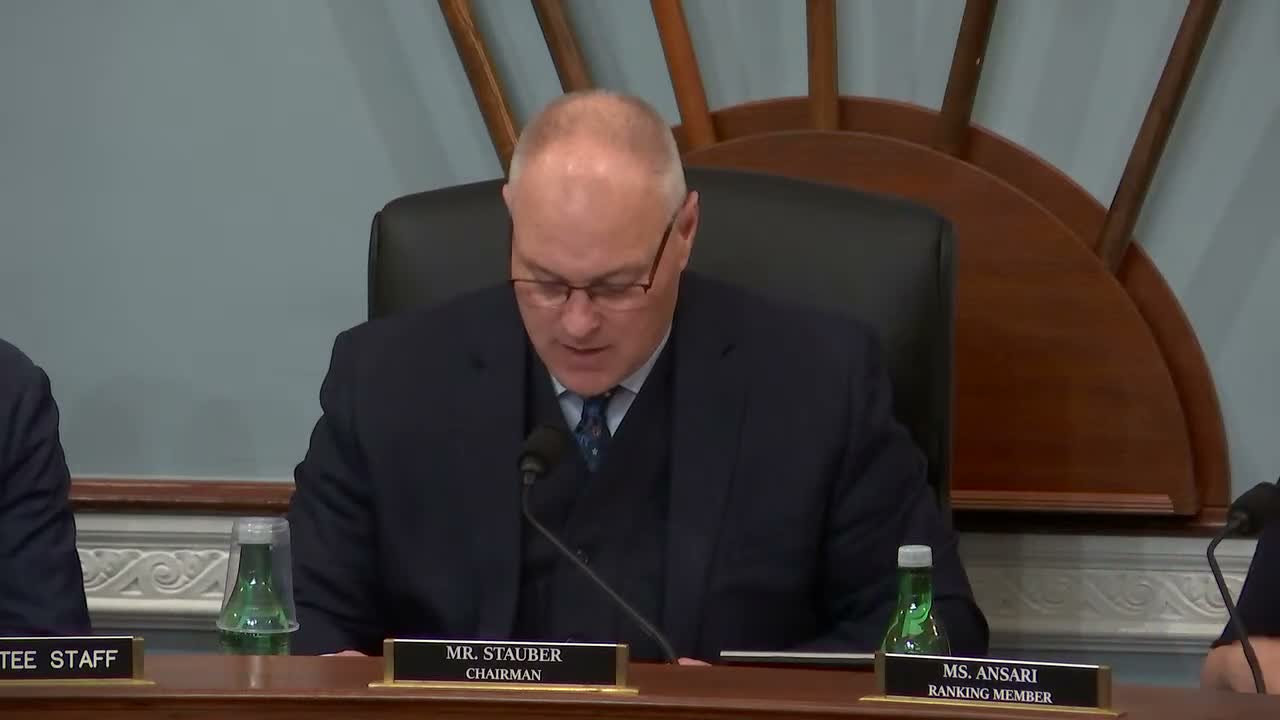
Summary
Lawmakers and witnesses debated H.R. 5745, the Marine Fisheries Habitat Protection Act, at a House Natural Resources subcommittee hearing. Proponents said codifying the rigs-to-reefs process protects marine habitat and coastal economies; opponents warned it could shift cleanup liabilities and impede coastal restoration.
The House Natural Resources Subcommittee on Energy and Mineral Resources heard testimony on H.R. 5745, the Marine Fisheries Habitat Protection Act, during a January hearing that drew sharply divergent views on converting decommissioned offshore oil and gas infrastructure into permanent artificial reefs.
Sponsor Representative Michael Ezell (R–MS) told the panel the bill “allows for their responsible conversion into artificial reefs, preserving habitat and strengthening coastal economies that rely on healthy fisheries.” Chair Stauber said the measure would codify and streamline existing state programs and make the Bureau of Safety and Environmental Enforcement (BSEE) the federal lead to reduce duplicative reviews. He said, “This bill will deliver a strong win for Gulf states and marine ecosystems.”
Supporters — including state officials and fishing-interest groups — argued artificial reefs provide hard substrate where natural bottom habitat is scarce, boost local fishing economies and can be implemented with engineering and environmental safeguards. Dr. Greg Stuntz, a marine biologist at Texas A&M, told the subcommittee that recent funded research shows artificial structures can both attract and increase fish biomass. Ryan Montague of the Louisiana Department of Wildlife and Fisheries described Louisiana’s long-running program and said reefing has funded inshore restoration and monitoring.
Opponents, led in floor remarks by the committee’s ranking members, warned the bill as drafted risks shifting long-term decommissioning liability and cleanup costs from operators to states and taxpayers. Representative Ansari told the panel the legislation “is absolutely ripe for corruption,” citing a Government Accountability Office finding that bonding held by Interior is small relative to estimated cleanup liabilities. Witness Megan Bivin said plugging a single offshore well can cost hundreds of thousands of dollars and removing large platforms can cost millions; she warned the bill could ‘‘decriminalize orphaning’’ of infrastructure.
Members pressed BSEE Gulf regional director Brian Domingue on how the current regulatory framework works. Domingue described a multiagency process that includes BSEE engineering/environmental reviews, U.S. Army Corps of Engineers permits, and U.S. Coast Guard navigation standards before a structure can be reefed. He said the program has bipartisan precedent but recommended working with sponsors on technical refinements and clarity around staffing and implementation.
Key factual claims and figures discussed at the hearing included industry and agency data on decommissioning backlogs and costs (witnesses cited, for example, GAO figures of thousands of overdue wells and hundreds of platforms in the Gulf and cited mileage of pipelines remaining on the seafloor), state program counts (Louisiana reported reefing roughly 478 structures), and specific unit costs (panel testimony gave sample costs for plugging wells, removing pipeline miles and decommissioning platforms).
Members representing coastal states raised procedural and policy questions about federal preemption and whether the bill would override stronger state rules such as California’s 2010 statute that limits reefing and retains liability with operators. Representative Joe Carbajal pressed Domingue about the Las Flores pipeline and agency oversight; Domingue said BSEE conducts preproduction inspections and engineering reviews but could not confirm specific permitting outcomes during the hearing.
The subcommittee took no vote. Members may submit written questions to witnesses by 5 p.m. Friday, Jan. 16; the hearing record will be held open for 10 business days. The chair dismissed the witnesses and adjourned the subcommittee.
Next steps: Sponsors and agency officials said they would continue negotiations on technical changes, and members signaled interest in additional cost, liability and ecological analyses before any markup.