
Judge declines to require language-line interpreter testimony in Ruiz DUI suppression hearing; court to issue order
Get AI-powered insights, summaries, and transcripts
Subscribe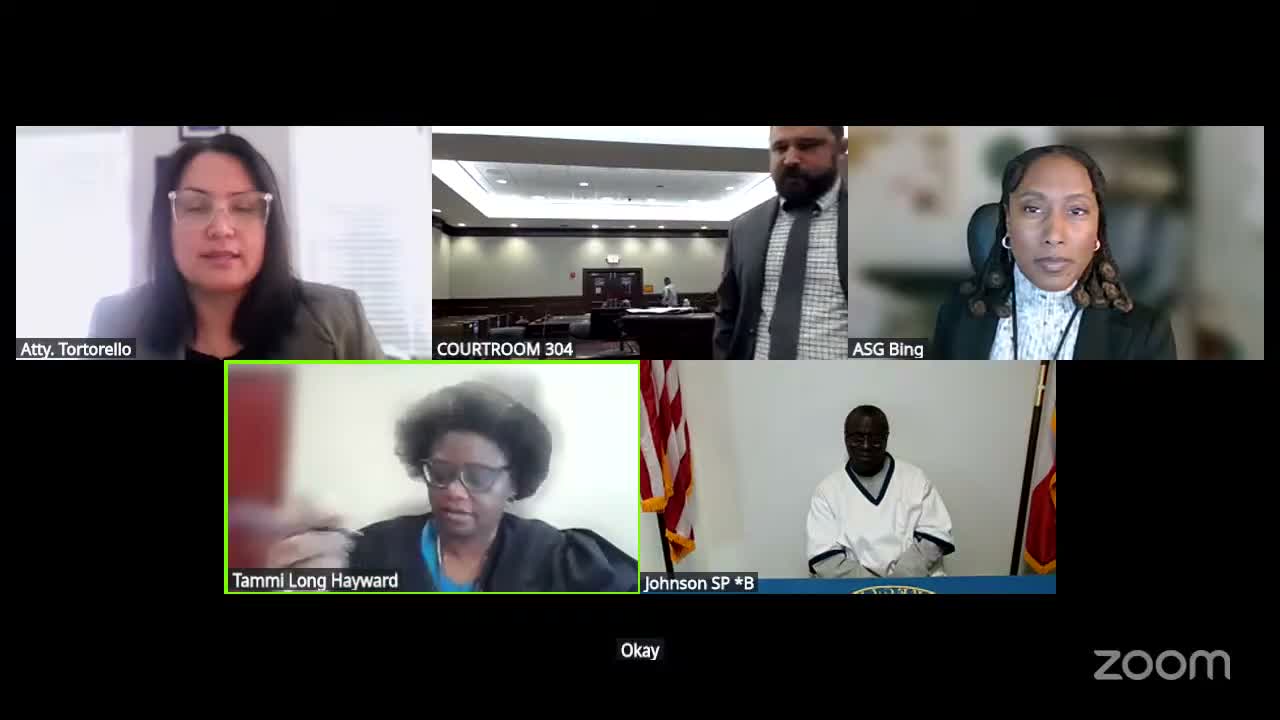
Summary
At a suppression hearing in State v. Ruiz (2023CR02799), defense sought to exclude statements taken through a contracted language-line interpreter and to suppress blood and field-test evidence. The judge signaled reluctance to suppress, citing county contract reliability and precedent; an order will follow.
A Clayton County State Court judge on the motions calendar heard competing arguments over whether statements obtained through a contracted language-line interpreter may be admitted at trial in State v. Ruiz (2023CR02799). Defense counsel moved to exclude statements and to suppress breath- and blood-test evidence on Confrontation Clause grounds, arguing the prosecution failed to identify or make the interpreter available for cross-examination.
"We are asking this honorable court to exclude admissions and statements allegedly made by Miss [Leibard] Reese under the Confrontation Clause," defense counsel told the court during opening argument, saying the state had not provided information about the interpreter or an opportunity to question her.
The state responded that officers used the county-contracted language line at the scene and that case law applying the so-called language‑conduit rule permits treating the interpreter’s words as the defendant’s own, absent a motive to mislead. Prosecutor ASG Bing cited Lopez v. State and Hernandez v. State, arguing the defense had not identified any specific indicia of unreliability.
Investigator Rudy Timmott, who responded to the crash, testified the county dispatch connected him to a third‑party language line while two Spanish‑speaking women were walking near a vehicle lodged in a ditch. He told the court he smelled alcohol, observed bloodshot, glassy eyes, conducted field sobriety tests and placed the defendant under arrest. On cross‑examination the investigator acknowledged his report did not contain identifying information for the language-line operator and that he had summarized, rather than transcribed, the defendant’s statements.
Defense seized on those gaps. Counsel argued the prosecution must provide assurances of reliability and let the defense question the translator, citing Crawford and subsequent state precedents about confrontation and translator competency.
The judge said she appreciated the defense’s concerns but noted the county’s regular use of a contracted language-line service and the practical burden of forcing an interpreter to testify in every case. "If we had to provide the interpreter’s testimony for every case in which a language line is used … the whole purpose of the contract would be undermined," the court said, and signaled it was unlikely to suppress statements based on the record presented. The judge also accepted the parties’ agreement to exclude the portable breath test result from trial evidence.
The court said it would issue a written order reflecting its reasoning and guidance to the parties. No final trial date disposition was announced in court; the motion remains subject to the forthcoming written order.