Chicago outlines 10‑year plan to retrofit most signalized intersections with accessible pedestrian signals
Loading...
Summary
CDOT presented the APS remedial plan finalized May 2025, with year‑1 targets to retrofit 70 intersections and phase‑1 goal of retrofitting 71% of the city's ~2,800 signalized intersections over 10 years; public requests are prioritized.
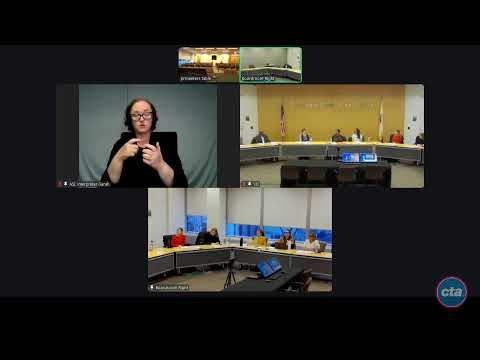
Dave Miller, chief highway engineer for the Chicago Department of Transportation, told the committee that the city is in year 1 of an APS (Accessible Pedestrian Signals) remedial plan finalized in May 2025 following litigation. Miller said the plan sets prioritization and delivery targets to bring nonvisual crossing cues—audible tones, speech messages and vibrotactile signals—to the city’s signalized intersections.
Miller said CDOT estimates roughly 2,800 signalized intersections in Chicago and that phase‑1 of the remedial plan would retrofit 71% of those locations over 10 years. "In year 1, we will be retrofitting a total of 70 intersections with APS," he said. The program prioritizes public requests first, followed by technical criteria such as exclusive pedestrian phases, mid‑block crossings near transit stations, leading pedestrian intervals, protected‑turn phases and proximity to hospitals and other public facilities.
The remedial plan includes independent oversight and community involvement: CDOT has a certified orientation and mobility specialist advising APS design and an independent monitor to oversee compliance with the court‑ordered remedial plan, Miller said. CDOT convened an APS community advisory committee and held an initial meeting in November; the department is building a public engagement campaign and posted program information at www.chicagoaps.org.
Committee members asked whether APS buttons will offer a long‑press function to announce cross streets or a spoken countdown. Miller said such features are optional and not part of the federal standard CDOT currently implements, but the department is evaluating feasibility and learning from other cities that deployed optional features. He also noted operational tradeoffs—many Chicago intersections are pre‑timed so pedestrians do not need to press a button to get a walk phase; in other jurisdictions, push buttons are required to call the walk phase. CDOT will accept maintenance reports and feature requests through the city’s 311/301 systems and is calibrating sound levels and messaging as the rollout proceeds.
Miller said the APS plan will focus retrofits near transit and high‑priority public facilities and that CDOT and CTA are coordinating to place APS at intersections that serve rail stations and bus transfer points. He invited committee members to provide feedback to the APS advisory committee and to use CDOT’s website and 311 channels to request or report APS locations and maintenance issues.
Next procedural steps include continued community outreach, technical prioritization of intersections and iterative deployments during the first year; CDOT staff said they will return with further updates as the program advances.