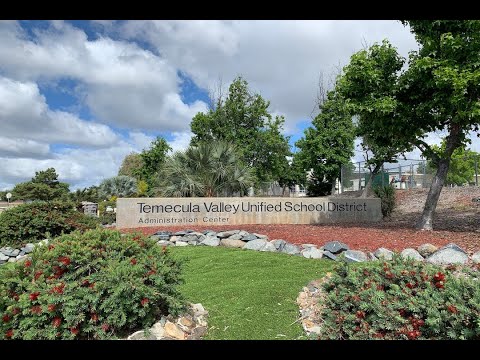
Temecula Valley board approves intent to form community facilities district and to incur debt for it
Loading...
Summary
The Temecula Valley Unified School District board voted 3–2 to adopt resolutions declaring its intent to establish a community facilities district (CFD) tied to a 188-home French Valley development and to incur bonded indebtedness against that district, prompting debate over developer fees, timing and homeowner impacts.
The Temecula Valley Unified School District Board of Education voted Jan. 13 to adopt two linked resolutions that set the district on a path to form Community Facilities District No. 2026/1 and issue bonds secured by that district.
The measures, approved by 3–2 roll calls, advance a financing mechanism that would convert developer fees tied to a planned French Valley subdivision of about 188 homes into a per-parcel special tax (often called a Mello-Roos/CFD approach) and sell bonds to get that revenue upfront. Nicole Lash, a district staffer explaining the proposal, said the CFD would assess “per parcel” charges to those homeowners rather than bake developer fees into purchase prices. She said the district would act as the administrative unit and collect an administrative fee, whereas the developer or another public agency might otherwise form the CFD.
Supporters said the CFD provides a revenue stream to fund school facilities and infrastructure without relying solely on general obligation bonds. Trustee Emil Barham said it is “an investment in our community” and “not new taxes,” arguing it would bring revenue that benefits students and facilities.
Opponents cautioned about homeowner impacts and urged more public engagement. Trustees recorded their votes in separate roll calls; the two resolutions (one stating intent to form the CFD and a related resolution stating intent to incur bonded indebtedness) each carried 3–2 after short debate.
What happens next: the resolutions state the board's intention and begin a formal process that includes additional public hearings, environmental and legal reviews and, if bonds are issued, eventual voter or property-owner notices depending on the mechanism. Staff said the advisory committee will discuss related general obligation bond questions in February and present further details on scope and timing.
Board comment and public reaction focused on clarifying differences between CFDs and general obligation bonds and on whether the district should be the administrative unit. "Sometimes people refer to these as Mello-Roos," Lash told the board, explaining the per-parcel tax structure and how it differs from a general obligation bond that would be voted on by all district homeowners. Trustee Barham and other proponents said the CFD avoids delays in funding by selling bonds to get money up front. Critics said the board should ensure transparency around costs homebuyers will face and the administrative fee the district would retain.
The board adopted the resolutions Jan. 13; staff said further outreach with the board advisory committee is planned ahead of subsequent steps.