
Early Childhood Collaborative briefs board on Early Start CT role and local needs assessment
Get AI-powered insights, summaries, and transcripts
Subscribe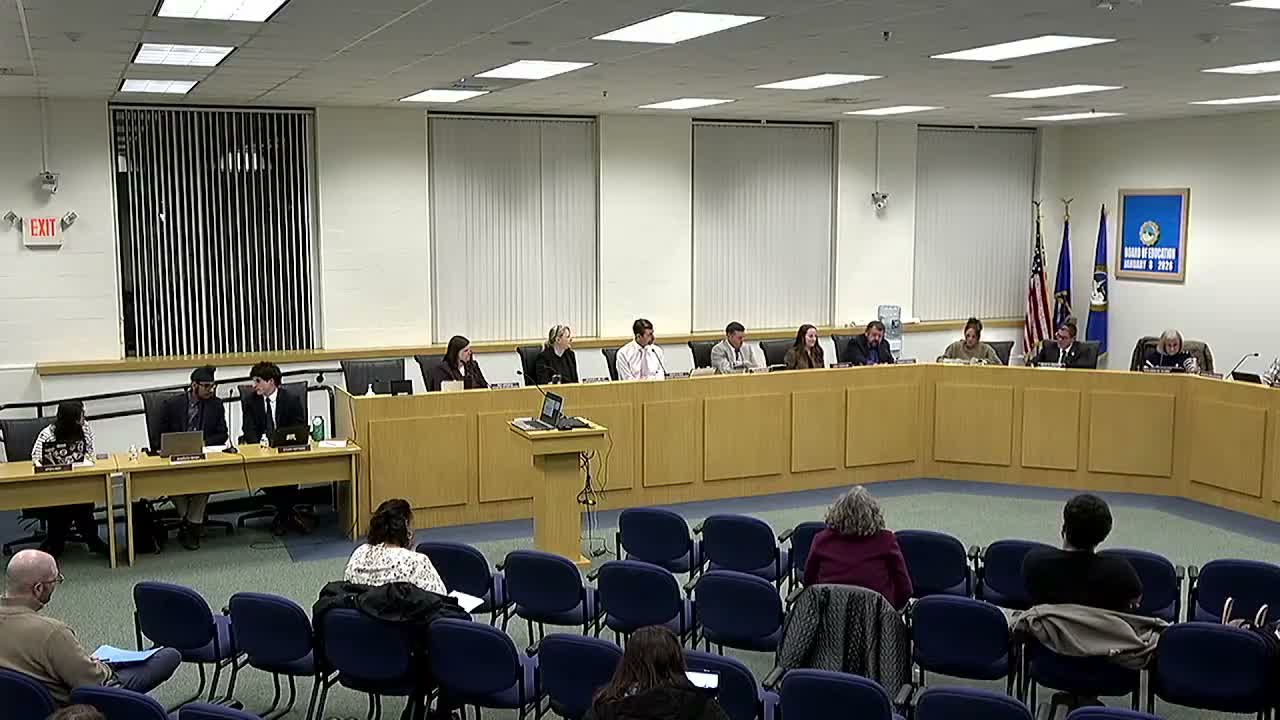
Summary
Joanne Kelleher told the board that the Early Childhood Collaborative of Southington is the town’s local governance partner for Early Start CT (contracted as of July 2025), that the town currently has 45 state-funded preschool slots and will need a community needs assessment to compete for more slots as the state expands funding.
Joanne Kelleher, director/presenter for the Early Childhood Collaborative of Southington, briefed the board on the state’s Early Start CT initiative and the collaborative’s new role as local governance partner under a contract with the state (held through the intermediary Shine Early Learning). She said the program’s intent is a mixed-delivery model of state-funded slots distributed across public schools, child-care centers and family providers and that local governance partners will help align services and communicate needs to the Office of Early Childhood.
Kelleher outlined the scale of local need: she said Southington currently has 45 state-funded slots at the Margaret Griffin Center while the community has roughly 450 births last year and about 2,500 children of pre‑kindergarten age overall — numbers she used to underscore that current state‑funded capacity is inadequate. She described a forthcoming parent portal the Office of Early Childhood will roll out to centralize registration and data collection and said the collaborative will conduct a local needs assessment and assemble a 'community table' of stakeholders to develop a community plan for early childhood services.
Kelleher said the state enacted an early care endowment and placed more than $300 million in that endowment; as the endowment grows, more state-funded slots are expected over time. She advised the board there will be a competitive RFP process in 2026 for state-funded Early Start CT slots and that many districts will not receive funding in the first round; the collaborative will return with more information as the application timeline and rubric are released.
The board asked about cost and reimbursement assumptions, outreach to underserved families, and what data will be required to demonstrate local need; Kelleher said the collaborative will work on outreach and the needs assessment and invited board members to support community engagement and attend upcoming community table meetings.
Next step: ECCS will conduct the local needs assessment, convene the community table and return to the board with recommended steps and opportunities to support applications for state-funded slots.