Get Full Government Meeting Transcripts, Videos, & Alerts Forever!
Get email alerts on the Pilot Policies topic
No spam. Unsubscribe anytime.
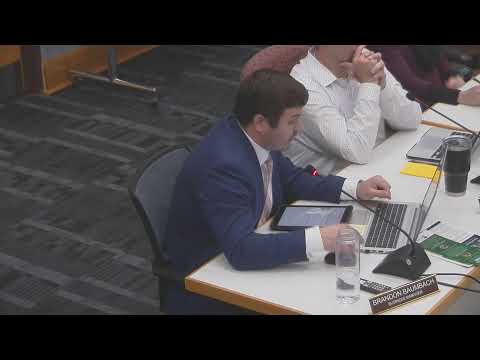
Grand Forks board debates PILOT process and seeks earlier, joint review with city and county
Summary
At its Jan. 5 meeting the Grand Forks Public Schools Board held an extended nonaction discussion of payments in lieu of taxes (PILOTs), focusing on earlier involvement with city and county officials, statutory 30‑day response rules in Century Code, and whether to adopt a rubric, policy or shared practice.
President Burger opened a nonaction discussion on payments in lieu of taxes on Jan. 5 as the board considered how the district should respond when developers seek tax abatements.
Doctor Brenner, an administrator, told the board the session was intended as a “nonactionable and philosophical discussion” to surface how PILOT requests affect students, enrollment and learning. He noted the district cannot change the legal process but can clarify how it will respond to future requests.
Board members repeatedly pressed for earlier, joint deliberations with the other two taxing entities. “Getting the 3 taxing entities together will be a great benefit,” said Mister Manley, adding that shared meetings would allow the three bodies to “hear the same data at the same time.” Several members said the current sequence often leaves the school board with a late request and insufficient time to negotiate.
Doctor Lund cited state code during the exchange, reading to the board that “once we get the letter, we have 30 days to respond. Now it can be yes, no, or we wanna negotiate, but it is in Century Code that we have [to] respond within 30 days. If we don't, that's taken as a yes, we accept it.” Members discussed whether that statutory window limits the board’s ability to negotiate and how subcommittee practice has differed from full-board expectations.
Some trustees favored a consistent rubric or practice for evaluating PILOTs; others warned a rigid policy could block exceptionally large economic development projects. Mister Larson suggested the board could set front‑end guidance such as minimum participation levels or maximum durations: “If we did have some guidance … we don't dip below 50% and we don't go beyond 10 years,” he said as an example of the kind of guardrails the board might consider.
Board members also raised process questions: whether the city’s subcommittee actually negotiates with the school board’s representatives, whether developers attend to answer questions, and what information the school district should require at the 30‑day mark to assess fiscal impact. Mister Palmasino said past practice had left the district unable to negotiate because only two members from other entities would advance the request without full board engagement.
No policy or motion was adopted. The board framed the conversation as preparatory work ahead of a Jan. 12 special meeting that will include fuller administrative recommendations on budget realignment and related district priorities. Several trustees asked administration to produce comparative materials and to make meeting materials publicly available before the Jan. 12 packet is released.