
Commissioners debate decommissioning Fisher County jail; motion introduced
Get AI-powered insights, summaries, and transcripts
Subscribe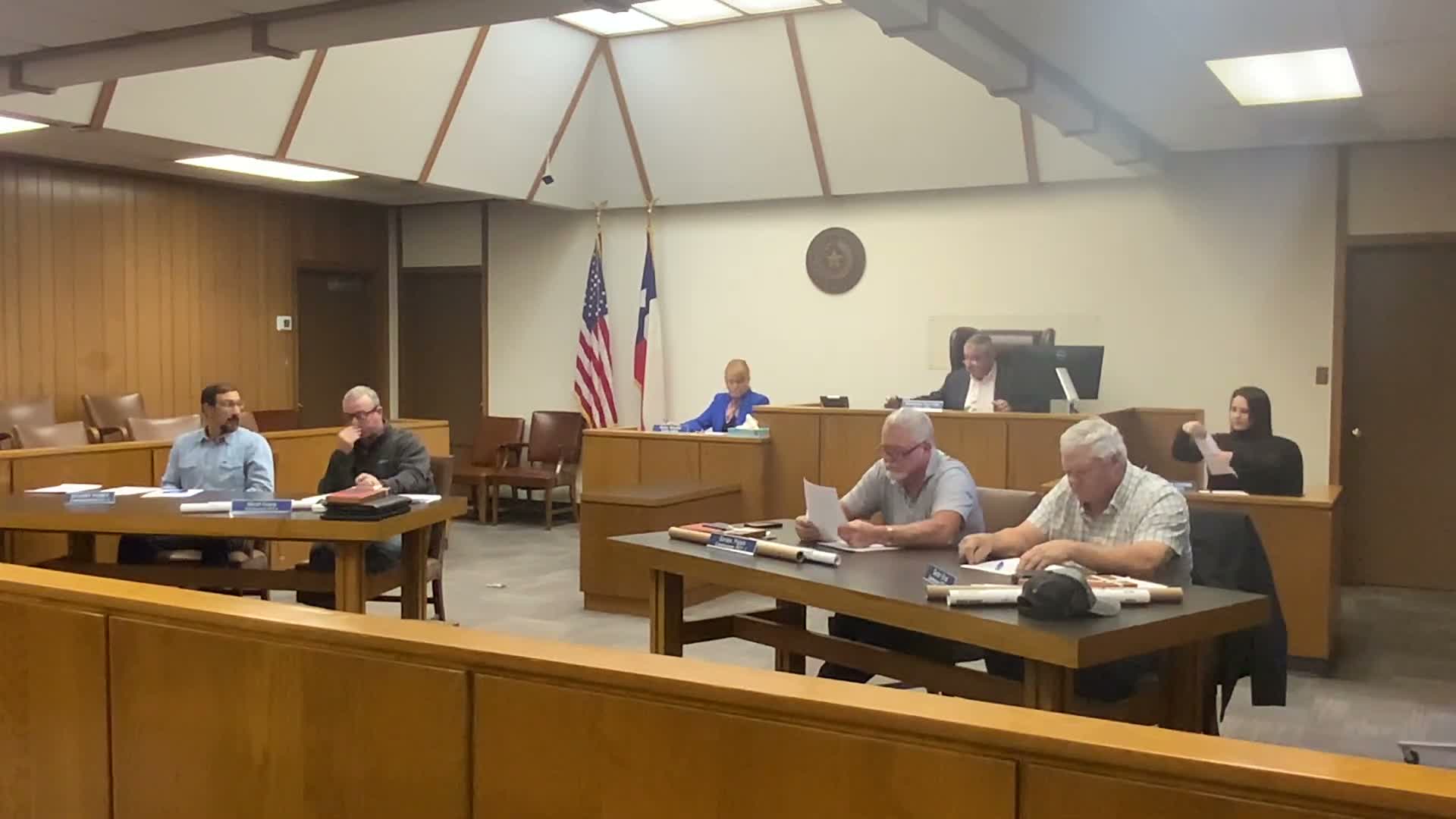
Summary
Commissioners discussed decommissioning the county jail versus keeping it depopulated, focusing on inspection costs, staffing requirements and reopening delays; Speaker 11 moved to decommission the facility, but the transcript contains no recorded vote.
A motion to decommission the Fisher County jail was introduced during the commissioners' meeting, following an extended discussion about costs, inspections and staffing.
Speaker 11 moved 'to decommission it,' calling the facility 'a money pit' and arguing the county should remove the jail from the Texas Jail Commission roll. Speaker 5 explained the difference between 'depopulated' and 'decommissioned' status: decommissioning removes the facility from the commission roster but would require treating any future reopening as new construction, with substantially higher reopening costs and delays.
Speakers described the inspections and work needed to reopen the facility if it remained on the rolls: health-inspector sign-off for the kitchen, fire-marshal inspection (including certification of the kitchen hood and filters), and maintenance of the fire panel(s). Speaker 5 cited an inspector's estimate that specialized hood certification could require a one-time service in the order of hundreds of dollars and recurring cleaning/maintenance costs; the transcript includes an estimate of roughly $745 for an initial certification and about $1,745 per year for recurring work for the hood system. The meeting also noted routine inspection fees for health and fire officials 'from $100 to $200' but that travel and other charges may make actual invoices larger.
The camera system to meet modern standards was discussed: Speaker 5 relayed an estimate attributed to Sam Goldsmith that upgrading the jail's camera system could approach $500,000; other participants questioned that figure and said alternative vendors might offer lower costs. Speaker 12 described relevant staffing rules, citing a jail-commission ratio of one jailer per 48 inmates and noting that dispatch and jail licensing requirements can be satisfied in part by dual-licensed personnel or temporary administrative licenses.
Debate centered on timing and planning. Speaker 6 pressed for a viable operational plan before decommissioning, noting reopening costs and the county's long-term inability to staff the facility reliably. Speaker 11 argued the facility had been a persistent financial drain and moved to decommission. Speaker 1 said the court would inform the state after the meeting and that the county office would send a letter to the state; the transcript does not record a second, a roll-call, or a vote on Speaker 11's motion.
What happens next: the transcript shows discussion of options and a motion being made, and staff were asked to provide clearer numbers and planning options. The meeting record provided here does not include a formal vote or the commission's final decision on the motion.