
Parents press DeSoto County board for policy after member’s endorsement of accused offender; attorney cites statutory limits
Get AI-powered insights, summaries, and transcripts
Sign Up Free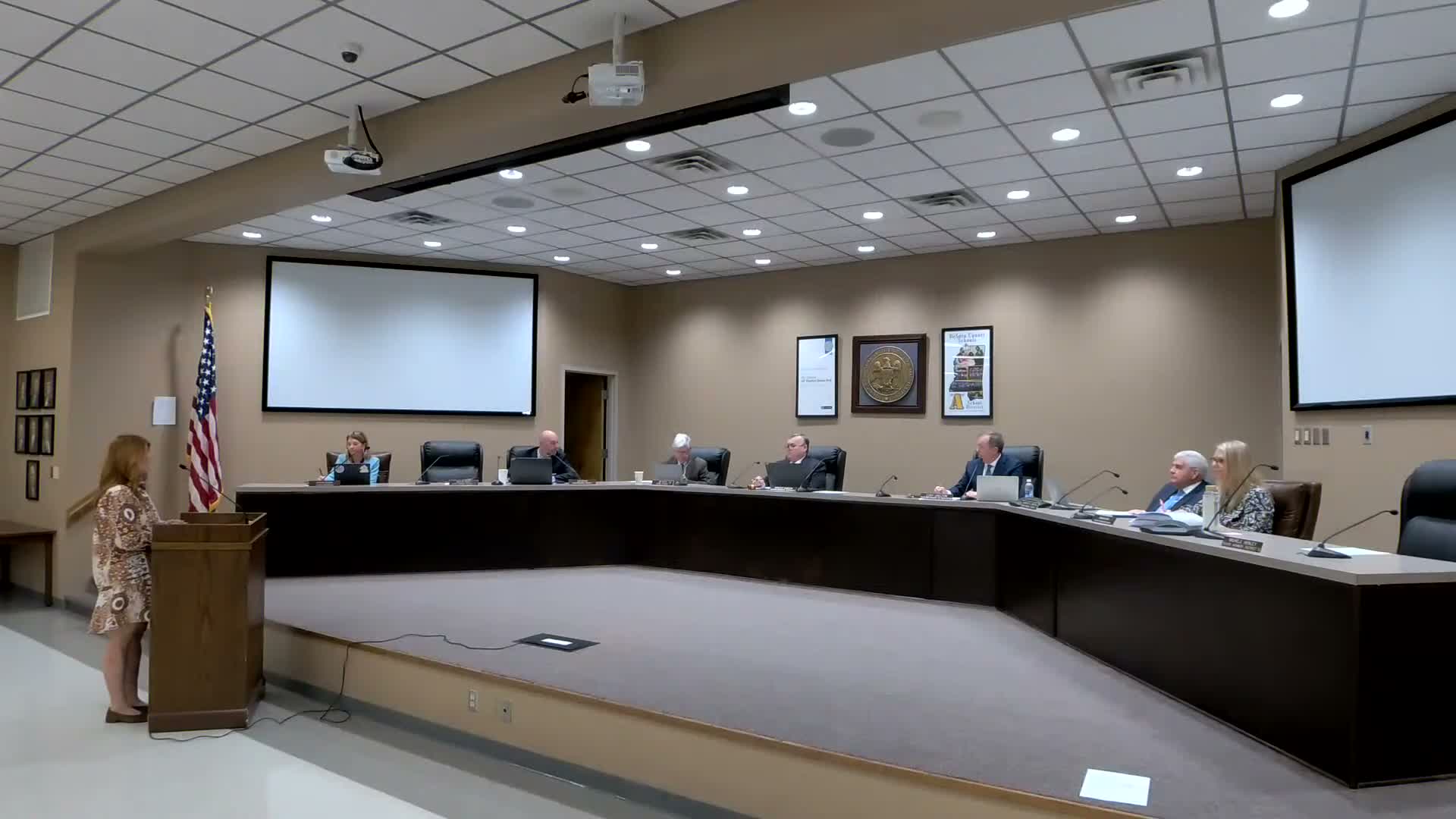
Summary
During public comment, speakers urged the board to adopt a policy barring board members and staff from supporting people charged with offenses against district children; a board legal responder said state law and a recent Supreme Court decision limit what rules can be imposed on elected officials.
Several speakers used the public-comment portion of the DeSoto County School District meeting to press trustees on accountability and conflict-of-interest policies when officials endorse or support people accused of harming students.
Megan Milljohn told the board that when "a school board member writes a character witness on behalf of an admitted offender, especially when the harm was done to a student within the very district that board oversees, it sends a message." She urged trustees to prioritize survivors, saying, "Choose the children." (Speaker identification and role are from the public comment record.)
Another commenter, Pam, thanked the board for a prior letter and asked whether the district could "initiate a process to put a policy in place so that board members, teachers, principals, assistant principals ... anyone associated with the school board or with any of the schools" would face a conflict-of-interest restriction if they "support someone who has been indicted as a ********* against a child in this district." Pam asked the board to identify next steps and suggested staff or legal counsel help draft a policy.
A person who responded during the meeting citing statutes and precedent said the district is "obligated to all of the statutes and the law of the state of Mississippi," and cautioned that when dealing with elected officials "the only thing that can be done to an elected official is spelled out in our statute." The speaker added that a recent Supreme Court case out of Texas had rejected efforts to place certain constraints on an elected board member, and said, "you can't put those on there." The responder also noted existing conflict-of-interest laws for employees and the State Board of Education's code of ethics, which apply to staff and can be embedded in employment contracts.
Board members did not take immediate formal action to create a new policy during the meeting; the board later moved to an executive session for student-discipline, residency appeals and an early-graduation request. The legal responder said the board "will do what is correct under the law" and offered to discuss other available options.
The meeting record shows public concern about perceived misplaced loyalty and calls from speakers for clearer written standards on whether district representatives should provide character-support statements for people accused of crimes against students.