Get Full Government Meeting Transcripts, Videos, & Alerts Forever!
Get email alerts on the Property Maintenance topic
No spam. Unsubscribe anytime.
Grand Island planning board urges clearer, quicker enforcement for property-maintenance law
Summary
Planning board members said the town’s new property-maintenance/local law lacks enforceable procedures and data; they urged a concise enforcement program (warnings, short cure periods, progressive fines) and asked the town board and attorney to return with a draft clarifying implementation by February.
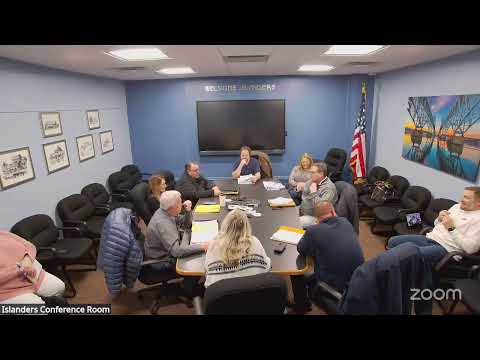
Speaker 1, a planning board member, opened a sustained discussion about the recently adopted property-maintenance/local law, saying the board has not received data or clear procedures from the town to make the statute workable.
"It was approved, but they haven't got to the point where they can implement it yet," Speaker 1 said, summarizing the group's frustration that the law is "on the books" but lacking an operational enforcement program. Multiple members argued the town’s building department has not been tracking complaints consistently, leaving the planning board without the data needed to shape targeted enforcement.
Board members described several practical problems with the current approach. Speaker 3 said enforcement tied to court timelines can take months, by which point a seasonal issue such as snow or an overgrown lawn is no longer actionable. Speaker 6 asked whether the town should rely on civil fines or place charges on property taxes; the group discussed progressive fines, brief cure periods and mechanisms to place unpaid fines on tax rolls or other municipal bills.
Several members pushed for a short, explicit enforcement program rather than a long, detailed local law. "Make a simple enforcement program: a notice on the door, seven days to cure, then progressive fines," Speaker 7 said, arguing an abbreviated procedure would produce faster compliance and avoid turning the municipality into a lawn- or snow-removal operator.
The planning board debated alternatives—city-contracted lawn or sidewalk service, administrative tickets, liening unpaid fines to taxes, or applying a charge on a utility bill—but repeatedly cautioned against making the town the direct service provider. Members noted the small number of formal actions in recent years (Speaker 1 reported about "8 lawns a year") and stressed proportionality in the remedy chosen.
The board agreed to resend their previously provided comments to the town board and to ask Bridal O'Toole (the town attorney) to compile a clearer, consolidated draft for the February meeting that includes explicit enforcement steps. Speaker 1 said they will request a status update and suggested the town board should explain how the building department will operationalize the law.
Next steps: the planning board will ask the town board for a written update on how the law will be implemented, request a consolidated draft from the town attorney for the February meeting, and recommended the town consider a concise enforcement flow (notice → short cure period → progressive fines → placement on taxes if unpaid).