Get Full Government Meeting Transcripts, Videos, & Alerts Forever!
Get email alerts on the Legislative Priorities topic
No spam. Unsubscribe anytime.
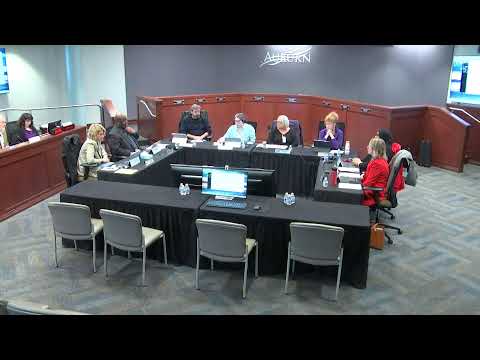
Auburn council adopts 2026 state legislative priorities after debate over PFML opt-out
Summary
The Auburn City Council on Jan. 12 adopted Resolution 5,886 setting the city's 2026 state legislative priorities. An amendment seeking to allow municipalities to opt out of Washington's Paid Family and Medical Leave program and to narrow eligibility failed after extended debate about staffing impacts and audit authority.
The Auburn City Council adopted Resolution 5,886 on Jan. 12, 2026, approving the city's 2026 state legislative priorities and authorizing staff to forward the document to AWC action days. The council voted to adopt the resolution after rejecting an amendment to strike two bullets related to Paid Family and Medical Leave (PFML).
Councilmember Baldwin moved to remove language that would allow municipal governments with equivalent or superior leave benefits to opt out of mandatory PFML participation and to narrow PFML eligibility; Councilmember Riggs seconded the amendment. Director Martinson described operational concerns and said some municipal practices can create overlapping payments — for example, an employee held on city salary while a workers'- compensation appeal proceeded and later receiving PFML benefits — and urged lawmakers to establish employer audit and verification authority to prevent duplicative payouts. "There are some operational impacts here," Martinson said, noting scenarios in which employers lack practical mechanisms to verify claims and manage staffing while employees exercise leave rights.
Baldwin said the proposed opt-out language was intended to avoid duplicative payroll taxes where municipalities already provide leave: "If municipal governments already offer equivalent or superior leave benefits, we should be able to opt out of mandatory PFML participation to avoid duplicate payroll taxes," she said. Several council members said they supported tightening audit and verification but not an opt-out. "I support the audit and verification," one council member said, "but I'm not comfortable allowing cities to opt out of a benefit our employees may need."
The council voted on the amendment by voice and hand; the amendment failed and the full resolution was then adopted. The mayor announced the adoption and said the priorities would be taken to the Association of Washington Cities action days next week.
What changed in the priorities: staff said the document was shortened for legibility to a 1½-page format and tightened language in several areas. Public-safety items retained support for reforms and added tightened requests for funding for officer wellness, recruitment and retention. Language about Flock (ALPR) camera usage was narrowed to ask legislators to "work to minimize changes" while providing protections for victim information and guidelines on disclosure. The transportation and infrastructure section was condensed to emphasize protecting state funds that support local projects. Affordable-housing language was tightened but maintained requests for preservation, land acquisition for permanent affordability and permanent supportive housing; some infrastructure items tied to housing were removed. The 1% property tax-cap proposal was removed from the top-priority list and is listed as an item to watch.
Next steps: By adopting Resolution 5,886, the council sent its revised priorities to the city's legislative contacts for AWC action days. Staff identified the new contact email for government affairs as Governmentaffairs@auburnwa.gov.