Lifetime Citizen Portal Access — AI Briefings, Alerts & Unlimited Follows
House Rules Committee approves structured rules to advance five Education and Workforce bills
Loading...
Summary
The House Rules Committee voted 8–3 to grant a structured rule that clears five Education and Workforce bills for floor consideration, rejecting two Democratic amendments that would have required further briefings and preserved ESG consideration for retirement plan fiduciaries.
The House Rules Committee on Thursday approved a structured rule that clears five bills from the Education and Workforce Committee for floor consideration after roughly two hours of debate and two failed Democratic amendments.
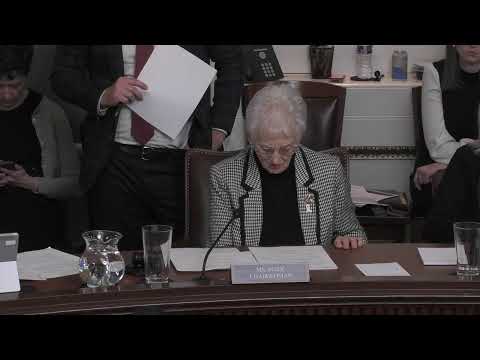
Chairwoman Fox opened the hearing and said the measures "allow for more agile, modern, and flexible workforce" policies. The package includes HR 2262 (Flexibility for Workers Education Act), HR 2270 (Empowering Employer Child and Elder Care Solutions Act), HR 2312 (Tipped Employee Protection Act), HR 2988 (Protecting Prudent Investment of Retirement Savings Act), and HR 4366 (Save Local Business Act). Representative Fishbach moved the rule; the motion was adopted on a roll call, 8 yeas to 3 nays.
Why it matters: Members debated how the bills would change overtime calculations, tipped-wage definitions and fiduciary duty rules for retirement-plan managers. Democrats argued the measures would cut workers' pay, weaken enforcement and bar consideration of climate and governance risks in retirement investing. Republicans framed the bills as restoring certainty for employers and prioritizing investment returns for retirees.
Opposition and key quotes: "These bills cut people's wages," Mr. McGovern, the committee's ranking member, said repeatedly in his opening remarks. He said the package "hand[s] out more loopholes so big corporations can squeeze workers even harder." Chairman Wahlberg, who had testified as a witness, described HR 2988 as a measure ensuring "retirement savings are used for retirement, not to fund woke agendas."
Substantive points debated: Democrats pressed whether HR 2270's exclusion of employer-provided child care from the overtime regular rate would, in practice, reduce overtime pay for employees who already receive such benefits. Representative Neguse asked whether the bill requires an employer's childcare contribution to reflect actual childcare costs; Chairman Wahlberg acknowledged there is no such requirement in the bill. Members also pressed on HR 2312's effect on the tipped wage credit and whether the bill would create new ways for employers to pay workers less.
Amendments and votes: Two Democratic amendments were offered and defeated. First, Mr. McGovern proposed adding a section directing a congressional briefing by the Republican Conference's tariff policy working group; that amendment failed on a roll call reported as 3 ayes and 7 nays. Mr. McGovern later offered an amendment to HR 2988 to allow fiduciaries to consider ESG factors so long as returns are not sacrificed; that amendment also failed on a roll call reported as 3 ayes and 7 nays. The committee then adopted the majority motion to report the rule by roll call, 8 yeas to 3 nays, and named Representative Fishbach manager for the majority and Representative Ledger Fernandez manager for the Democrats.
What happens next: With the Rules Committee's action, the five bills can be scheduled for floor consideration under the terms approved by the committee. The rule sets debate time limits, identifies which amendments (if any) may be offered, and provides a motion to recommit for each bill. The committee adjourned after reporting the rule.
Reporting note: Quotes and attributions are drawn from the committee transcript. The record includes extended exchanges on minimum-wage history, child-labor enforcement examples, and litigation referenced by members concerning major investment firms and ESG-related claims.