
House subcommittee hears debate over bill to codify rigs-to-reef program, splitting witnesses and lawmakers
Get AI-powered insights, summaries, and transcripts
Subscribe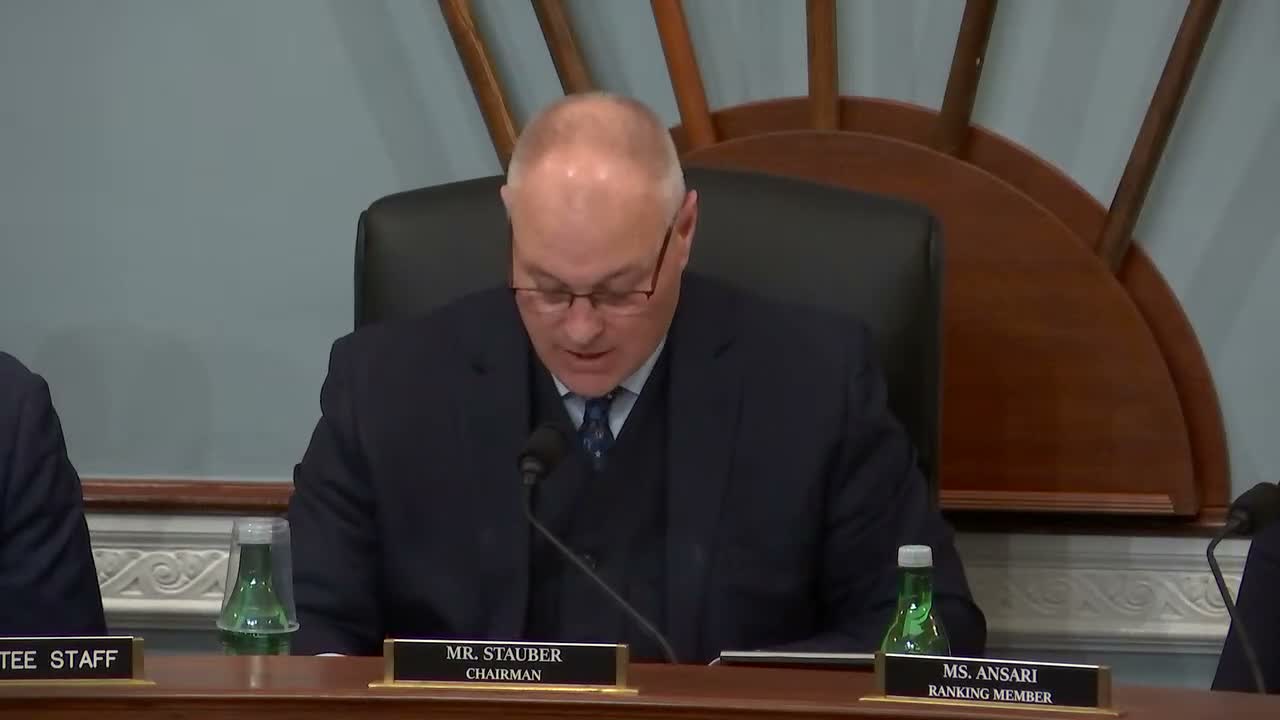
Summary
The House subcommittee considered H.R. 5745, the Marine Fisheries Habitat Protection Act, which would standardize a federal process to allow eligible offshore platforms and pipelines to be reefed in place. Witnesses split along regional and sector lines: fisheries and state reef-program officials backed the measure; coastal restoration and worker-advocacy witnesses warned it could shift decommissioning costs and hinder restoration.
WASHINGTON — The Subcommittee on Energy and Mineral Resources heard bipartisan testimony on H.R. 5745, the Marine Fisheries Habitat Protection Act, on Jan. 14, 2026, as lawmakers and witnesses debated whether codifying and expanding a federal rigs‑to‑reef program would protect marine habitat or shift cleanup burdens to states and taxpayers.
Chair Stauber opened the hearing saying the bill would "streamline and clarify" federal approvals and designate the Bureau of Safety and Environmental Enforcement (BSEE) as the lead federal agency to oversee reefing of eligible offshore structures. "This bill will deliver a strong win for Gulf States and marine ecosystems," the chair said during his opening remarks.
Supporters — including the bill sponsor, Rep. Ezell, scientists and state reef-program managers — said converting decommissioned platforms into permanent artificial reefs preserves habitat, supports fisheries and yields economic benefits for coastal communities. Dr. Greg Stuntz, a marine biologist at Texas A&M, testified that recent research shows artificial structures can both attract and increase fish biomass, and that rigs‑to‑reef programs can reduce fishing pressure on fragile natural reefs. "Our work will allow you to rest assured that science bolsters this legislation," Stuntz said.
Ryan Montague, assistant secretary for fisheries at the Louisiana Department of Wildlife and Fisheries, described Louisiana's experience with its reefing program, saying the state has reefed roughly 478 structures across 87 sites and that half the saving from reefing is contributed to state programs that fund inshore reefs and coastal resilience projects.
Opponents, including Ranking Member Ansari and witnesses such as Megan Bivin of True Transition, warned that the bill as drafted could leave states and taxpayers responsible for long-term liability and would reduce decommissioning work that creates jobs. "Already, instead of paying to clean up their mess, oil and gas companies have shifted billions in cleanup costs to the American taxpayer," Ranking Member Ansari said, citing Government Accountability Office estimates on bonding shortfalls. Bivin emphasized costs for removal and pipeline segments and said leaving pipelines in place can block access to sediment resources needed for coastal restoration in Louisiana.
Members pressed BSEE Gulf regional director Brian Domingue on how the bill would change current practice. Domingue told lawmakers that BSEE's existing standard is removal, but that states may take ownership and liability for reefed structures only after engineering and environmental standards are met and after necessary Army Corps and Coast Guard permits and navigation reviews are satisfied. He said he supported the bill's intent but recommended working with sponsors to address coordination and implementation details.
Lawmakers focused on several fault lines: whether the measure would effectively preempt stronger state rules (particularly California's 2010 law), how the bill defines an "established reef ecosystem" (with critics saying the definition could be overly broad), whether third‑party or operator‑led surveys could determine reef eligibility, and whether BSEE has capacity to take on an expanded federal review role without new resources.
Several members highlighted regional differences: Gulf states and fishing interests frequently supported reefing in place as a way to preserve productive habitat and generate revenues for state programs; California lawmakers and witnesses cautioned that state law and nearshore conditions differ and that federal language should not undercut state protections. Rep. Carbajal raised the Las Flores pipeline restart and asked whether BSEE had completed required inspections; Domingue said BSEE conducts preproduction inspections but could not confirm operational status at the hearing.
The hearing record was held open for 10 business days for additional written responses; the chair asked members to submit follow-up questions by 5 p.m. Friday, Jan. 16. The subcommittee adjourned without taking a vote.
Next steps: lawmakers said they expect to continue negotiating bill language to clarify state roles, liability and review timelines before any markup.