
Lawmakers, director clash over grizzly delisting and safety where bears range outside recovery zones
Get AI-powered insights, summaries, and transcripts
Subscribe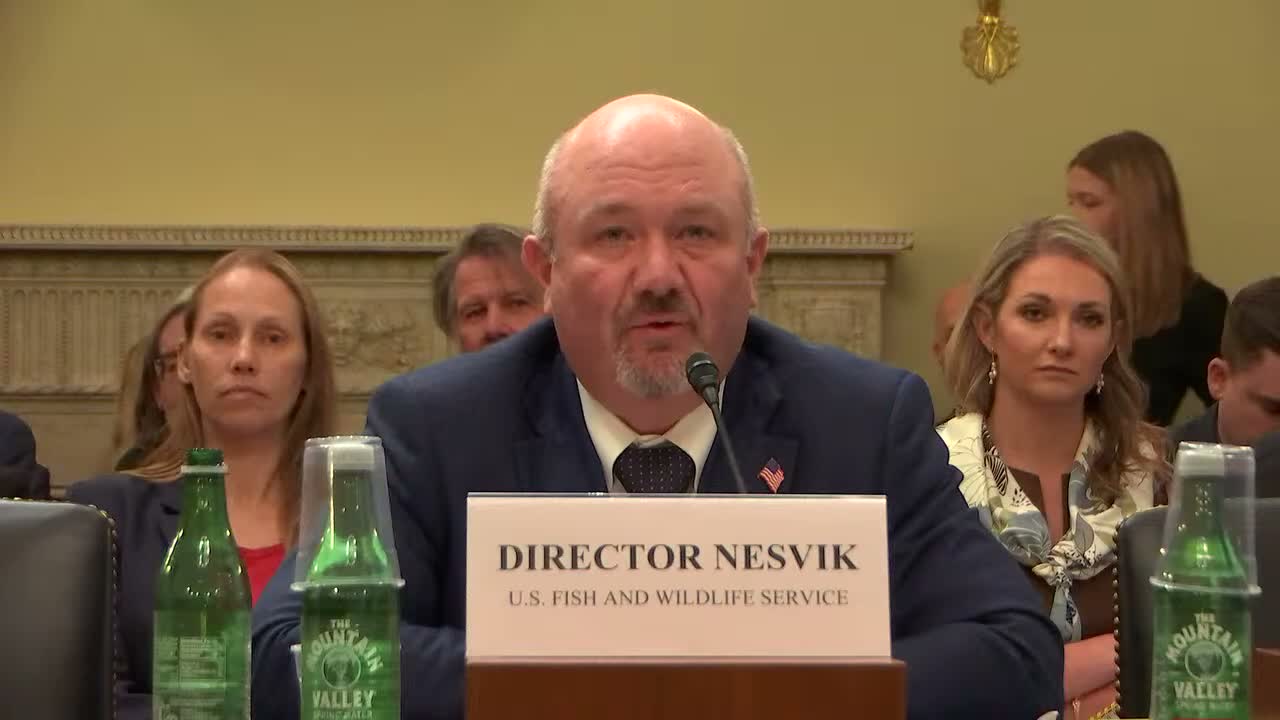
Summary
Members debated whether the Greater Yellowstone grizzly population and Wyoming management meet the Endangered Species Act delisting criteria; Director Nesbick said recovery has been achieved in core areas but conflict increases where bears enter developed or agricultural lands.
Members opened the hearing by asking whether the Greater Yellowstone Ecosystem grizzly population and Wyoming’s management meet the Endangered Species Act’s five factors for delisting. The committee’s questioning emphasized both biological recovery and social suitability for human coexistence.
Director Nesbick said historical delisting decisions have been made under multiple administrations and that courts have complicated the legal landscape. He warned that conflict tends to arise "in those areas outside of areas that are biologically and socially suitable" and that when bears enter developed or agricultural areas, "grizzly bears nor people do very well, and it's not good for the grizzly bear, and it's not good for people." He described recovery in core areas as a success but said new management challenges arise when bears expand beyond suitable habitat.
Members from states with large hunting and fishing constituencies pressed the director on public‑safety risks and effects on game species. A member noted news reports of bear‑human incidents and asked whether an "overabundance" of a federally protected predator jeopardizes hunters, anglers and recreators. Nesbick acknowledged that injuries and fatalities have occurred in some cases.
Speakers also highlighted the role of state investments in recovery: one member said Wyoming had invested "literally millions… tens of millions of dollars" in grizzly recovery and that excise taxes paid by hunters and anglers helped support those efforts. The exchange framed delisting as both a scientific and management transition that often returns primary management to state wildlife agencies, but members noted that court challenges commonly complicate that process.
The committee did not vote on any action; it discussed delisting in the context of broader questions about how recovered species are transitioned to state management and how human‑wildlife conflict is handled when recovered predators move into non‑core habitat.