Get Full Government Meeting Transcripts, Videos, & Alerts Forever!
Get email alerts on the Governance topic
No spam. Unsubscribe anytime.
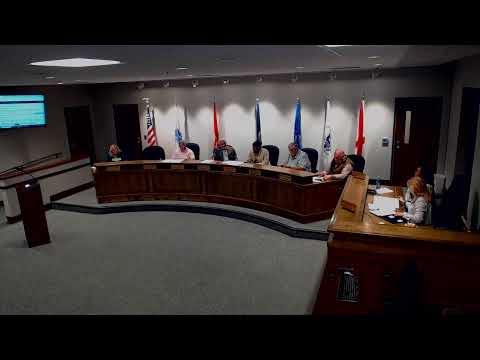
Alexander City Council approves chemical, equipment and program contracts, and a new fire‑reporting system
Summary
At its Jan. 5 meeting, the Alexander City Council approved multiple resolutions — awarding bids for water‑treatment chemicals and grounds equipment, authorizing a one‑year contract with a court referral program at the Cooper Center, and approving a switch to ESO fire‑reporting software — with votes recorded as passing by the council.
Alexander City Council voted Jan. 5 to approve several resolutions affecting procurement, contracts and public‑safety reporting.
Votes at a glance
- Chemical contract: Council approved award of bid number 26-03 for water‑treatment and wastewater chemicals (nine bids submitted; three lowest considered). Staff noted price increases for some line items. Motion passed (recorded vote: 5–0).
- Grounds equipment: Council authorized purchase of grounds equipment after receiving two bids. Staff recommended a John Deere product over a Toro bid for parts availability and service; the resolution passed 5–0. The contract cap mentioned in the meeting was "not to exceed $78,143."
- Court Referral Program contract: Council discussed and approved entering a one‑year contract with the Phenix City Court Referral Program to provide periodic group-based substance‑use support at the Cooper Center using two classrooms on Saturdays. Staff emphasized an "immediate out" clause allowing the city to terminate the contract if conditions are not met; proponents described the program as "low risk, high reward." Motion to approve the resolution passed (recorded vote: 5–0).
- Fire‑reporting software (ESO): The fire department explained the city's current records management system (ZOLL) had reached its end of life for reporting compatibility with FEMA systems. Staff compared two vendors and recommended ESO because of lower recurring costs. Staff estimated year‑one implementation costs would raise expenses by roughly $194 but that recurring years would save approximately $2,300 annually. Council approved the resolution to authorize the mayor to execute the agreement.
Councilors said procurement decisions were based on service, parts availability, and long‑term cost considerations. No dissenting votes were recorded on the items taken up during the meeting; motions were generally described as passing unanimously.
The council moved on to public comment and other business after recording the votes.