Get Full Government Meeting Transcripts, Videos, & Alerts Forever!
Get email alerts on the School Construction topic
No spam. Unsubscribe anytime.
Independence district pitches new pre-K–8 building and blended financing plan for May 2026 ballot
Summary
Superintendent Kelly Kogan presented a plan for a 125,530-square-foot pre-K–8 school and proposed a combined financing approach — a 0.75-mill bond plus a 1% school-district earned-income tax — to fund construction and long-term facilities, with design starting if voters approve in May 2026.
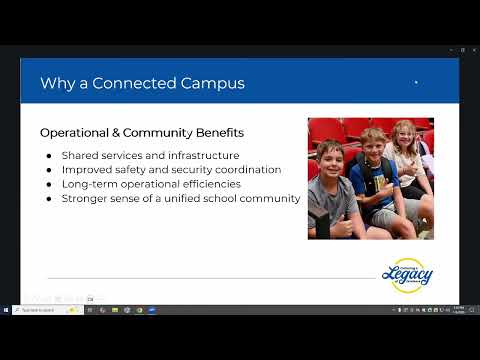
Superintendent Kelly Kogan told the Independence City Council the district needs a new pre‑K–8 building to replace aging facilities that lack modern safety, accessibility and learning infrastructure. The district presented a 125,530‑square‑foot design with a planning figure of $425 per square foot that includes furniture, technology and contingency costs and said a bond on the May 2026 ballot would be for about $59.5 million.
Kogan said the district has experienced recent failures that illustrate the urgency: Independence Middle School closed because of a corroded pipe and Independence Primary School suffered a major roof leak. She argued renovation carries hidden risks and recurring costs, including the need for swing‑space trailers that can cost $200,000–$300,000 and the safety challenges of phased work around occupied classrooms. "Renovation brings unknowns," she said, and "new construction gives us predictability, longevity, and a true return on investment." The district plans to retain the existing auditorium in a ‘‘mothballed’’ condition while demolishing most of the middle school.
On financing, the district treasurer (identified in the meeting by first name as Jennifer) reviewed current revenues and constraints: inside millage, three continuing levies, and a permanent improvement (PI) fund that she said brings in roughly $725,000 annually. She told the council that a single mill in the district generates about $602,000 and that a 1% school‑district earned‑income tax would be expected to generate about $3.3 million a year. The presenters described a combined approach — a 0.75‑mill bond to fund fixed construction costs paired with a 1% earned‑income tax to spread burden across wage earners — and said the pairing could reduce the property‑tax impact while funding long‑term facilities.
The district also laid out ancillary costs and assumptions the public asked about: site improvements and utilities were estimated at $4,000,000 and abatement/demolition at $2,000,000. Kogan compared the $425/sq ft planning figure to an OFCC figure referenced during the presentation and said the district used a pre‑bond architect (Garmin Miller/AVG) and plans to use a construction‑manager‑at‑risk procurement model to reduce change‑order risk and improve accountability.
Residents and council members pressed the district on maintenance, accountability and neighborhood impacts. Several speakers asked how the district would ensure maintenance standards after past roof problems; Kogan said the district is developing a five‑year maintenance plan with the director of business and operations and will work with city engineers and safety services as outside reviewers. Parents raised traffic and dismissal concerns about co‑locating three schools; Kogan said drop‑off timing and circulation will be part of safety‑service planning and acknowledged neighborhood concern.
The district announced public engagement steps: two community meetings with tours (Jan. 22 at 7:00 p.m. at the middle school and Feb. 24 at 7:00 p.m. at the primary school) and an online tax‑impact calculator the district said it would post for voter education. If voters approve the May 2026 ballot measure, the district expects to begin design work in 2026, start construction in 2027 and aim for student occupancy in August/September 2029.
The council thanked the district for the briefing, collected follow‑up questions to be returned to district leadership, and adjourned after a motion.