Walton County workshop: residents urge ‘do nothing’ as tourism staff outline Eastern Lake regional-access plan
Loading...
Summary
Walton County tourism staff presented a two‑phase plan for a regional beach access at Eastern Lake—with restrooms, dune walkovers, parking and sidewalks—funded by the tourism bed tax. Dozens of residents at a public workshop urged preservation, submitted a 1,587‑signature petition and proposed lower‑impact alternatives such as sidewalks or using existing facilities.
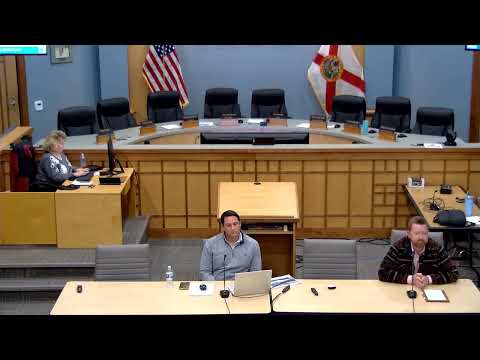
Josh Urban, Walton County’s beach operations director, opened a public workshop to gather input on a proposed regional beach access at Eastern Lake and said staff would bring community feedback back to the Board of County Commissioners for direction. "We're here with kind of our idea," Urban told attendees, stressing the presentation was preliminary and that the county could also present a "do nothing" option to the commissioners.
In a roughly five‑minute presentation, a county presenter identified in materials as Ryan outlined the project history and scope. The county bought parcels in 2019 to expand public beachfront, previously completed a municipal parking lot and now proposes a two‑phase project: Phase A would add a restroom/bathhouse, dune walkovers, showers, ADA parking, low‑speed vehicle and bicycle parking and a turnaround at San Roy Road; Phase B would make right‑of‑way improvements including sidewalks on Eastern Lake Drive and San Roy Road and drainage work. The presenter said the work would be funded through the tourism bed tax and gave budget figures presented to the public: about $9.5 million in property acquisition, $500,000 for design (FY25) and $3.75 million budgeted for construction. He outlined a conceptual schedule that would begin surveys and environmental analyses in 2026, move through permitting and a development order, and—if approved—begin construction procurement in 2027.
The presenter listed the principal approvals staff expect to need: a Coastal Construction Control Line permit from the Florida Department of Environmental Protection, state wildlife review tied to protection of the Choctawhatchee beach mouse, and a county development order from Planning. He emphasized staff would follow the land‑development code, comply with wildlife lighting rules and not seek variances, and said the tourism department was not recommending changes to existing county policy that prohibits vending and driving on the beach.
Public comment that followed was overwhelmingly opposed to building new facilities at the outfall of the coastal dune lake. Longtime residents and property owners said the site is ecologically sensitive and argued the parcel was purchased in 2021 to protect the resource rather than develop it. Garrett Horn, who said his family has owned property on Eastern Lake since 1959, told the workshop, "Common sense tells you this is no place for bathrooms," and cautioned that pavement and bathrooms would degrade the outfall’s unique, shifting ecology.
Mark Scott, who helped organize an online petition, told the meeting the petition had gathered about 1,587 signatures as of his tally: roughly 740 from Walton County residents, about 230 from nearby communities and more than 200 from out‑of‑state visitors. "Keep the area a neighborhood access," he said the petition requests, listing prohibitions on regional access, vending and new construction.
Speakers raised other objections: Chuck Cowan, a resident and homeowner, said the existing parking lot has increased traffic and created an unresolved safety hazard at a blind curve, warned of potential crime and argued that high‑intensity lighting desired for safety would conflict with turtle‑friendly lighting. He warned that state approvals and past litigation could prevent proposed dune walkovers. Adrian Cowen, who said he owns the beachfront property adjacent to the parcel, noted part of Eastern Lake Road to the south is private and cautioned that any future construction could overburden existing easements, change the residential character and risk violating coastal dune setback requirements.
Several residents suggested lower‑impact alternatives instead of placing permanent infrastructure on the dunes. Lynn Nesmith and others said the county should consider building sidewalks between 30A and the beach access or improving nearby parking/amenity sites—options intended to improve pedestrian safety without constructing facilities on the dune outfall.
Staff response and next steps: county staff said the meeting demonstrated strong neighborhood sentiment against development at the outfall and reiterated that no construction or design work would proceed without further direction from the Board of County Commissioners. Urban and staff asked residents to submit written comments and said staff would incorporate those statements in the packet the county takes to the BCC; they also said environmental and property analyses would be completed if the BCC authorized continued design work. A county contact and project website were provided for written input.
The workshop closed with staff saying they expect to return the issue to a future BCC agenda within months and that any further work would require formal commission authorization and regulatory permits. Residents left the meeting urging preservation, conservation easements and alternatives that avoid new beachfront structures.