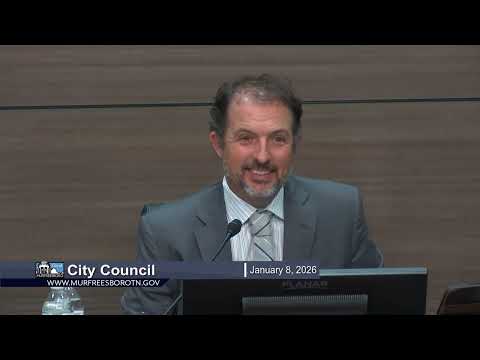
Murfreesboro council approves annexation and PRD zoning for 27.9‑acre 'Aubrey' development after traffic and flooding concerns
Loading...
Summary
After lengthy public comment raising traffic, flooding and school-capacity concerns, Murfreesboro City Council on Jan. 8 approved annexation and Planned Residential District zoning for a 27.9‑acre site called Aubrey that would allow 98 homes; council and developers said infrastructure improvements and engineering reviews will be required before construction.
MURFREESBORO, Tenn. — The Murfreesboro City Council voted Jan. 8 to annex a 27.9‑acre parcel along Old Salem Road and Windrow Road and to rezone it to a Planned Residential District for a development proposed as “Aubrey,” a project the developer says would include 66 single‑family detached homes and 32 townhomes.
Council opened the pair of public hearings after staff said the property is adjacent to the city limits, that sewer is not presently available to the site and that any sewer extension would be paid for by the developer. Planning staff told council the planning commission recommended approval at its Nov. 5 meeting.
Why it matters: Residents from nearby neighborhoods told council the annexation and rezoning could worsen congestion at Old Salem and Veterans Parkway and at other nearby intersections, and raised questions about on‑site flooding and school capacity. Council members asked staff whether development without sewer would be allowed, how traffic warrants would be evaluated and when planned signalization at Rucker Lane might be completed.
What was said: Ken Jacobson, who said more than 500 people had signed an online petition opposing the annexation, urged the council to “reduce the hazards at these intersections” before allowing new housing. Thomas Brough, another nearby resident, called for an independent traffic study and said certain sections of the site “it has to have detention ponds” because parts of the property flood in heavy rain.
Developer and staff responses emphasized engineering requirements and staged improvements. Brian Gower of SCC and Matt Taylor, the design engineer, described proposed detention ponds, preserved wetlands, and design features intended to detain the 100‑year storm and to meet city engineering standards. Taylor said engineered plans will be reviewed by the city and that the drainage design must avoid increasing flows to neighboring properties. Transportation staff said they have staked utilities for a signal at Rucker and estimated installation in three to six months but declined to give a firm calendar until TDOT’s New Salem Highway work settles traffic counts.
Council action and vote: Council first approved the plan of services and annexation by roll call (Ayes: Miss Saverwater, Mr. Wade, Mr. Wright, Mayor Mary McFarland; Noes: Miss Gail Harris, Mr. Maxwell, Vice Mayor Shacklett). After further discussion about density, infrastructure timing and design, the council approved the PRD zoning for the Aubrey project by the same recorded vote.
What happens next: Staff and the developer said engineering plans — including stormwater, road cross‑sections and detailed traffic analyses — must be completed and reviewed before permits are issued. Council members asked for follow‑up on signalization and timing for road improvements and noted that many infrastructure decisions hinge on impact‑fee collections and coordination with TDOT and the county.
The council’s decisions allow annexation and PRD zoning to move forward; zoning approvals trigger subsequent plan‑review and permitting requirements rather than immediate construction.