
Board delays vote on Douglas–Sarpy community achievement plan after debate over partners and preschool evaluation
Get AI-powered insights, summaries, and transcripts
Subscribe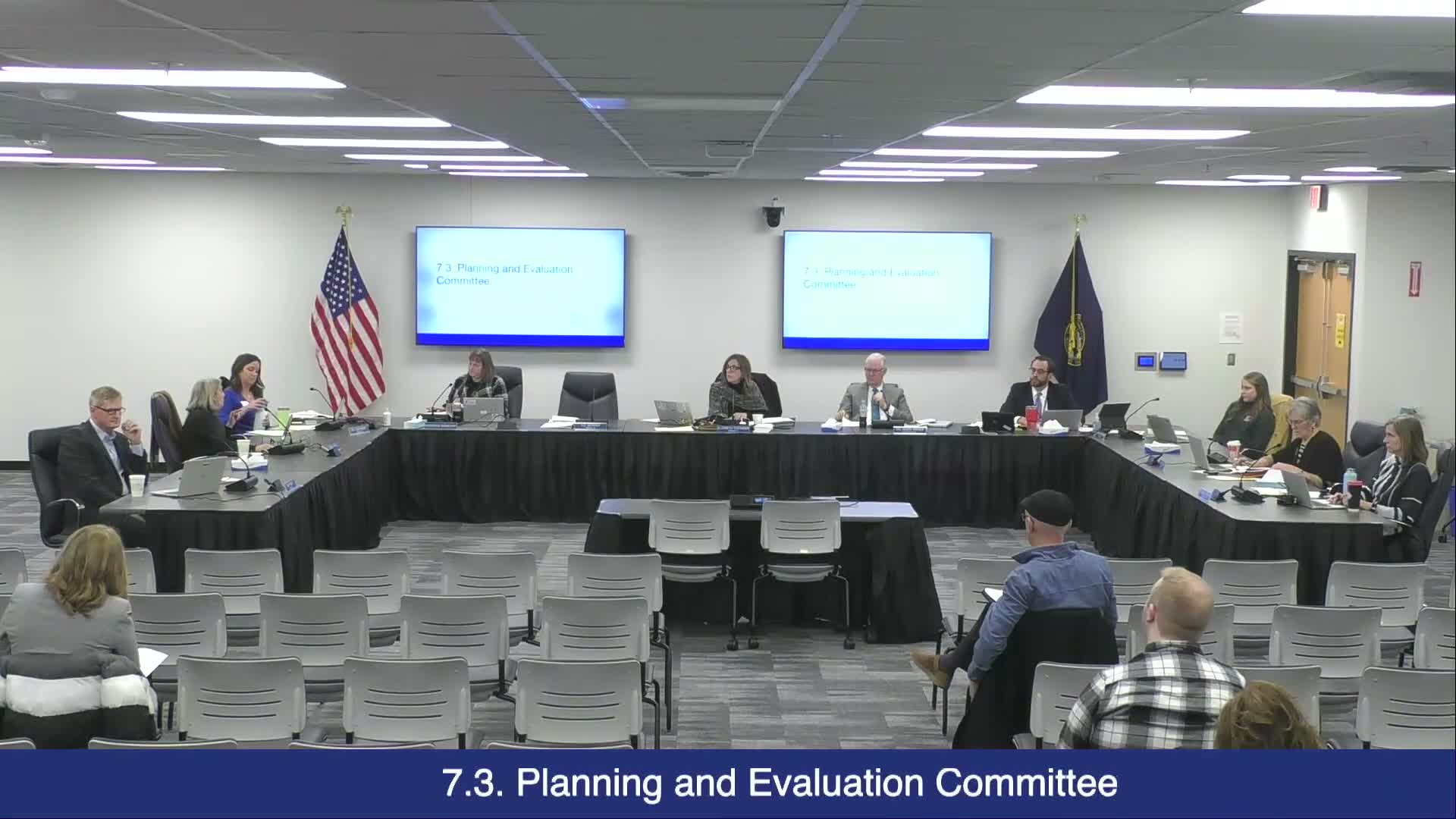
Summary
Board members debated the Douglas–Sarpy community achievement plan, raising concerns about the plan’s length, nonprofit partners listed (including references to OneWorld), and continuous preschool social‑emotional tracking; the planning and evaluation committee recommended no action and board members asked for additional review.
The State Board of Education paused action on the community achievement plan for the Douglas–Sarpy learning community after an extended Jan. 9 discussion that included concerns about partner organizations and the plan’s approach to preschool evaluation.
Several board members said they needed more time to review the plan — described in the discussion as roughly 500 pages — and asked staff for clearer documentation on the nonprofits listed in the packet. One board member raised concerns that material the committee reviewed suggested OneWorld (a community health partner referenced in committee discussion) supports gender‑affirming care; that allegation prompted requests for clarification about partner roles and which activities would receive state aid via the community achievement plan mechanism.
Shirley Vargas, school transformation officer, explained the statutory function of a community achievement plan: it is a mechanism that allows a community achievement plan aid component to be included in state aid calculations so participating districts may receive state aid tied to the plan. Vargas clarified that the plan itself does not directly appropriate state funds to nonprofit partners in the same way districts receive state aid; she said more detailed financial reporting and auditing of the learning community are available and offered to provide those documents to board members.
Members also objected to aspects of the plan related to preschool evaluation. Some members described a requirement to collect social‑emotional data through apps or digital tools for preschool children and said they found continuous, device‑based tracking of preschoolers’ social‑emotional indicators troubling. Other members defended the value of school‑based health partners and whole‑child services for students in high‑poverty areas and said the health centers reduce broader costs by providing services to students and families.
The planning and evaluation committee ultimately recommended no action at this meeting, and board members asked staff to meet with learning community leaders and return with clarifications and additional documentation before the board votes. Staff noted state aid certification deadlines and said a short delay would be possible but that March 1 remains the statutory checkpoint for certain funding calculations.
Why it matters: The community achievement plan determines whether and how state aid calculations flow to participating districts and influences local services delivered through partnerships in Douglas and Sarpy counties. Disagreement among board members about partner roles and preschool evaluation illustrates governance tensions between oversight and local program partnerships.
What’s next: Staff committed to provide requested documentation (partner listings, audited financial reports and clarifications on evaluation methods) and to meet with learning community representatives before the board acts.