Get Full Government Meeting Transcripts, Videos, & Alerts Forever!
Get email alerts on the Land Use topic
No spam. Unsubscribe anytime.
Council approves waterfront rezoning despite district opposition
Summary
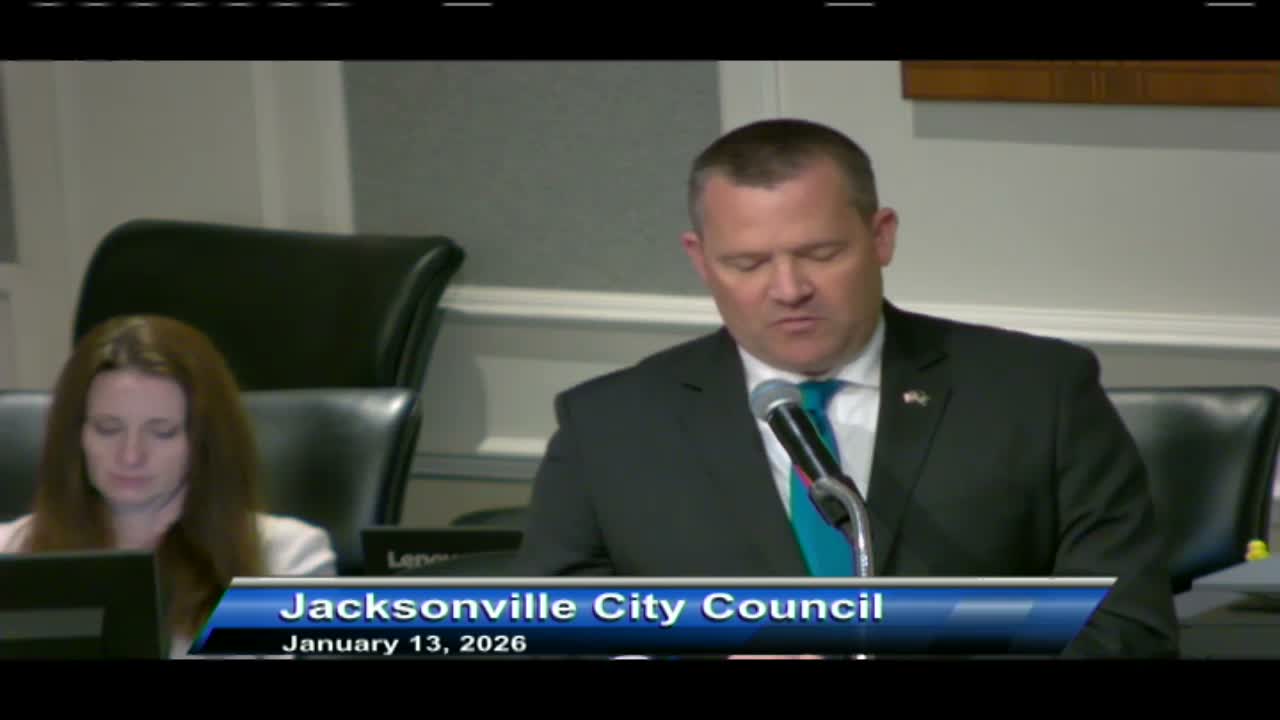
After public testimony and sustained debate, the City Council approved a waterfront rezoning ordinance (2025-0675) by recorded vote, 13-4. Councilmember Gay and others argued the rezoning is incompatible with existing larger lot patterns along the riverfront.
The City Council approved ordinance 2025-0675, a quasi-judicial rezoning affecting a waterfront road, after debate about lot sizes, density and neighborhood compatibility.
Councilmember Gay, who said she had held multiple community meetings, opposed the ordinance and urged the council to require a zoning approach that respects existing larger waterfront lots. "We're not saying no to this, but we want something compatible with larger lots on the water," Gay said during debate, describing the parcel mix and saying the proposed RLD-60 zoning was incompatible with the established RLD-100 pattern.
Vice President Carlucci, Colonel Miller and other council members publicly supported the district council member's position or cited prior public outreach, but the council ultimately recorded the vote in favor. The clerk read the tally as 13 ayes and 4 nays; the transcript shows the council approved 2025-0675 by that vote.
The measure went through the required quasi-judicial process, including ex parte disclosures from several members earlier in the meeting. The ordinance text and staff exhibits were on the record at committee. The transcript does not record post-adoption implementation steps in detail.
The item had been the subject of public comment earlier in the meeting and at committee, and several speakers referenced neighborhood meetings and specific site context during council debate.