Get Full Government Meeting Transcripts, Videos, & Alerts Forever!
Get email alerts on the Active Transportation topic
No spam. Unsubscribe anytime.
West Sacramento reviews bicycle, pedestrian and trails master plan update; engagement and state e-mobility rules highlighted
Summary
City commissioners and consultants reviewed the Bicycle, Pedestrian and Trails Master Plan update, discussed aligning mode‑shift goals with funding and accountability, and heard community priorities around connectors, protected bike lanes and lighting; consultants outlined next steps and phase 2 outreach.
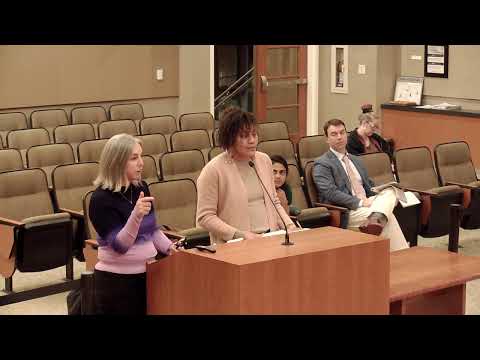
West Sacramento's Transportation, Mobility and Infrastructure Commission met Jan. 12 to review progress on the city's Bicycle, Pedestrian and Trails Master Plan update, hear findings from consultant teams and community engagement partners, and discuss how ambitious the plan's mode‑shift goals should be.
Steve Rosen of the city's Transportation Mobility section said the update will set the city's investment priorities through 2035 and align the BPTMP with the new general plan mobility elements and the Vision Zero action plan. "This plan will fold in those changes about electric mobility and the way we've changed moving through our city post quarantine," he said.
Trace McMillan of Nelson Nygaard (NN Engineering) described the technical approach and how the plan ties to funding eligibility. McMillan said the team used Replica trip data to characterize existing travel patterns and noted that on a typical 2025 weekday the dataset showed roughly 128,000 trips within the city and about 23–24% of those trips were walking or biking. "So this is all trips, all movements, all estimated modes," McMillan said, cautioning that Replica aggregates trip types and can include recreational trips in the walking/biking share.
The consultants said the update will incorporate two new focus areas: micromobility (e‑bikes) and neighborhood electric vehicles (NEVs). McMillan summarized recent California developments affecting those devices, saying the state defines three classes of e‑bikes and new 2026 rules increase oversight of high‑speed electric off‑road bikes; the plan will include an explainer of laws and best practices for residents. "The product of this plan will be an explainer of all of the laws that affect these that will be put on the city's web page and in the plan so that people know what the regulations are," McMillan said.
Consultants and Civic Thread, the city's engagement partner, also presented phase 1 outreach results. Kiara Reid of Civic Thread said the team used pop‑ups, translated materials (Spanish and Russian) and partnerships with the Health Education Council to reach families, youth and older adults. "We really leaned into our long history doing Safe Routes to School work," Reid said.
Niru Bidyarthi of Civic Thread summarized the consolidated feedback: residents value existing trails but identify the connectors'the handoffs between neighborhoods, crossings and trailheads'as the primary friction. Participants repeatedly flagged West Capitol Avenue, Jefferson Boulevard, South River Road, Industrial Boulevard and Sacramento Avenue as corridors needing safer crossings, better lighting and protected bike infrastructure. On neighborhood streets (Brighton, Broderick, Lake Washington Boulevard areas) residents asked for sidewalks, curb ramps and traffic calming.
Commissioners debated whether the BPTMP should adopt the Mobility Action Plan's aspirational mode‑shift targets or set a more measured, attainable goal tied to present infrastructure and funding. McMillan said a higher goal "would tell us that we would need to invest more sooner to achieve the goal by that date" and that measurable metrics and reporting are necessary to hold the city accountable. Commissioners cautioned that unrealistic targets could make the city appear to have failed in later grant applications or public reporting.
A motion was made at the meeting to proceed to a formal recommendation or vote on a goal; the motion was seconded but discussion continued and no formal recommendation to the council was recorded during this session.
On project timing, city staff reported there is funding for preliminary engineering on Sacramento Avenue but not full construction funding; if funding continues, staff estimated construction could begin in the early 2030s. The consultants also noted the Sycamore Trail Extension and West Capitol bike facility upgrades as near‑term projects on the BPTMP map.
Next steps outlined by consultants include the phase 2 analysis and recommendations, a prioritization process that ties goals to measurable variables for project scoring, and more targeted outreach (workshops, dot‑voting and events timed with Bike Month and local festivals). Civic Thread requested commissioner help identifying community events and groups to reach equestrian users, cyclists, school families and youth.
The meeting moved on to administrative items and a brief director's report about Via/on‑demand ride‑share pricing (staff said no pass price increase had been implemented). The commission then made and seconded a motion to adjourn; the meeting was closed by voice vote.
The consultants will return with phase 2 materials, draft prioritization criteria and additional opportunities for commissioners to provide input.