
Grafton schools face $1M+ preliminary shortfall; superintendent warns of staff cuts, larger classes
Get AI-powered insights, summaries, and transcripts
Subscribe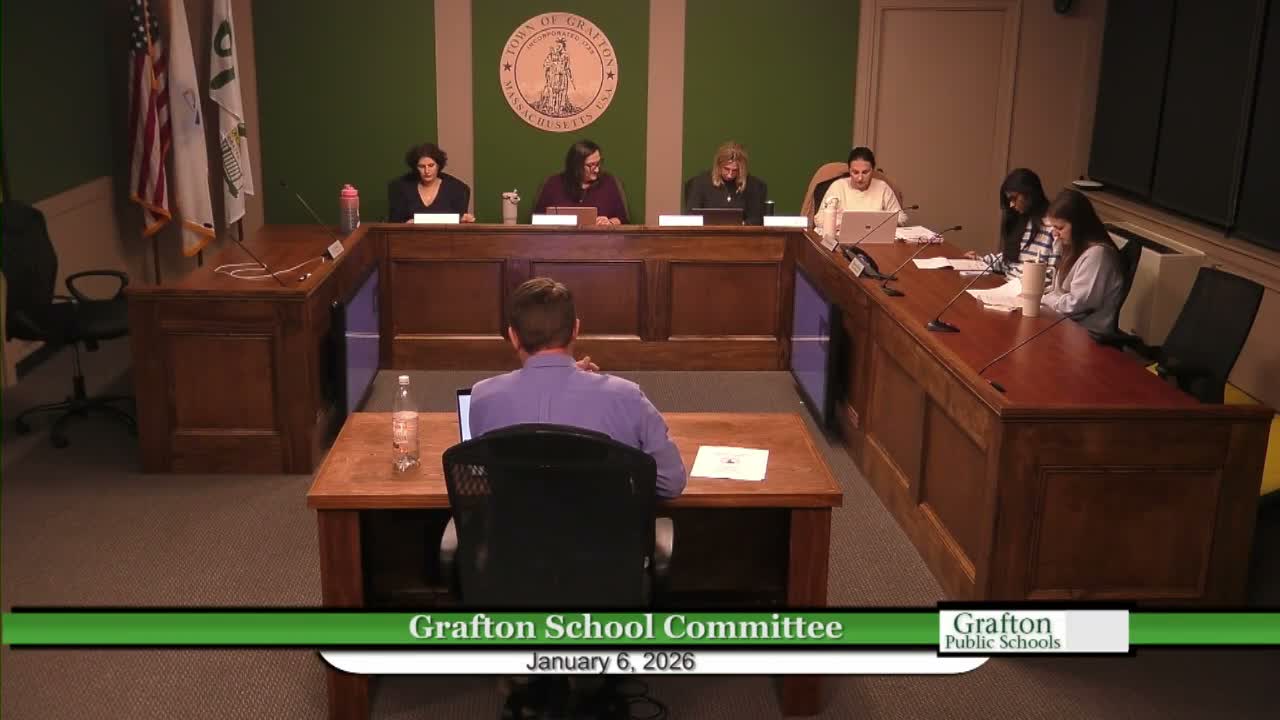
Summary
At its Jan. 6 meeting the Grafton School Committee heard a preliminary FY27 budget shortfall estimate of roughly $1.0M–$1.4M. Superintendent Doctor Cummings said proposed reductions would likely hit teaching positions and programs, and he flagged rising enrollment and limited capital reserves as compounding problems.
Grafton — The Grafton School Committee on Jan. 6 received an early look at fiscal-year 2027 budget pressure that district leaders said could require roughly $1.0 million to $1.4 million in reductions unless the town changes its appropriation or voters approve additional revenue.
Doctor Cummings, speaking at the committee meeting, described a ‘level-service’ preliminary ask of $50,500,000 and said the town administrator had indicated the town might be able to appropriate about $49.3 million to $49.5 million to the schools. That gap, Cummings said, produces a shortfall the committee must address as reduction options are developed.
“This is January 6; these numbers are preliminary,” Cummings told the board, but he also warned that the most likely places to make cuts would be instructional staff and programs. He outlined a possible scenario that could translate into roughly 7 full-time-equivalent (FTE) positions at the secondary level and 7 FTE at the elementary level — about 14 FTE total — noting that further reductions would increase class sizes and reduce electives and services.
Cummings also called attention to additional, non-recurring costs the district should plan for if staff layoffs occur, including unemployment liabilities. He said a notional reserve of about $20,000 per displaced position had been used in early calculations, which for 14 positions would add roughly $280,000 in one-time costs and does not reduce the overall savings target.
The committee pressed several alternatives, including pausing cost-of-living adjustments, and asked for more precise numbers from the town administrator. One member asked whether potential cuts would be applied as a townwide share or disproportionately to the schools; board members said that distinction matters for how reductions are calculated and for public messaging.
Enrollment projections and recent moves added urgency. Cummings reviewed an April 2024 NESDEC enrollment forecast that estimated approved housing projects could add an estimated 252–328 students in grades K–5 and additional students in the middle and high school grades over the next two to five years. He also reported a December 15 update showing 168 students had moved into the district and 35 had left since July 1, a net increase of 133 students in the short term.
Using DESE per-pupil data, Cummings noted that Grafton’s reported per-pupil expenditure — $16,585 in the slides presented — ranks below the area-district average and the state average. He said reaching state-average funding would represent a large, multi‑million-dollar annual increase for the district.
Cummings and board members repeatedly emphasized limited capital reserves: he said the district was “essentially out of money” for roofs and HVAC repairs and noted that an HVAC unit connected to a computer lab would likely require work beyond the district’s current capacity to pay.
The committee approved the 2026–27 school calendar earlier in the meeting and set a planning schedule that includes a joint discussion with the select board; the town administrator is expected to present more detailed fiscal materials at a later joint meeting. Several board members said they prefer budgeting conversations happen earlier and more transparently so the district and town can coordinate messaging to voters.
What happens next: the committee will continue developing reduction options and meet with the town administrator and select board to reconcile town revenue assumptions and the school appropriation. Several members said they intend to explore messaging and advocacy in the community to explain potential impacts if additional revenue is not identified.