
House subcommittee presses NOAA on GeoXO contract descopes, canceled instruments
Get AI-powered insights, summaries, and transcripts
Subscribe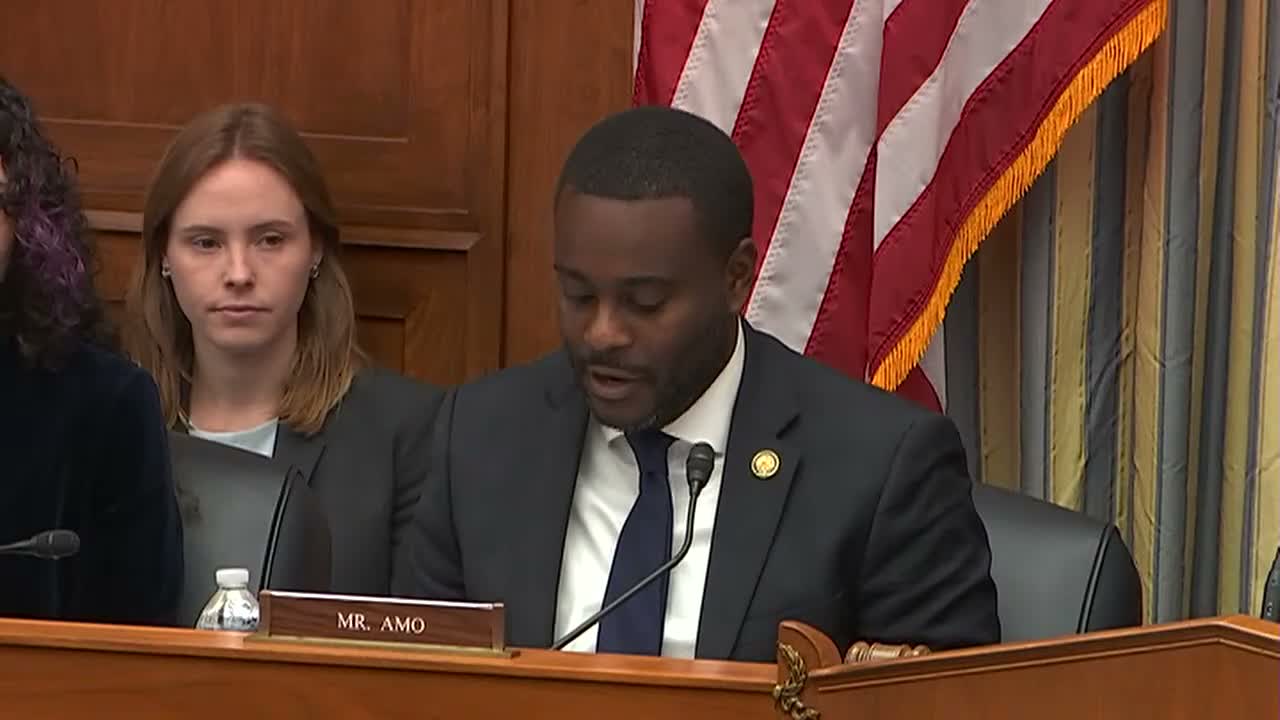
Summary
Members pressed NOAA officials about recent GeoXO program changes, including termination of two instrument contracts (ocean color and atmospheric composition) and whether descope decisions risked losing capabilities Congress sought to preserve.
NOAA officials told the House Science, Space, and Technology subcommittee that the agency descaled two GeoXO instruments to prioritize core public‑safety capabilities, while lawmakers warned those changes could reduce capabilities Congress intended to fund.
Ranking Member Rep. Amo opened the line of questioning by saying, “NOAA canceled several satellite instruments and reduced the number of satellites from 3 to 2.” He asked NOAA to identify specific contract changes and whether those changes had been communicated to Congress.
Irene Parker, deputy assistant administrator for systems at NOAA's National Environmental Satellite Data and Information Service (NESDIS), listed contracts she said NOAA has awarded for GeoXO: “we have awarded our imager contract to L3 Harris. We have awarded our hyperspectral infrared sounding contract to BAE, our lightning mapper contract to Lockheed Martin, and our spacecraft contract to Lockheed Martin.” She added that, “as a part of the administration's direction, we did, descope 2 instruments, ocean color and atmospheric composition. This was to be able to make sure that we are focusing our what focusing on the public safety weather mission.”
Committee members pushed back on the operational implications. Rep. Amo expressed concern that cuts leaving an advanced sensor “only on the east” constellation could mean unequal benefit across the country. Parker replied that “the imager will be on both east and west” and described the imager as NOAA and the National Weather Service's core observation requirement, saying the imager supports severe‑weather and hurricane tracking.
Amo also noted appropriations language in the pending fiscal‑year 2026 Commerce/Justice/Science agreement that endorses advanced imaging and atmospheric sounding on both east and west satellites. Parker told the panel, “As long as the president enacts that law, we will ensure that we always execute the laws enacted by the president,” committing to follow enacted statutory direction.
NOAA framed the descopes as an administrative reprioritization to concentrate on the agency's public‑safety mission; lawmakers said the committee will continue oversight to ensure continuity of capabilities. The hearing record remains open for 10 days for additional comments and written questions.