Get Full Government Meeting Transcripts, Videos, & Alerts Forever!
Get email alerts on the Regional Collaboration topic
No spam. Unsubscribe anytime.
Cottonwood Heights conditionally to renew Central Wasatch Commission membership, seeks clearer transportation outcomes
Summary
After hearing CWC leaders, the council signaled conditional support to continue membership for another year but asked for measurable transportation outcomes and clearer priorities beyond land‑exchange legislation; staff said short‑term programs (bypass/bus, grants) will continue while legislative work resumes.
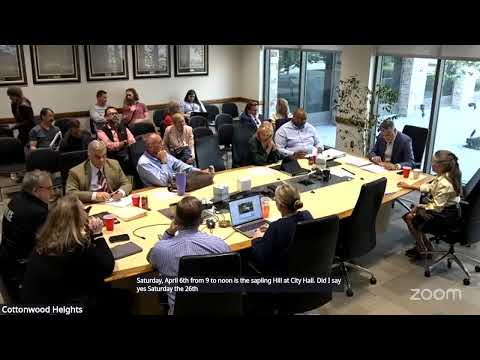
Mayor Mike Wickers invited Central Wasatch Commission (CWC) executive director Lindsay Nielsen and Mill Creek Mayor Silvestrini to brief the council on the commission’s recent activities and priorities. The CWC’s mission traces to the Mountain Accord and includes transportation, recreation, environmental and economic workstreams.
CWC and Mill Creek representatives highlighted concrete programs the commission funds or convenes: a bus‑bypass program to reduce canyon traffic, trail and restroom projects, visitor‑use research, and a regional symposium. The CWC has also pursued federal legislation (Central Wasatch National Conservation and Recreation Area Act) that includes land exchanges with the Forest Service as one component.
Some council members said they value CWC’s convening role but want more near‑term emphasis on transportation problems affecting Cottonwood Heights, especially Wasatch Boulevard, where litigation around an Environmental Impact Statement has stalled some UDOT work. Councilors asked how the CWC can influence release or redirection of legislatively appropriated funds for Phase 1/Phase 2 enhanced busing and whether the commission could be a neutral broker in related disputes.
After discussion, Cottonwood Heights council members agreed to fund another year of membership on a conditional basis and requested measurable performance outcomes — particularly demonstrating influence on transportation priorities — and a one‑year performance review to inform future funding decisions. No formal vote was recorded in the work session; staff will carry forward the council’s direction on membership and report back.