
Panama City tables Gateway Overlay amendment after months-long debate, directs staff to refine rules by district
Get AI-powered insights, summaries, and transcripts
Subscribe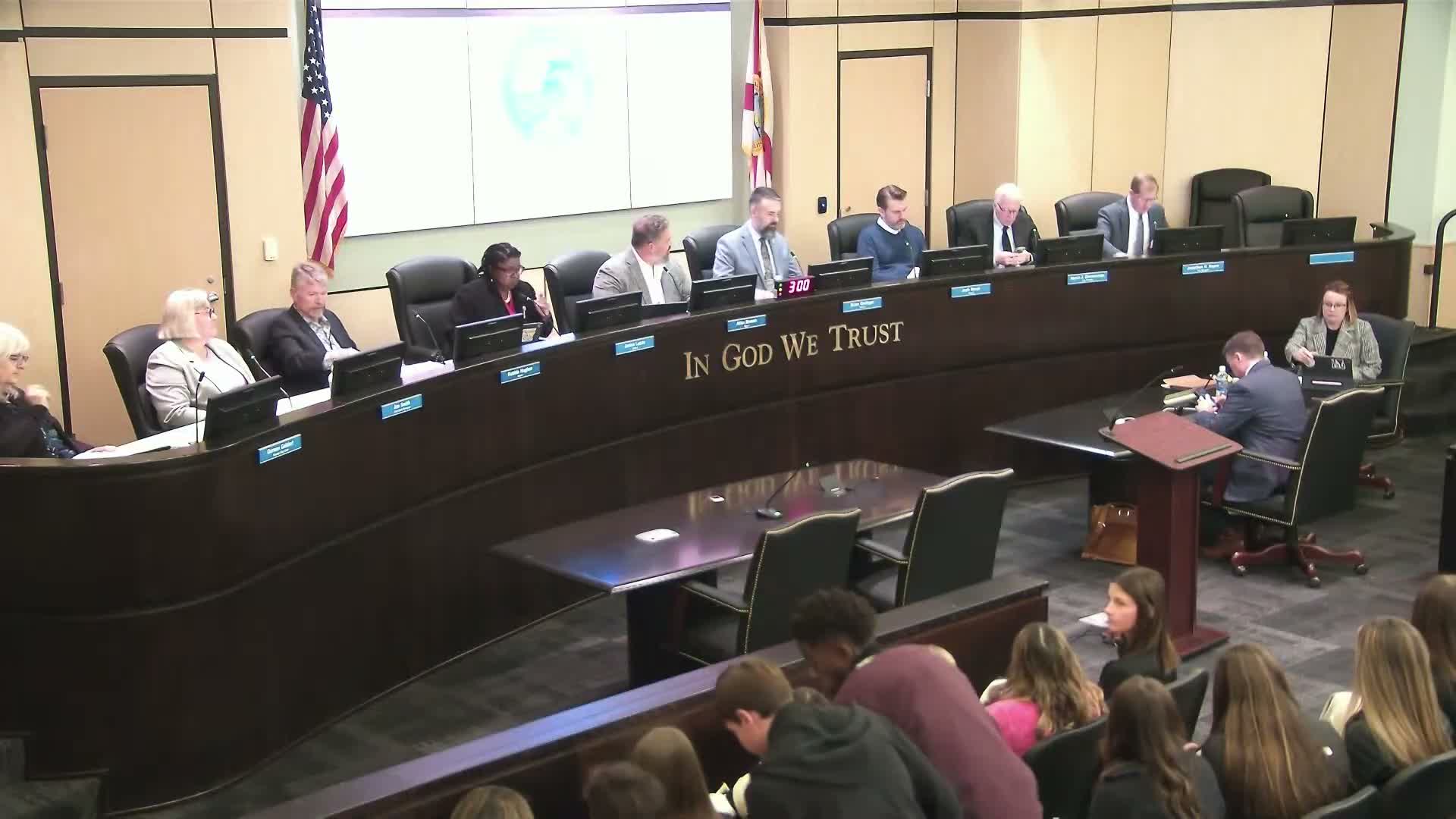
Summary
The City Commission voted 4–1 to table ordinance 32-94, which would add several conditional uses to the Gateway Overlay, and instructed staff to return in 60 days with district-specific standards; commissioners debated spacing rules, potential impacts on investment and an option to limit the ordinance only to bail bonds.
The Panama City Commission on Jan. 13 voted 4–1 to table an ordinance that would expand conditional uses in the Gateway Overlay, sending staff back to draw more precise, district-level rules.
The measure — ordinance 32-94 — would amend sections of the Unified Land Development Code to allow uses such as bail-bond offices, pawn shops, check-cashing stores and other formula businesses in the Gateway Overlay as conditional uses, subject to objective criteria. Development staff and the city attorney warned commissioners that, as written, meeting those objective criteria (for example spacing requirements) could create a legal entitlement that would make it difficult for the commission to deny an application.
"If they meet the conditional use, you will not be able to say no," said a planning adviser during the staff presentation, explaining that spacing and design standards are intended to supply objective reasons for approval or denial. Director of Development Services Michael Fuller told the commission such standards could include spacing (300/100 feet examples were discussed), signage limits and design compatibility.
Public speakers at the hearing included property owners and prospective tenants who asked whether boat sales and repair businesses would be allowed under the proposed changes. "Boat sales are allowed currently," Fuller said, and repairs could be treated as a secondary or auxiliary function depending on how the use was structured.
Commission debate focused on the ordinance's geographic breadth and economic effects. Mayor Branch warned that allowing certain commercial uses could deter future private investment downtown: "Before I spent $12,000,000 downtown, if a bail bonds place was down there, I would have never put a dime," he said, arguing the city should avoid unintended consequences. Other commissioners said the conditional-use framework could give staff tools to shape aesthetic and compatibility standards rather than ban national chains outright.
City attorney Mike Burke recommended a two-step path: approve a narrower ordinance now (for example, for bail bonds only) and direct staff to return within 60 days with a district-by-district approach and additional criteria. The commission instead voted to table the entire ordinance for 60 days to allow staff time to craft district-specific standards; the roll call showed four votes in favor and one opposed.
After the tabling vote, commissioners also authorized legal staff to contact Ms. Blue Brown, an under-contract buyer of a city parcel that lies inside the Gateway Overlay, to discuss a potential extension of her due-diligence period so that her transaction would not be prejudiced by the commission's action.
The ordinance will return to the commission after staff refines the conditional-use criteria and maps the Gateway Overlay by district as requested. No final change to the land-development code was adopted on Jan. 13.
The commission next hears this item when staff files updated language and maps; staff suggested a 60-day timeline to return with revised criteria.