Get AI Briefings, Transcripts & Alerts on Local & National Government Meetings — Forever.
UDOT proposes tolling, new mobility hub and busway to cut Big Cottonwood Canyon winter congestion
Summary
UDOT presented a Big Cottonwood Canyon Environmental Assessment proposing a 1,750-space mobility hub, bus-priority lanes, mid‑canyon stop improvements and variable peak tolling to reduce winter peak travel times; Forest Service and UDOT comment periods are open through early January.
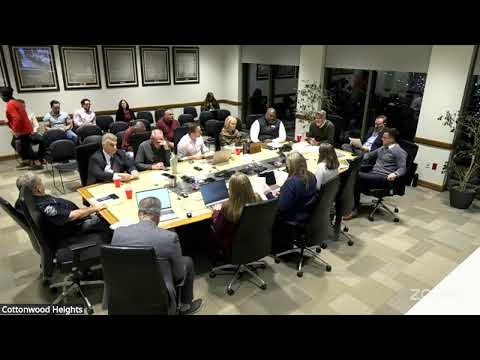
UDOT told the Colorado City Council on Dec. 16 that its preferred alternative for the Big Cottonwood Canyon Environmental Assessment would combine a large mobility hub near the gravel pit, a grade-separated interchange, a bus-only transitway into the canyon, mid‑canyon ADA‑accessible bus stops, and variable peak tolling to reduce severe winter congestion.
Kevin Weider, UDOT project manager, said the project aims to meet the legislature's direction in Senate Bill 2 (2023) to reduce wintertime travel delays on Big Cottonwood Canyon Road. "If we do this proposed action with the buses, with the tolling, we could bring those times down to 30 minutes or 24 minutes with the bus," Weider said during the presentation.
Why it matters: UDOT's modeling shows long peak travel times under the no‑action alternative — roughly an hour in the morning and 45 minutes in the evening on the modeled days — and projects that the combined transit and tolling approach would sharply reduce delays and keep the road operating near capacity. UDOT emphasized the project is intended to manage demand rather than raise revenue: "We're not looking to make money on this," Weider said.
Project details and impacts: The mobility hub concept shown to council would be a roughly 4.5‑acre parking structure of about 1,750 spaces with about 14 bus bays to serve valley routes and connect to the canyon service. UDOT estimated the mobility‑hub area infrastructure at roughly $200 million; after accounting for overlapping Little Cottonwood costs the net proposed amount was described as about $144 million. UDOT said the large majority of environmental impacts would be at the gravel pit outside the canyon (about 30 acres) and that no homes would need to be relocated; staff identified one full parcel purchase (no home on it), roughly 11 partial acquisitions for the mobility hub and another 21 partial acquisitions for in‑canyon improvements.
Environmental and permitting considerations: UDOT and the Forest Service flagged potential impacts to Columbia spotted frog and Bonneville cutthroat trout, disturbance of streams and ponds, and visual impacts at Solitude and the gravel pit. Bus stops at Solitude and Brighton would sit on Forest Service land and require Forest Service special‑use permits; UDOT said it is coordinating with the Forest Service on aesthetics and mitigation.
Operations, tolling and exemptions: UDOT described tolling as variable and electronic (camera/photo billing and account options) and said exemptions would likely be available for residents and people who work in the toll zone. The agency said it is still weighing which agency would operate enhanced canyon bus service (UDOT or UTA), noting contractual and staffing differences.
Public engagement and schedule: UDOT said its public comment period runs through Jan. 12 and the Forest Service comment window runs Dec. 11–Jan. 9. Staff said they hope to have a decision in spring 2026 but warned the timing depends on the volume and substance of comments; different agencies have different post‑decision timelines and litigation windows.
Next steps: UDOT invited residents to an open‑house meeting at Canyon View Elementary and asked commenters to identify specific sections or technical errors that would help the study team make targeted changes. The EA will be revised as needed after public comment and agency review before any final decision or implementation.