Get Full Government Meeting Transcripts, Videos, & Alerts Forever!
Get email alerts on the Regional Energy Programs topic
No spam. Unsubscribe anytime.
Tri‑County Regional Energy Network outlines $155 million plan, says Santa Barbara saw 25 local upgrades
Summary
The committee heard an annual report from the Tri‑County Regional Energy Network (3CVREN). Presenter Garrett Wong said the REN has expanded from an initial ~$50 million to a $155 million business plan, and locally completed 25 single‑family incentive projects totaling roughly $64,000.
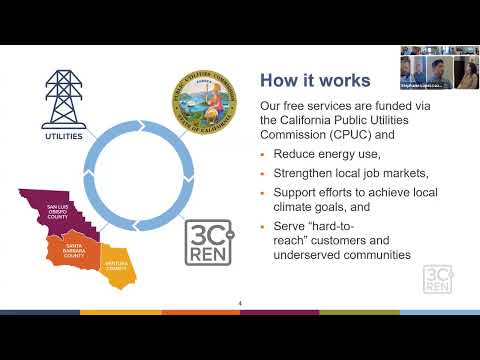
The City of Santa Barbara Sustainability & Resilience Committee received the Tri‑County Regional Energy Network annual report and an update on local programs. Garrett Wong, co‑director of the Tri‑County REN, described how the regional program uses ratepayer‑collected funds to deliver energy‑efficiency and electrification incentives, workforce training and technical assistance across three counties.
Wong said the REN has grown from an initial budget of about $50 million to a business plan requesting and deploying roughly $155 million. "We do call ourselves 3 c v REN for short," he said, explaining the network’s role coordinating with utilities and local community‑choice providers. He added the REN focuses on "hard‑to‑reach customers" — including low‑income households, residents with limited English proficiency and small businesses — and coordinates so residents can link to the most appropriate incentive programs.
Locally, Wong said the REN completed 25 single‑family projects in Santa Barbara, representing roughly $64,000 in incentives primarily for heat‑pump water heaters and HVAC upgrades. He noted multifamily projects have proven more difficult to deliver because of financing, consent and the so‑called split incentive (owners pay for upgrades while tenants receive the savings).
Committee members asked where residents should go to access heat‑pump incentives. Wong and City staff described a "concierge" approach: a REN advisor hotline (including Spanish‑speaking assistance) and the GovCentives web tool that maps ZIP codes to available incentives and eligible programs. Wong said the REN cannot directly fund certain items — such as rooftop solar, battery storage and EV chargers — but can connect customers to complementary funding sources and partners to assemble those projects.
The committee members pressed the REN on strategies for multifamily outreach and engaging property managers; staff described mailer campaigns, pilot outreach efforts and experimentation with movable/renter‑friendly appliances to reduce the split‑incentive barrier.
Wong also noted workforce and Energy Code Connect services for local building officials and contractors aimed at helping projects comply with evolving state energy standards. The presentation closed with staff offering to return with more local metrics in next year’s impact report.
The committee did not take a formal vote on REN program funding but thanked staff for the update and asked for continued coordination on outreach and the upcoming REN business plan.