Get Full Government Meeting Transcripts, Videos, & Alerts Forever!
Get email alerts on the Housing topic
No spam. Unsubscribe anytime.
Council leans toward phased short‑term rental pilot using Granicus address‑verification software
Summary
Council members discussed using Granicus software to locate unlicensed short‑term rentals, automatically notify owners and capture 24/7 complaints; members favored a phased pilot to bring eligible properties into licensing first and use the data to shape zoning and enforcement changes.
Councilmembers reviewed options for tightening short‑term rental (STR) compliance and a Granicus software demonstration that would double as an enforcement and monitoring tool.
A presenter described the software’s capabilities: automated address verification, daily screenshot capture of listings, 24/7 complaint intake with photo/video uploads, automated owner notices and a staff dashboard that preserves evidence for enforcement. The presenter said the vendor’s approach has produced high compliance rates in other cities and that the state’s address‑verification funding substantially reduces local software cost.
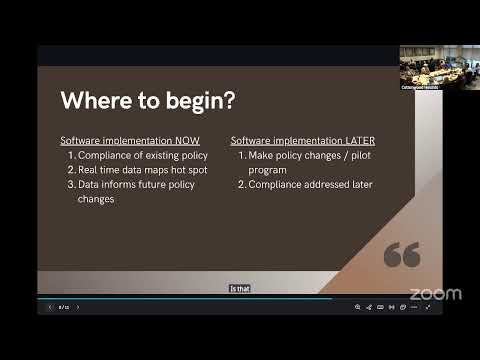
Participants discussed two main paths: (1) a phased software implementation that first targets properties already allowed by code (for example, units in multifamily zones and condominiums that can be licensed), brings those into compliance and uses the resulting evidence to craft zoning limits and owner‑occupancy definitions; or (2) adopt policy limits (zone caps, owner‑occupancy rules) first and deploy software later. Several councilmembers preferred the phased approach so staff can use real data to design enforceable rules.
Staff estimated the software implementation fee (after state contributions for address verification) at about $22,520 annually; the presenter said roughly 40 new licenses could cover that fee in the first year. Council also discussed enforcement design: switching civil enforcement (administrative/civil citations) rather than criminal charges, using escalating penalties (three‑strikes rules) for repeat offenders, and requiring property‑manager proximity or owner affidavits for owner‑occupancy programs.
Staff reported that the city has hundreds of short‑term listings and far fewer permits — creating an enforcement gap the software could help close. Council directed staff to study a pilot focused on condo complexes already zoned for STRs, pursue software procurement options, and return with legal options for a time‑limited licensing pilot and enforcement pathway.
Next steps: staff to draft a pilot implementation plan, budget amendment options to pay for initial software licensing, and legal analysis of short‑term temporary permits or a one‑year conditional licensing window to bring existing eligible properties into compliance.