Get Full Government Meeting Transcripts, Videos, & Alerts Forever!
Get email alerts on the Transportation topic
No spam. Unsubscribe anytime.
Council debates Highland Drive design: median vs. adding a northbound lane, asks staff for modeling and business‑impact analysis
Summary
Councilmembers asked staff and the consultant to expand the Highland Drive/Fort Union 30% design to model alternatives — including medians without adding lanes — and to evaluate effects on traffic flow, businesses and pedestrian/cyclist safety before any vote.
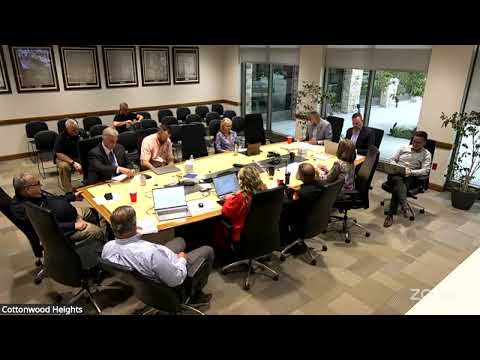
Cottonwood Heights councilmembers on July 15 asked staff and the project consultant to run comparative traffic models and broaden the Highland Drive/Fort Union intersection 30% design to show the effects of different options, including installing a median without adding a third northbound lane.
Mayor Matt Wickers opened the discussion by reviewing the project scope and funding sources, then councilmembers pressed for analysis beyond the existing executive summary, arguing the 30% design should quantify tradeoffs for businesses and active‑transportation users. One councilmember said the scope should include “what happens when we put in a median” and whether that change would reduce access to nearby businesses such as McDonald’s or Starbucks. The consultant (Ben) confirmed traffic‑modeling work is part of the 30% design and said a la‑carte study of medians and business impacts can be added to the contract.
Several councilmembers warned that adding travel lanes can induce demand and increase regional cut‑through traffic. “To keep widening our arterials and collectors throughout Cottonwood Heights is not the answer,” one councilmember said, urging preservation of safety and multimodal alternatives. Others emphasized the corridor’s regional function and noted some design work must align with county and state rules.
Staff said the project is funded primarily with transportation impact fees and corridor‑preservation grant funds, with roughly $110,000 identified for the design phase. Finance staff indicated the combined transportation and stormwater impact fees available for related improvements are under $200,000 and must be attributed to the growth that generated them; timing constraints on impact‑fee use remain a consideration.
The council directed staff to: (1) ask the consultant to model a median‑only option and a lane‑addition option for AM/PM peak flows; (2) include a business‑impact assessment showing how access changes would affect adjacent businesses; and (3) return with clearer cost and funding timelines, including whether SS4A/CSAP planning funds or corridor preservation grants could affect the city’s match. The mayor and staff said the 30% design is not a final commitment to build and that adding analysis now would inform the business meeting action item later this evening.
Next steps: staff will ask the consultant to price the additional modeling work and report back to the council with a proposal for amending the design contract or adding a written addendum to capture the extra scope.