
SFPUC proposes $12.5 billion 10‑year capital plan; near‑term water and wastewater rates to rise while Clean Power SF cut would partly offset bills
Get AI-powered insights, summaries, and transcripts
Subscribe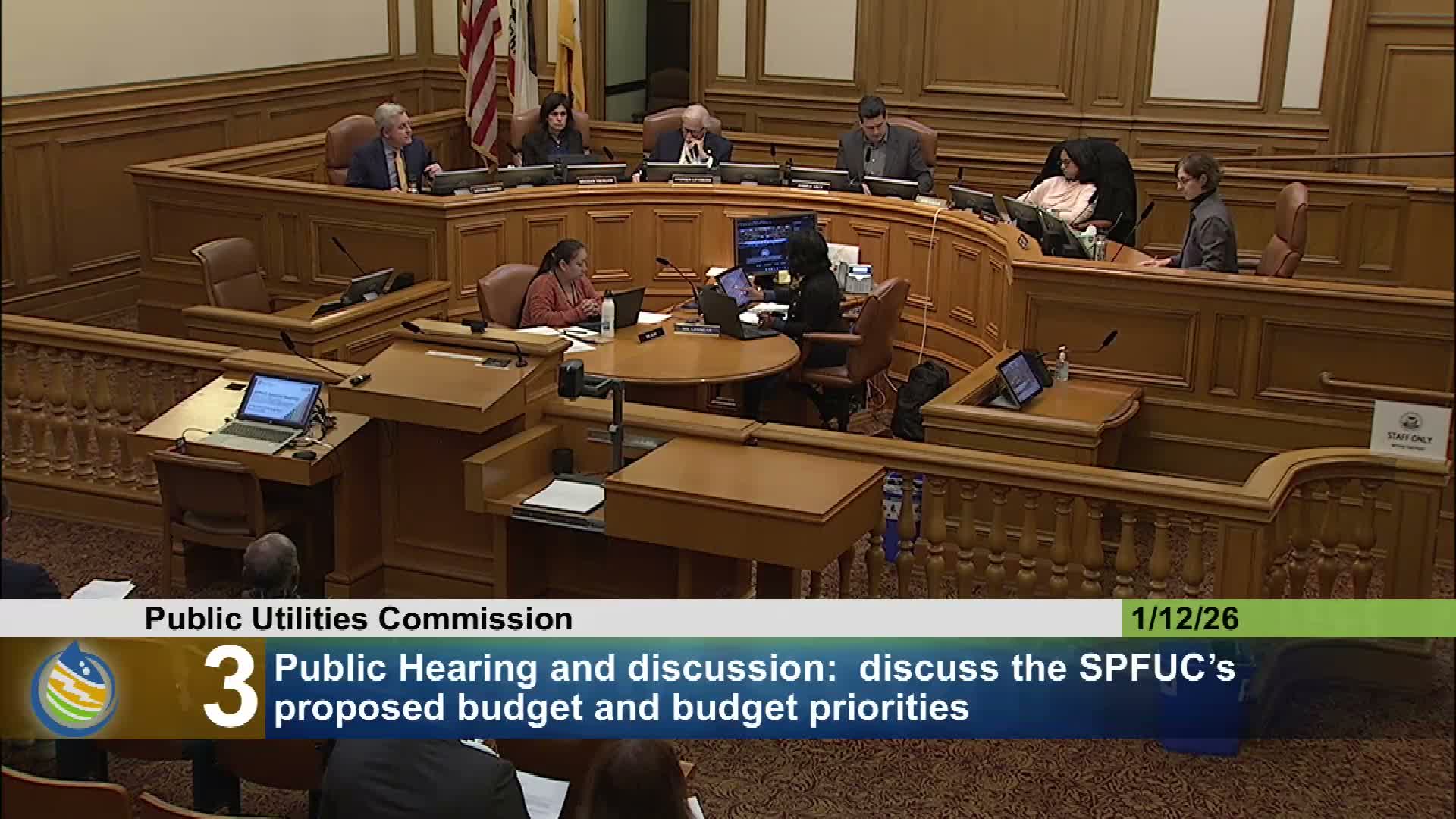
Summary
SFPUC staff presented a $12.5 billion 10‑year capital improvement plan and a 10‑year financial plan that front‑load sewer investments and debt service, projecting short‑term water and wastewater rate increases but a proposed 20–25% Clean Power SF generation cut that could leave the average household about 3% higher next year.
San Francisco Public Utilities Commission staff on Jan. 13 unveiled a proposed operating budget package, a $12.5 billion 10‑year capital improvement plan (CIP) and a 10‑year financial plan that together would require notable near‑term rate increases for water and wastewater customers.
Deputy Chief Financial Officer Laura Bush and the SFPUC's financial strategy team said the largest drivers are multi‑decade sewer upgrades and the debt service for recently completed capital projects. Bush emphasized the commission's affordability policy and said staff took steps to limit rate impacts while maintaining reliability and meeting regulatory mandates. "We've taken every possible measure to keep rates down, but not to compromise the reliability and quality of the services that we deliver," she said.
Budget director Anna Dooning said initial CIP proposals approached $16 billion but that staff used reprioritization and strategic deferrals to bring the plan to $12.5 billion. Dooning identified wastewater as nearly half the plan and named the nutrient‑reduction project as the single largest item at about $1.5 billion. "Critical upgrades to our aging sewer system are the primary driver of the largest rate increases in this budget and in the years ahead," she said.
Financial planning director Erin Corbinova told commissioners the agency built conservative scenarios into the 10‑year plan, including lower water‑sales forecasts and higher fringe and construction costs, which push more costs into the near term. Capital finance director Nikolai Sklaroff said SFPUC currently has about $11 billion in outstanding debt and will issue substantial debt under the plan; he described planned refundings and use of low‑cost loans such as WIFIA to manage long‑term costs.
Staff framed a partial offset to water and wastewater increases: the power enterprise expects to lower Clean Power SF generation rates by roughly 20–25 percent if the commission adopts the proposal on Jan. 27. Bush said that cut, combined with other power changes, would leave the average San Francisco customer who receives water, sewer and power from the SFPUC with an overall utility bill increase of about 3 percent next year. The Clean Power SF reduction, if approved, was presented as going into effect March 1 and would affect roughly 380,000 Clean Power SF customers.
Commissioners pressed staff on the underlying assumptions. Commissioner Thurlow asked for greater detail on the uncertainty in demand projections and how the plan would accommodate low‑ or high‑demand scenarios; staff said they will return with additional scenario analysis when the financial plan is adopted. Vice President Liberone and others asked how future refinancing savings would be reflected; staff said projected rate scenarios intentionally exclude assumed refunding savings but that executed refundings will be incorporated into later updates and quarterly reports.
Staff highlighted tradeoffs made to contain near‑term rate pressure, including cutting billions in CIP scope and shifting some community programs and add‑backs into operating budgets. The SFPUC plans robust public outreach on proposed rate changes this spring, with a planned late‑April rate adoption and final budget adoption after the mayor's office and Board of Supervisors review in the summer.
Next steps: the commission continued the hearing to a special meeting on Jan. 23, 2026 for follow‑up presentations and scheduled enterprise‑level presentations and detailed rate adoption hearings over coming weeks.