City staff outline 6‑month work plan and planning commission role ahead of growth‑plan effort
Loading...
Summary
City staff and operations leadership briefed the Planning Commission on upcoming council goals and a roughly six‑month sequence of planning items—including the growth plan kickoff, transportation standards, wildfire resilience choices, and several master‑plan applications—urging commissioners to engage as advisory bodies and use training resources.
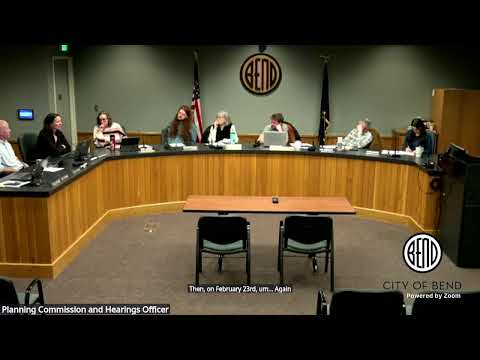
City operations and planning staff briefed the Planning Commission on Jan. 12 about the next six to 12 months of major work and how the commission’s advisory role will fit into larger council goals.
Russ Graves (introduced as chief operations officer) and other staff framed the briefing around council priorities—housing, complete neighborhoods, economic development, climate resilience and wildfire preparedness—and a sequencing of work sessions and public conversations scheduled through mid‑year. "The fundamentals of the Oregon land use system," staff said, "it says, 'thou shalt grow in cities,'" stressing that growth is expected and the challenge is managing where and how the city accommodates it.
Staff highlighted upcoming items of direct interest to the commission: a transportation‑standards discussion (Jan. 28) addressing cross sections and corridor design; a wildfire‑resilience conversation and building‑code question for council (date advanced by council); a growth plan kickoff (a multi‑year rewrite of the comprehensive plan) with initial work sessions likely to continue over four to five years; and a suite of land‑use and master‑plan applications likely to come before the commission in the near term, including the Stevens Road Tract master plan amendment and the Timber Yards master plan amendment. Staff said the city is negotiating a multiyear consulting contract to support the growth‑plan work.
The briefing stressed the commission’s dual roles: quasi‑judicial review for certain applications and advisory recommendations to council on legislative code changes. Ian (staff) gave an orientation on advisory‑body rules, ex parte contacts, ethics and public‑records obligations and encouraged commissioners to use posted resources and an upcoming onboarding session.
Staff encouraged commissioners to direct questions to staff (Renee and Colin were named contacts), to attend council work sessions (public and online) for context, and to coordinate with the city liaison to ensure the commission’s work aligns with council values.
Staff also previewed specific code work the commission should expect this spring: middle‑housing land division adjustments, neighborhood‑commercial siting standards, potential development‑code changes tied to recent state legislation, and infrastructure and drainage discussions. Several items were noted as likely to include substantive public engagement and quasi‑judicial hearings.
"We're trying to sequence these things in some type of rational schedule of conversations," staff said, asking commissioners to stay engaged and to use the city’s land‑use education resources to build background knowledge. The session closed with administrative reports and a preview of the Jan. 26 hearing on the tree‑code amendments.