East Stroudsburg Area SD presents five facilities options as JM Hill community presses for numbers, transit fixes and preservation
Loading...
Summary
At a packed town-hall, district and consultant RLPS outlined five options ranging from status quo to consolidation and a ninth‑grade academy; dozens of residents urged keeping JM Hill open, demanded cost figures, and raised transportation and equity concerns.
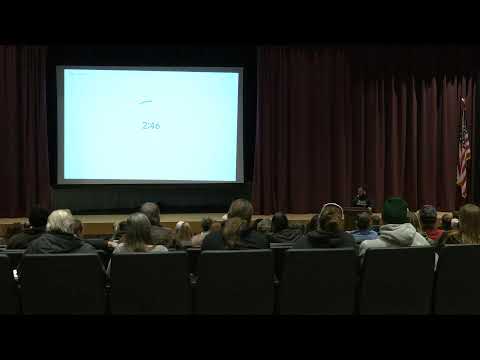
Superintendent Maggie Vitale opened a packed East Stroudsburg Area School District town‑hall, saying the meeting was intended to gather public feedback on a consultant’s facilities study and that “we're not making a decision now.” RLPS Architects then summarized district building conditions, enrollment trends and five high‑level options the board asked staff to develop, and announced a community survey and a February board review of the priority matrix.
The consultants described the district as having buildings built from the 1920s through about 2008, roughly 1,400,000 square feet of facility space and about 6,200 students at the time of the study. They said enrollment has declined from about 6,899 to 6,244 over the last decade and explained that PlanCon capacity calculations differ from how the district actually uses space (the consultants said districts typically operate near 80% of PlanCon capacity). RLPS presented five options: A) status quo (maintain all buildings); B) status quo with targeted renovation/rebuild of JM Hill and elementary realignment; C) right‑size by removing one elementary (potentially selling or retiring JM Hill); D) grade realignment with one intermediate and two high schools plus possible magnet/academy programming; and E) ninth‑grade academy with further consolidation and potential sale or nonuse of JM Hill. RLPS emphasized the 'Moscow' prioritization (must/should/could/won't) and said the board aims to narrow to two options in March–April for deeper study.
Public comment dominated the meeting. Speakers from JM Hill’s borough and other district neighborhoods repeatedly raised three core objections: a lack of transparent cost data, transportation reliability and equity consequences if a neighborhood school is closed. Michelle Briscoe, president of the JM Hill PTA, said closing JM Hill “would place a disproportionate burden on our borough community,” noting many families rely on walking or onpublic transit and taxi services. Several speakers pointed to apparent inconsistencies in the materials and asked for the consultant’s full assessment report, renovation cost estimates, and per‑student or per‑building cost projections before they could meaningfully answer the community survey.
Transportation concerns were frequent and specific. Multiple speakers described current bus runs that regularly arrive late or require hours on the road, and warned that consolidation could create commutes of 60–90 minutes for some students. One parent described special‑education students who already spend more than an hour on buses; others said prolonged rides could worsen attendance, behavior, or health outcomes. A former student and current community member recounted being on a 06:05 a.m. bus and returning home near 10 p.m. on activity nights, and warned that similar itineraries would harm student life under consolidation.
Speakers also pressed the district on equity. Several commenters said JM Hill functions as a local hub for meals and programs and that its community is comparatively economically vulnerable; one speaker cited research (a University of Houston study referenced in public comment) linking closures to long‑term negative educational and labor outcomes for affected students. Others challenged the presentation language that labeled JM Hill “older” or “most challenged” and noted that the school’s utilization was reported at high levels by residents (one commenter stated “JM Hill is at 94% utilization and capacity”).
Multiple speakers criticized the engagement rollout: they questioned whether the QR‑code survey reached seniors and noninternet households, noted the low raw response number cited by public commenters, and described the survey wording as leading. Several urged mailed surveys, broader outreach to taxpayers, and a public release of the consultant’s full assessment and the district’s projected budget impacts, including estimates of renovation vs. consolidation costs and any resulting transportation costs and staffing implications.
District leaders and RLPS repeatedly framed the process as iterative: survey responses will be compiled for a February board discussion of the priority matrix, the board will aim to choose two options for in‑depth study in March–April, and further town halls and township meetings will follow. Superintendent Vitale said staff will compile questions posed at the meeting, answer what they can publicly, and publish those responses ahead of the February board meeting.
What happens next: the district is collecting community survey responses (QR code announced at the meeting), the board will review the priority/Moscow list in February, and RLPS will return to help refine and cost the two options the board selects for deeper study. Residents at the town‑hall requested that any next presentation include full renovation/rebuild cost estimates, per‑student impacts, transportation modeling, and clear equity and commute analyses before options are narrowed further.